
Why in news?
The President and Vice‑President of India sent warm greetings to the nation on the occasion of Sarhul. The festival welcomes the new year for many Adivasi communities and celebrates the enduring bond between people and nature.
Background
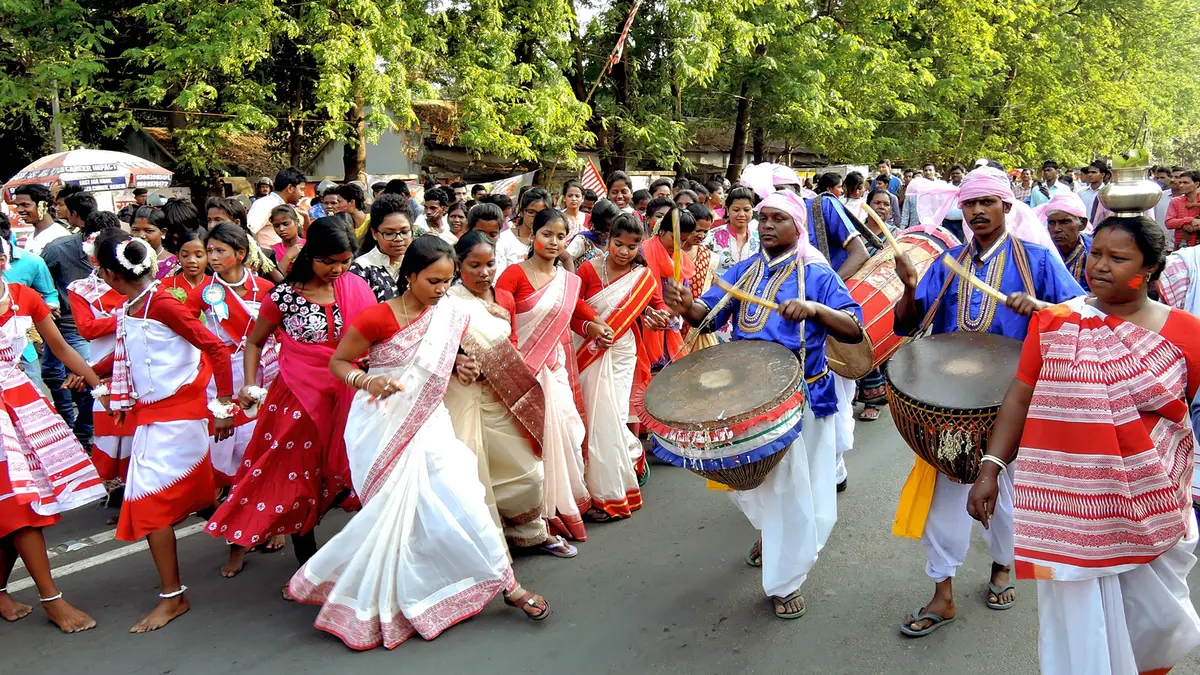
Sarhul literally means “worship of the Sal tree.” It is one of the most revered festivals among tribal groups such as the Oraon, Munda, Santal, Khadia and Ho in Jharkhand and neighbouring states. The celebrations honour Sama Maa, the village‑protecting deity believed to reside in the sacred Sal tree. Rituals emphasise harmony between the Sun and the Earth: the pahan (male priest) personifies the Sun while his wife, the pahen, represents the Earth, symbolising the essential link between sunlight and soil that sustains life. Sarhul is traditionally observed in the Chaitra month of the Hindu lunar calendar (around March–April) and marks the onset of the agricultural season.
Celebrations and Significance
- Three‑day festival: Preparations begin with cleaning homes and Sarna Sthals (sacred groves) and gathering Sal flowers. On the first day the pahan observes a strict fast. The second day features communal rituals — sacrifices, prayers for prosperity and cultural performances — held in the sacred groves. Festivities conclude on the third day with a community feast featuring traditional foods and the rice‑beer Handia.
- Connection to farming: Only after completing Sarhul rituals do Adivasi communities start agricultural activities such as ploughing, sowing and gathering forest produce. This custom highlights the festival’s deep ties to nature and the cycle of life.
- Ecological awareness: Sarhul celebrates the renewal of life and emphasises conservation. In his message, the President urged citizens to pursue development while respecting the environment, noting that the festival is a reminder of our duty to protect forests and natural resources.
Conclusion
Sarhul is more than a spring celebration; it reaffirms indigenous knowledge about living in harmony with nature. By recognising the spiritual value of trees and the environment, the festival encourages respect for biodiversity and sustainable livelihoods.
Source: News on Air

