

Why in news?
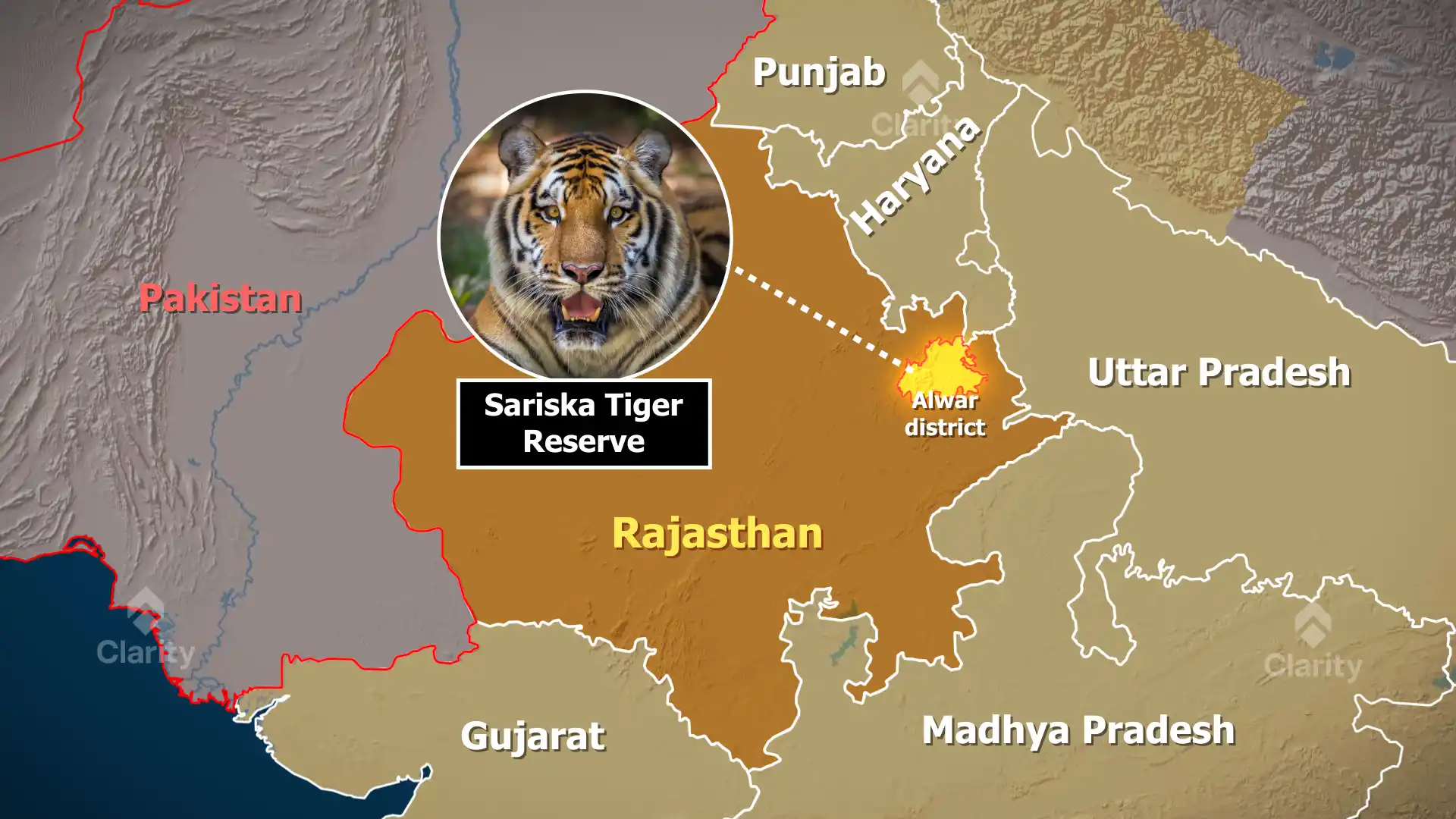
The Sariska Tiger Reserve in Rajasthan has acquired drones to monitor its increasing tiger population and to curb illegal activities such as poaching and logging. With about 50 tigers now inhabiting the reserve, authorities see aerial surveillance as a way to track animals that wander into surrounding farmlands and villages and to better protect the forest.
Background
Located in the Alwar district of Rajasthan, Sariska lies within the Aravalli Range and covers an area of approximately 881 square kilometres. Originally a hunting preserve of the Maharaja of Alwar, it was declared a protected reserve in 1955, upgraded to a national park in 1979 and became a tiger reserve under Project Tiger later that year. Notably, after Sariska’s tiger population was wiped out by poaching in the early 2000s, it became the first reserve in the world where tigers were successfully reintroduced through relocation from other reserves.
Features of Sariska Tiger Reserve
- Landscape and vegetation: The reserve’s terrain includes rocky hills, scrub‑thorn arid forests, grasslands and dry deciduous forests. It is dominated by dhok (Anogeissus pendula) trees, with other flora such as salar, kadaya, ber, banyan, guggal and bamboo.
- Wildlife: Besides Bengal tigers, Sariska supports leopards, sambar deer, chital, nilgai, four‑horned antelope, wild boar and numerous bird species. The reserve also contains heritage sites such as the Pandu Pol temple and the ruined Bhangarh Fort.
- Challenges: Tigers sometimes leave the reserve to establish territories in neighbouring forests or villages, leading to human–wildlife conflict. Illegal logging, grazing and poaching remain threats.
- Drone surveillance:
- The reserve has purchased two drones, with plans to add AI‑enabled devices. These drones will monitor tigers in open areas, track their movements when they stray outside the park and detect illegal activities.
- Drones complement existing monitoring methods such as camera traps, radio collars and forest patrol teams.
- Aerial views will help identify watering holes during summer and guide rapid response teams.
By embracing technology, Sariska aims to balance wildlife conservation with the safety of local communities and the integrity of its forests.
Sources: ETV Bharat