Why in news?
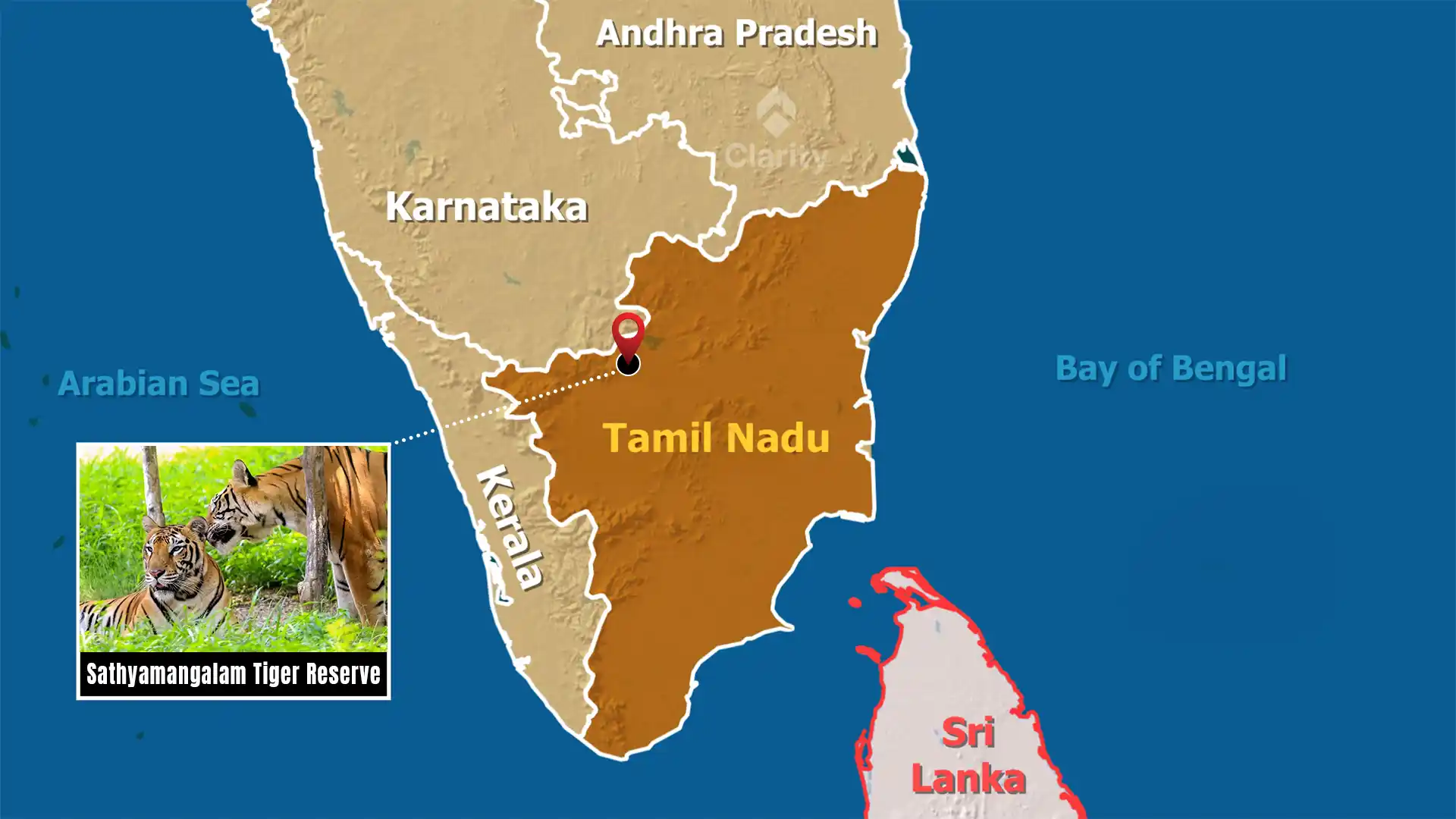
The Tamil Nadu government informed the Madras High Court that 42 illegal resorts and farmhouses operating in the eco‑sensitive zone of the Sathyamangalam Tiger Reserve (STR) have been locked and sealed. The action comes after inspections found that only 11 of 53 establishments had valid permissions. Further steps are being taken to prosecute remaining offenders.
Background
Sathyamangalam Tiger Reserve lies in the Erode district of Tamil Nadu, where the Western Ghats meet the Eastern Ghats. The area was first declared a wildlife sanctuary in 2008 and was upgraded to a tiger reserve in 2013. Covering about 1,408 square kilometres, it forms a vital wildlife corridor linking the Mudumalai, Bandipur, Biligiri Ranganatha and Cauvery wildlife sanctuaries within the Nilgiri Biosphere Reserve. The reserve’s forests host Bengal tigers, Asian elephants, blackbucks, leopards and over 230 species of birds. Its tribal population includes Irulas and Soliga communities.
Key details of the crackdown
- Illegal resorts: Inspections identified 53 resorts and farmhouses operating within the eco‑sensitive zone of STR. Only 11 had valid permission; the remaining 42 were closed and sealed.
- Legal action: The court directed the authorities to act against unlicensed establishments and submit a status report. Appellate bodies will consider any appeals filed by resort owners.
- Eco‑sensitive zone: Areas around tiger reserves are subject to strict regulations to minimise disturbance to wildlife. Unregulated tourism can lead to habitat degradation, noise and light pollution, and increased human–wildlife conflict.
About the reserve
- Ecological importance: STR connects the Western and Eastern Ghats, allowing gene flow between animal populations. A 2009 wildlife survey recorded 12 tigers, 836 elephants and 779 blackbucks. By 2018 the tiger population had grown to 80, earning the reserve the TX2 award for doubling tiger numbers.
- Conservation challenges: The reserve faces threats from poaching, sandalwood smuggling, forest fires, invasive species and human–wildlife conflict. Anti‑poaching camps and patrols operate throughout the park to curb illegal activities.
- Tribal communities: Irula and Soliga tribes live within and around the reserve. They practise sustainable harvesting of forest produce and are entitled to land use rights under the Forest Rights Act.
Significance
- Protecting habitats: Shutting down illegal resorts preserves the integrity of the eco‑sensitive zone and reduces disturbance to wildlife.
- Balancing tourism and conservation: Responsible tourism in and around protected areas can generate revenue for conservation and local communities. Enforcement against unlicensed operators ensures that tourism remains sustainable.
- Inclusive management: Involving tribal communities in conservation efforts and recognising their rights can strengthen protection while respecting cultural heritage.
Conclusion
Sathyamangalam Tiger Reserve is a biodiversity hotspot and a corridor linking India’s great mountain ranges. The recent action against illegal resorts underscores the need for vigilant enforcement of environmental laws. Long‑term conservation success will depend on protecting wildlife, supporting indigenous communities and regulating tourism responsibly.
Sources: New Indian Express