

Why in news?
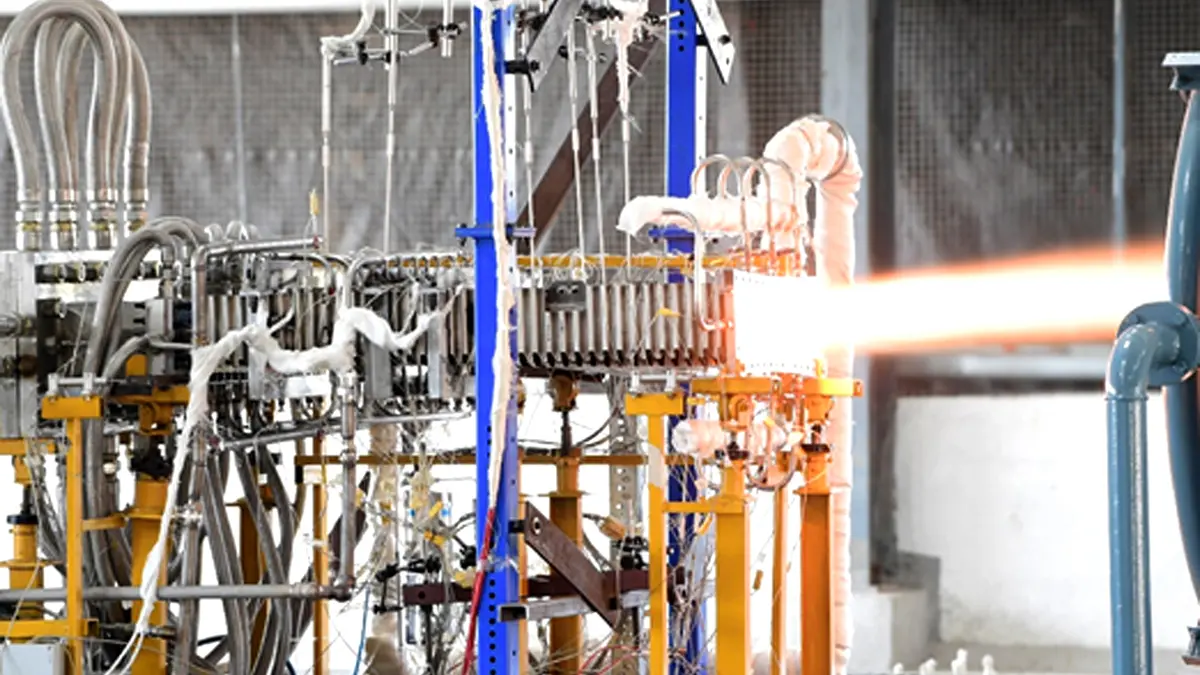
The Defence Research and Development Organisation (DRDO) achieved a milestone on 9 January 2026 when its Defence Research and Development Laboratory (DRDL) conducted a long‑duration ground test of a full‑scale, actively cooled scramjet combustor. The engine ran for more than twelve minutes at the Scramjet Connect Pipe Test facility in Hyderabad, marking a major step in India’s hypersonic missile programme.
Background
A scramjet (supersonic combustion ramjet) is an air‑breathing jet engine designed to operate at hypersonic speeds (Mach 5 and above). Unlike traditional turbojets, scramjets have no moving compressors or turbines. Instead, the engine’s forward motion compresses incoming air, which flows through the combustion chamber at supersonic speeds. Fuel is injected and burns in this fast‑moving airflow, generating thrust. Because scramjets rely on high initial speeds to function, a rocket or conventional jet typically boosts the vehicle before the scramjet takes over.
The January 2026 test
- Actively cooled combustor: The DRDL test involved a full‑scale combustor equipped with a cooling system to manage extreme temperatures. Previous sub‑scale tests lasted about 1,000 seconds; the new test exceeded 720 seconds (12 minutes).
- Domestic design: The combustor and the Scramjet Connect Pipe Test facility were designed by DRDL scientists and manufactured with the help of Indian industry partners.
- Application: Scramjet engines will power hypersonic cruise missiles capable of speeds above Mach 5 (around 6,100 km/h). These weapons promise greater range and shorter reaction times compared to conventional missiles.
- Build‑up: The January test builds on earlier experiments, including a two‑minute test in April 2025. Engineers will now analyse data and refine the engine before moving to flight demonstrations.
Significance
- Strategic edge: Developing scramjet technology places India among a handful of nations working on hypersonic weapons. Such missiles are difficult to intercept and could enhance deterrence.
- Technological innovation: Success in scramjet propulsion showcases indigenous expertise in materials, cooling systems and combustion under extreme conditions.
- Future prospects: Beyond military applications, scramjets could eventually enable reusable space vehicles and faster intercontinental travel.
Conclusion
The long‑duration test of DRDO’s scramjet combustor demonstrates steady progress in India’s hypersonic ambitions. Continued research and subsequent flight tests will determine how quickly this cutting‑edge technology can be fielded.
Source: PIB