

Why in news?
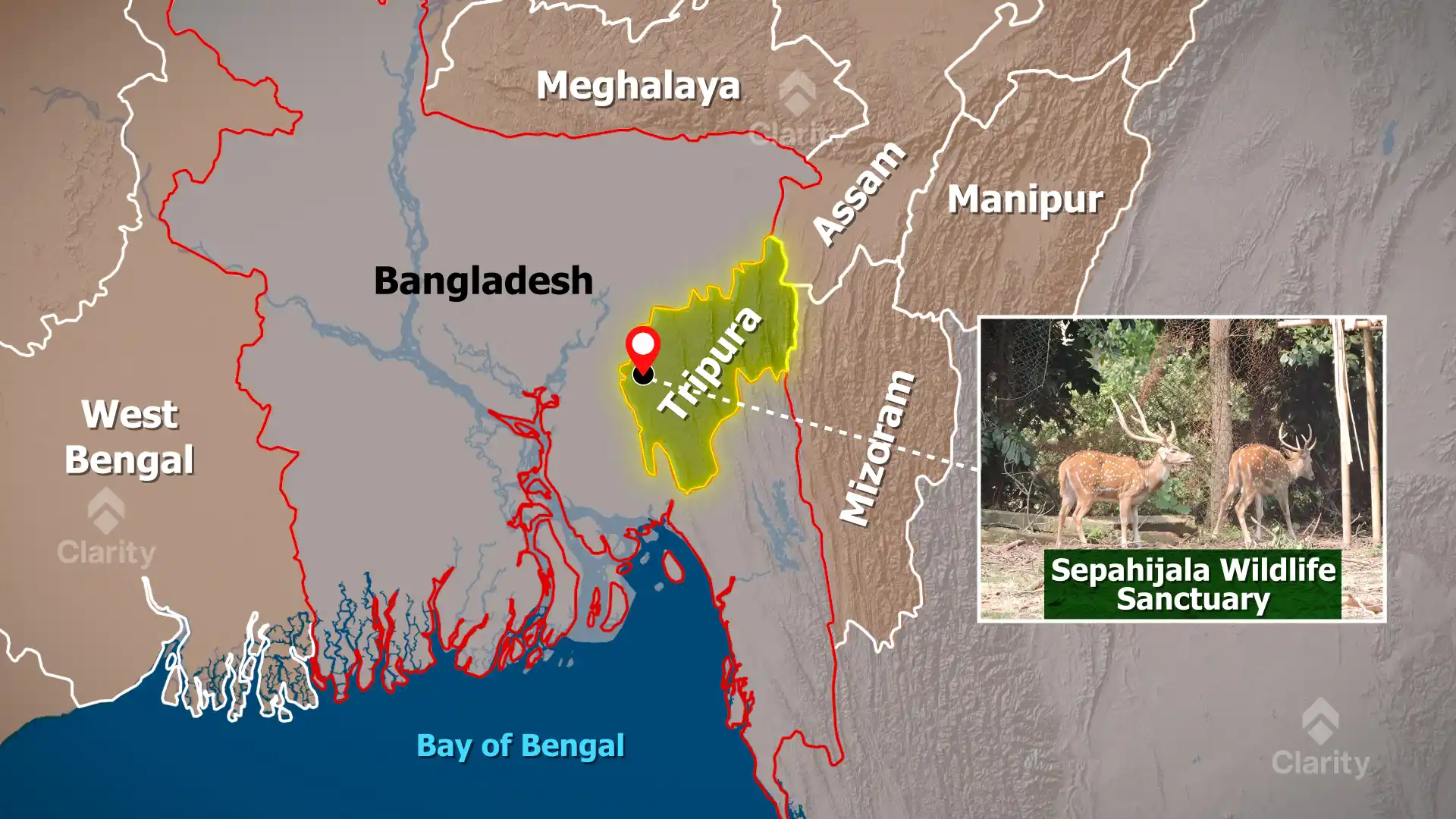
The Tripura government has announced that it has received over Rs 57 crore from the Ministry of Development of North Eastern Region (DoNER) to modernise the Sepahijala Wildlife Sanctuary and zoo. The funding will support infrastructure upgrades, clean‑up drives and the introduction of new animal species, aiming to raise the facility to international standards.
Background
Established in 1972, Sepahijala Wildlife Sanctuary lies about 25 kilometres from the town of Bishalgarh in Tripura. Covering roughly 18.5 square kilometres, it houses a botanical garden, an artificial lake, a “magical” landscaped garden and a mini zoo. The sanctuary is known for its Clouded Leopard enclosure and hosts four species of langurs – Phayre’s leaf monkey, capped langur, rhesus macaque and pig‑tailed macaque – along with numerous other mammals, reptiles and birds.
Features of the sanctuary
- Diverse fauna: More than 150 bird species, including waterfowl and raptors, live here. Mammals include barking deer, sambar, crab‑eating mongooses and clawless otters. There is also a reptile house and butterfly garden.
- Research and education: The sanctuary operates a wildlife research and conservation centre that studies animal behaviour and promotes environmental awareness among visitors.
- Visitor amenities: Facilities include boating on the lake, watchtowers, nature trails and the “Abasarika” tourist cottage for overnight stays.
- Accessibility: The sanctuary is connected by road from Agartala and Bishalgarh, making it a popular day trip for tourists and school groups.
Modernisation plan
- Infrastructure upgrades: Funds will be used to renovate animal enclosures, improve drainage and develop better waste management to enhance hygiene.
- New species: Authorities plan to introduce additional animals, including exotic birds and larger mammals, to attract visitors.
- Clean‑up drive: Following reports of plastic waste and poor sanitation, a comprehensive clean‑up campaign is underway to restore the sanctuary’s natural beauty.
- Staff training: Wildlife caretakers and veterinarians will receive training to adopt modern zoo management practices.
Significance
- Conservation awareness: Upgraded facilities can inspire visitors to appreciate biodiversity and support wildlife protection.
- Tourism boost: Modern amenities and diverse animals will attract tourists, creating local employment and contributing to the state’s economy.
- Regional development: The DoNER‑funded project reflects the central government’s commitment to strengthening infrastructure in the North‑East.
Conclusion
Sepahijala Wildlife Sanctuary is an important ecological and educational asset for Tripura. The planned modernisation will not only enhance visitor experience but also support conservation and sustainable tourism.
Sources: MSN