

Why in news?
The Ahilyanagar cyber police recently arrested two employees of the Shani Shingnapur Temple trust for diverting more than ₹50 lakh into personal accounts. They allegedly manipulated online applications used for booking pooja services, exposing vulnerabilities in the temple’s digital payment systems.
Background
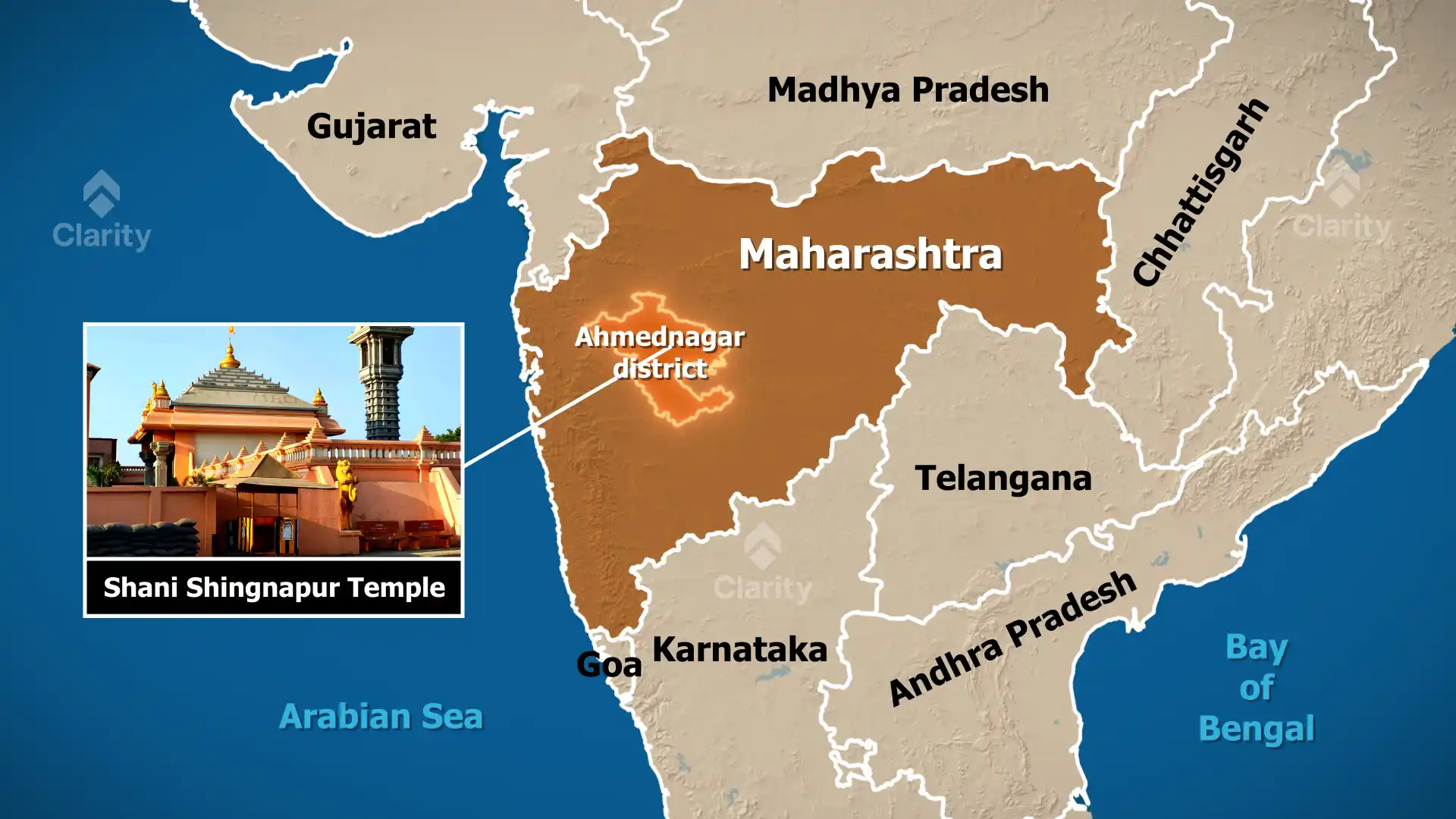
Shani Shingnapur is a village temple in Ahmednagar district, Maharashtra, dedicated to Lord Shanidev, the deity associated with the planet Saturn. The temple is unique because the idol, a black stone more than five feet high, stands in the open without a roof, walls or doors. Villagers traditionally do not install doors on their houses, believing that Lord Shani protects the community from theft.
Architecture and traditions
- Open‑sky shrine: The deity is worshipped under the open sky. A copper vessel hangs above the idol, continuously pouring mustard oil onto it as part of the ritual.
- No doors: Houses in Shani Shingnapur historically had no doors or locks, reflecting faith in the deity’s protective powers. Although modernity has introduced doors in some homes, the tradition remains a symbol of trust.
- Simple structure: The temple lacks ornate architecture. Nearby structures include a trident (Trishul), a Nandi bull and smaller images of Shiva and Hanuman. A later addition is an east‑facing multi‑deity temple built west of the main idol.
The alleged fraud
According to reports, a clerk and the temple’s head of CCTV/security partnered with operators of unauthorised mobile apps to divert payments from devotees booking poojas, receiving prasad or ordering live‑streamed rituals. The scam reportedly went undetected for months until local politicians raised concerns. Police have seized documents and asked the trust to audit its finances while warning the public against using unofficial apps.
Conclusion
The case serves as a reminder that even sacred places must implement robust digital safeguards when handling online donations and services. Strengthening transparency and oversight will be vital to restoring trust among devotees.
Source: Hindustan Times