
Why in news?
The Karnataka High Court has ordered the state government to halt all construction and ground activities within the Sharavathi Lion‑Tailed Macaque Sanctuary and its eco‑sensitive zone. Petitioners argued that a proposed 2,000‑MW pumped storage project would damage fragile forests and violate wildlife protection laws. The court’s directive highlights the tension between energy development and conservation.
Background
The sanctuary lies in the Western Ghats of Karnataka, a mountain range recognised as a UNESCO World Heritage Site for its exceptional biodiversity. Established in 1972 as the Sharavathi Valley Wildlife Sanctuary, the protected area originally covered 431 square kilometres along the Sharavathi River basin. In 2019 the state expanded and renamed it the Sharavathi Lion‑Tailed Macaque Sanctuary by merging the Aghanashini Lion‑Tailed Macaque Conservation Reserve (299 km²) and adjacent reserve forests, bringing the total area to roughly 930 km². Its southern boundary adjoins the Mookambika Wildlife Sanctuary.
The terrain is highly undulating, ranging from about 94 metres to more than 1,100 metres above sea level. Vegetation ranges from tropical evergreen and semi‑evergreen forests to moist deciduous woodland, grasslands and savanna. The forests include species such as Dhoopa (Vateria indica), Gulmavu (Drypetes roxburghii), Surahonne (Calophyllum tomentosum), Mavu (Mangifera indica) and Nandi (Garcinia gummi‑gutta). The area is also known for Myristica swamps – ancient freshwater swamp forests dominated by nutmeg‑like trees.
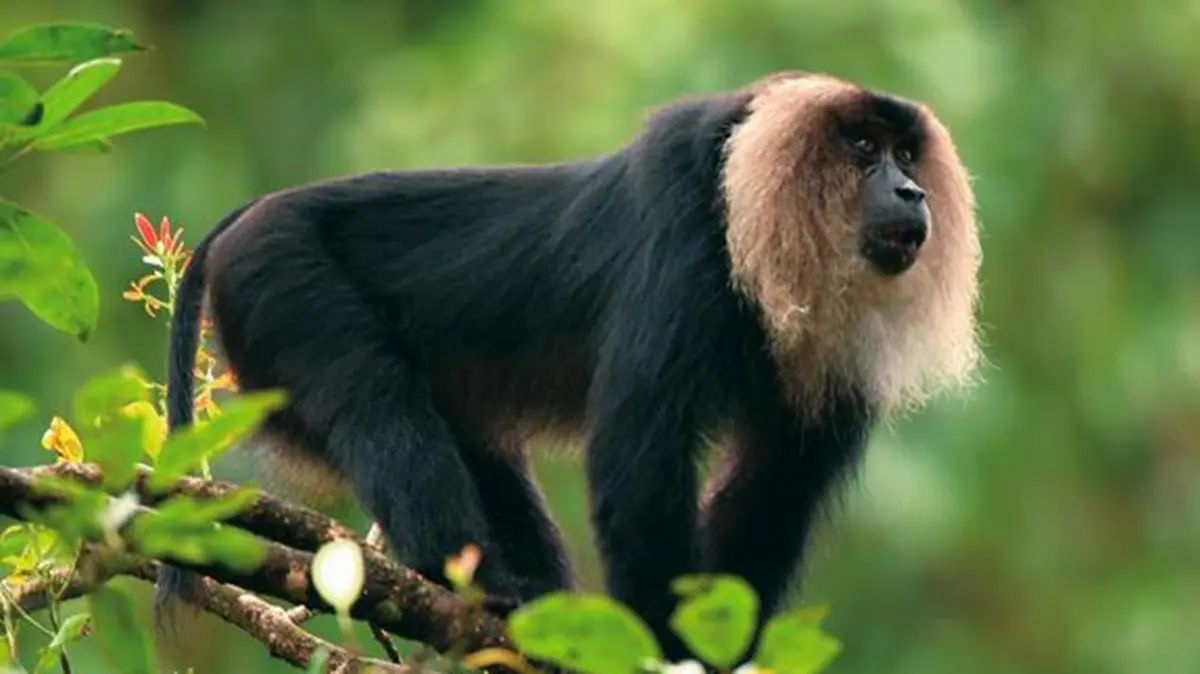
The sanctuary’s namesake, the lion‑tailed macaque (Macaca silenus), is an endangered primate found only in India’s Western Ghats. Adults measure 40–61 centimetres in body length, with males weighing 5–10 kilograms and females 3–6 kilograms. They have black fur, a silver‑grey mane around the head and a tail tipped with a tuft, resembling a lion’s tail. These macaques live in the upper canopy of evergreen and monsoon forests and are highly dependent on large, undisturbed forest patches. Other wildlife in the sanctuary includes tigers, leopards, wild dogs, jackals, sloth bears, spotted deer, sambar, barking deer and mouse deer.
Issues and significance
- Court directive: The High Court’s order suspends ground activities related to the proposed Sharavathi pumped storage hydroelectric project until legal and environmental concerns are addressed. Petitioners argue that the project could fragment habitats and threaten endangered species.
- Biodiversity hotspot: The sanctuary protects some of the last viable populations of lion‑tailed macaques and numerous other flora and fauna. Its evergreen forests are part of a global biodiversity hotspot and provide ecosystem services such as water regulation and carbon sequestration.
- Balancing development and conservation: Karnataka aims to increase renewable energy capacity, but large infrastructure projects in sensitive areas can cause irreversible ecological damage. The court’s intervention underscores the need to carefully assess environmental impacts before approving such projects.
- Community involvement: Local communities and environmental groups have called for greater transparency and consultation in decision‑making, emphasising that sustainable livelihoods and ecological integrity should go hand in hand.
Conclusion
The Sharavathi Lion‑Tailed Macaque Sanctuary exemplifies the ecological richness of the Western Ghats and the challenges of balancing conservation with energy demands. Protecting this sanctuary safeguards endangered species and the wellbeing of communities who depend on forest resources. Any development within its boundaries must respect the sanctity of the ecosystem and comply with wildlife and environmental laws.
Sources: The Indian Express

