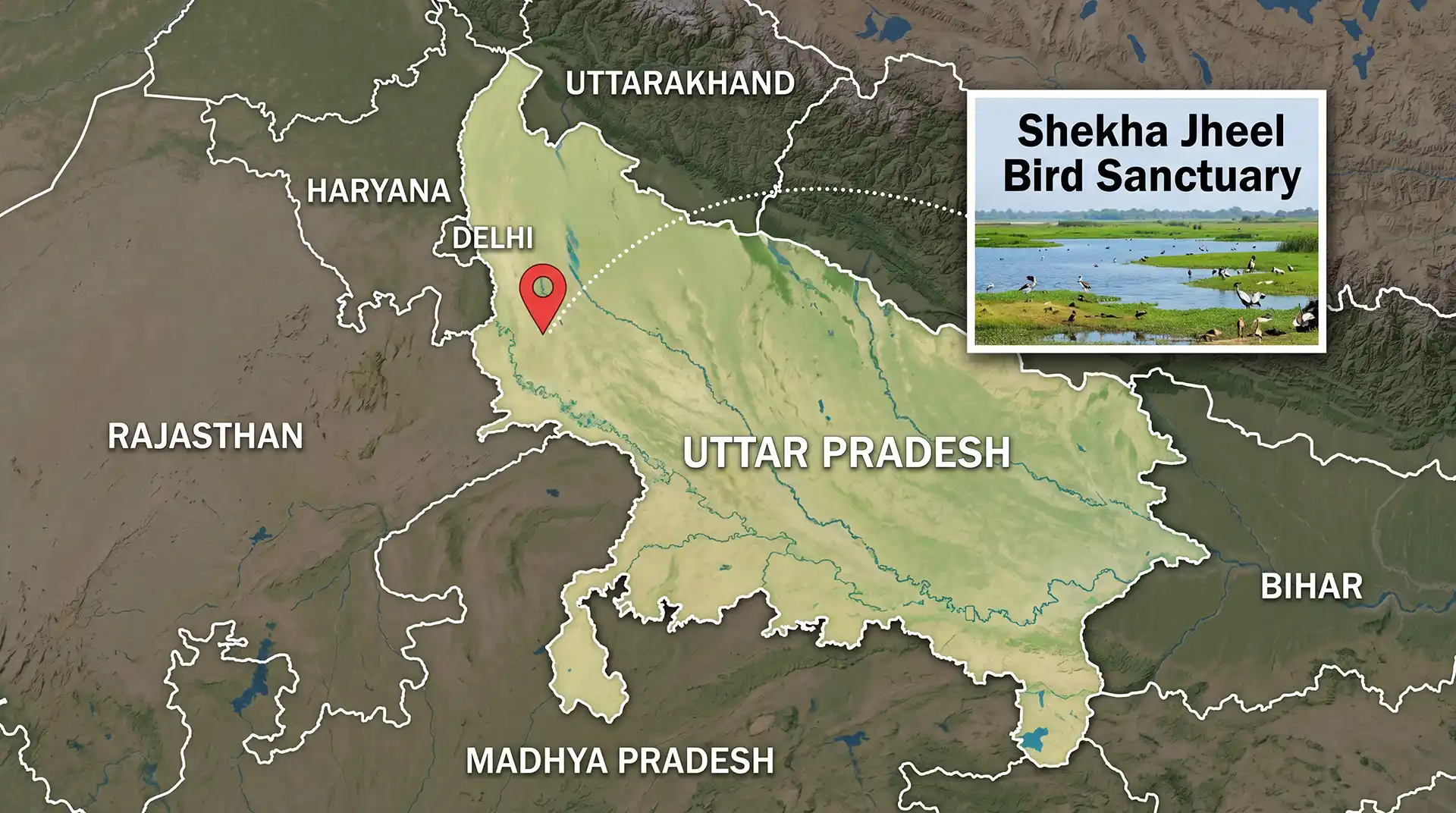
Why in news?
Union Environment Minister Bhupender Yadav announced that Shekha Jheel Bird Sanctuary in Aligarh district, Uttar Pradesh, has been designated as a Ramsar site. The recognition makes it India’s 99th wetland of international importance and raises Uttar Pradesh’s tally of Ramsar sites to 12.
Background
Shekha Jheel is a perennial freshwater lake located on the Gangetic plains in Uttar Pradesh. It came into existence after the construction of the Upper Ganges Canal in 1852. The lake lies along the Central Asian Flyway and serves as a vital stopover for migratory birds.
Ecological characteristics
- Vegetation: The wetland supports diverse aquatic plants. Submerged species include Hydrilla verticillata, Ceratophyllum demersum, Vallisneria spiralis, Potamogeton crispus and Najas spp. Free‑floating plants such as Salvinia, Azolla and Eichhornia crassipes occur on the surface. Rooted floating plants include Nymphoides cristata and Nymphoides indica.
- Fauna: The lake provides habitat for numerous migratory and resident birds. During winter, species such as the Bar‑headed Goose, Painted Stork, various ducks and waders rest and feed here. The wetland also supports fish and amphibians.
- Hydrology: As a monsoonal wetland, Shekha Jheel receives inflow from rains and the canal. It contributes to groundwater recharge and helps control floods in the surrounding area.
Ramsar Convention overview
- The Ramsar Convention (1971) is a global treaty aimed at conserving wetlands of international importance. Member countries commit to protecting listed sites and promoting the wise use of wetlands.
- Ramsar wetlands provide critical habitats for migratory birds, endangered species and unique plant communities. They also support local livelihoods through fishing, agriculture and tourism.
- With Shekha Jheel’s designation, India now has 99 Ramsar sites spread across 28 states and union territories. This reflects the country’s growing efforts to conserve wetlands for biodiversity and climate resilience.
Significance
The Ramsar listing will help mobilise resources and attention for conserving Shekha Jheel. Protection measures can ensure that bird populations continue to thrive, water quality improves and local communities benefit from sustainable tourism and fishing.
Source: Press Information Bureau