
Why in news?
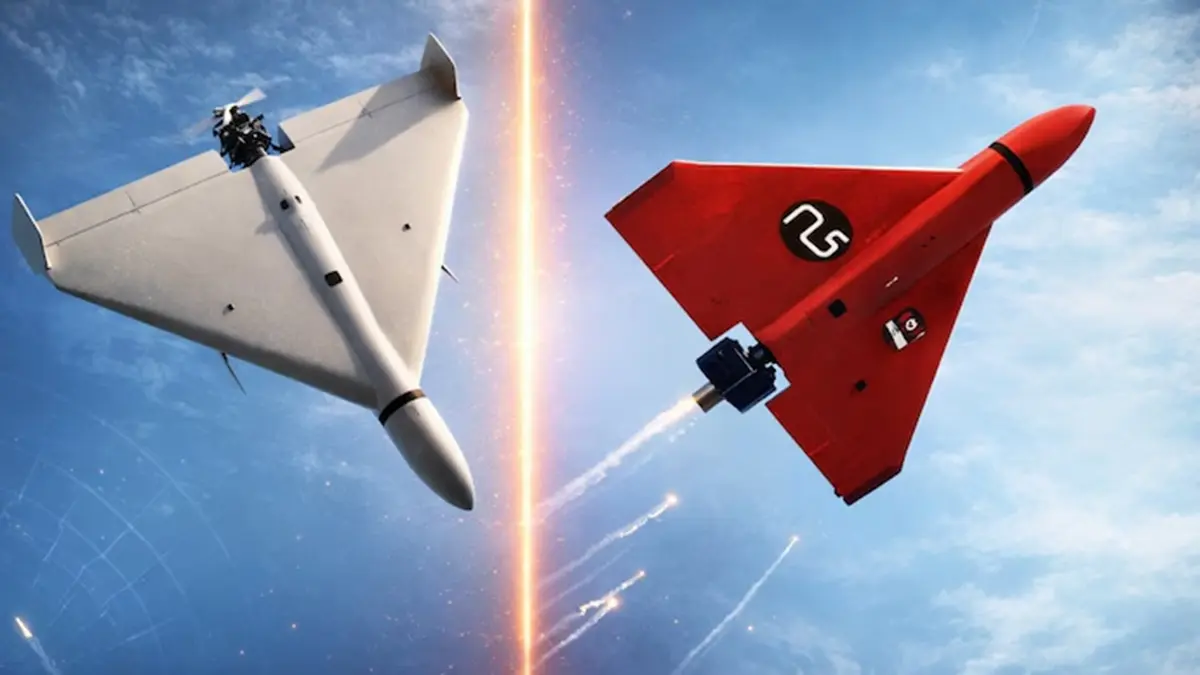
India has developed a new long‑range swarm attack unmanned aerial system known as Sheshnaag‑150. Reports in March 2026 revealed that the autonomous drone can travel more than 1,000 km and deliver precision attacks using a swarm of smaller munitions.
Background
Swarm drones consist of numerous small, low‑cost drones that can overwhelm air‑defence systems through sheer numbers and coordinated manoeuvres. They are guided by artificial intelligence and can make decisions collectively. The Sheshnaag‑150 system, developed by a private Indian start‑up with support from defence research agencies, is designed to carry a payload of 25–40 kg.
The drone reportedly uses advanced visual navigation and secure communication to guide its swarm of loitering munitions to the target. It emerged from lessons learned during Operation Sindoor, when India used remotely piloted vehicles in difficult Himalayan terrain. Sheshnaag‑150 is part of India’s push for indigenous defence technology and aims to complement ballistic missiles and conventional drones by offering long‑range precision with lower cost.
Key points and significance
- Range and payload: With an advertised range over 1,000 km and a payload up to 40 kg, the drone can strike targets deep inside hostile territory.
- Swarm capabilities: A mother drone releases dozens of smaller munitions that coordinate their attack, making interception difficult for enemy air defences.
- AI navigation: Onboard algorithms and visual navigation allow the swarm to adapt to obstacles and jammed communications.
- Indigenisation: Developing such systems domestically reduces reliance on imports and can boost India’s defence exports.
Source: Business Standard – Sheshnaag‑150 long‑range swarm drone

