
Why in news?
The Karnataka High Court has ordered a halt to construction activities at the Shree Chamundeshwari Temple on Chamundi Hills near Mysuru. The court criticised state authorities for defying earlier judicial orders, reminding them that such directives are binding on all, and sought affidavits explaining why work continued despite the injunction. The dispute arises from a challenge to the Chamundeshwari Kshetra Development Authority Act, 2024.
Background
The Chamundeshwari Temple sits atop the 1,000‑metre‑high Chamundi Hills about 13 kilometres from Mysuru city. Dedicated to Goddess Chamundeshwari – an incarnation of the warrior goddess Durga who, according to legend, slew the buffalo demon Mahishasura – the temple has been a centre of devotion for more than a thousand years. Historical records suggest that the Hoysala rulers built the original shrine in the 12th century, and later the Vijayanagara rulers expanded it in the 17th century. Maharaja Dodda Devaraja Wodeyar added a stone stairway of over 1,000 steps in the 1650s, allowing pilgrims to reach the hilltop on foot.
Architecture and features
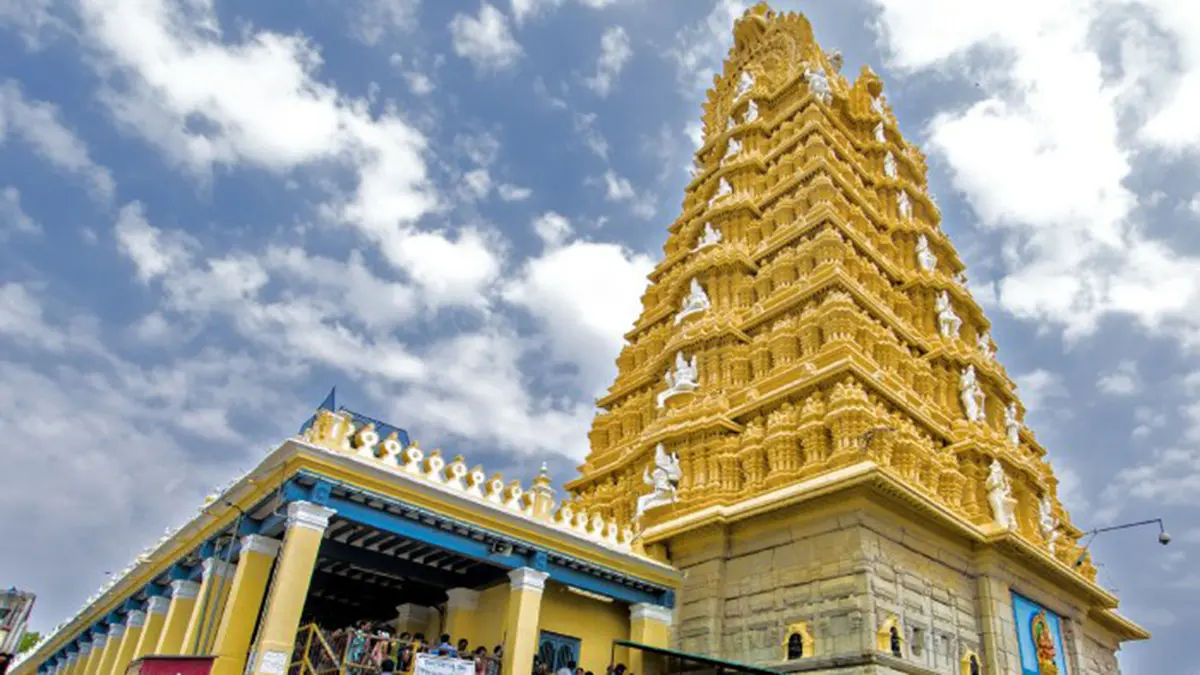
- Dravidian style: The temple is a quadrangular structure built in classic Dravidian style, featuring a pillared hall (Navaranga), an antechamber (Antharala), the sanctum sanctorum and a circumambulatory passage.
- Seven‑tier gopuram: The entrance tower, or gopuram, rises in seven tiers and is adorned with colourful sculptures of gods, goddesses and mythical figures. A small statue of Lord Ganesha stands above the silver‑plated doorway.
- Shakti Peetha: Chamundeshwari Temple is counted among the 18 Maha Shakti Peethas – sacred sites where parts of the goddess Sati are believed to have fallen – making it a major pilgrimage destination.
- Nandi statue: Halfway up the hill stands a massive granite sculpture of Nandi, Lord Shiva’s bull, carved in the 17th century.
Significance
- Religious importance: Thousands of devotees flock to the temple, especially during Navaratri, to worship the goddess and seek her blessings. The hill and temple are visible from miles away, symbolising Mysuru’s spiritual heritage.
- Cultural heritage: The monument is intertwined with the legend of Mahishasura and the very name of Mysore (derived from “Mahishuru”). Preservation of the temple safeguards centuries‑old art, architecture and folklore.
- Tourism and environment: The hill offers panoramic views of Mysuru and its surroundings. Authorities must balance tourism with environmental conservation by regulating construction and protecting the hill’s flora and fauna.
Conclusion
The High Court’s intervention highlights the need to respect judicial oversight when developing heritage sites. Any plans to improve facilities at the Chamundeshwari Temple must ensure structural safety, preserve the temple’s sanctity and protect the hill’s ecology while keeping devotees’ sentiments in mind.

