Why in news?
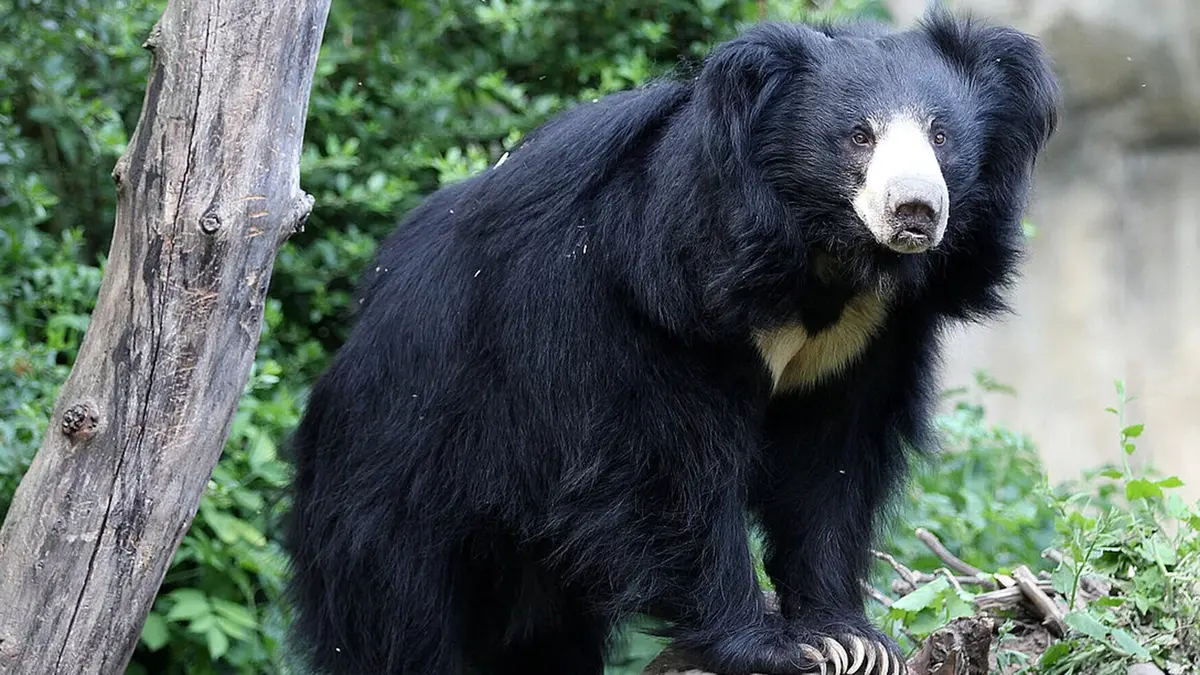
An eight‑year‑old female sloth bear wandered into the premises of Rashtrakavi Kuvempu Airport near Shivamogga in Karnataka after travelling nearly 50 kilometres from its release site. Wildlife officials tranquilised and relocated the animal to a zoo, bringing attention to human–wildlife conflict in India.
Background
The sloth bear (Melursus ursinus) is native to the Indian subcontinent. It has shaggy black fur, long curved claws and a flexible snout adapted for sucking up ants and termites. Adult females weigh around 55–95 kilograms and give birth to one or two cubs.
Sloth bears inhabit forests, grasslands and scrublands across India, Sri Lanka and Nepal. They are listed as Vulnerable on the IUCN Red List due to habitat loss, poaching and conflict with humans. Translocation is sometimes used to remove problem individuals from villages or industrial sites.
The Shivamogga incident
- Translocation: The bear was earlier captured in Toranagallu, a mining town, after causing disturbances. Forest officials fitted it with a GPS collar and released it in a forest near Bhadravathi.
- Long journey: Within days the bear travelled about 50 km, likely following its homing instinct, and entered the airport perimeter. Authorities monitored its movement using the GPS collar.
- Safe capture: A team of veterinarians tranquilised the animal and moved it to the zoological park at Shivamogga, where it will be cared for under supervision.
Lessons and challenges
- Habitat fragmentation: Expanding roads, mines and settlements reduce forest cover, forcing bears and other wildlife into human spaces.
- Ineffective relocation: Many animals try to return to their home ranges after translocation. Without addressing habitat quality and connectivity, such efforts may only provide temporary solutions.
- Public awareness: Communities need education on avoiding conflicts, such as secure waste disposal and refraining from provoking or feeding wildlife.
Conclusion
The sloth bear’s unexpected visit to an airport highlights the pressures wildlife face as human activities expand. Long‑term conservation will require protecting habitats, creating corridors and involving local communities to ensure safe coexistence.
Source: The Hindu