Why in news?
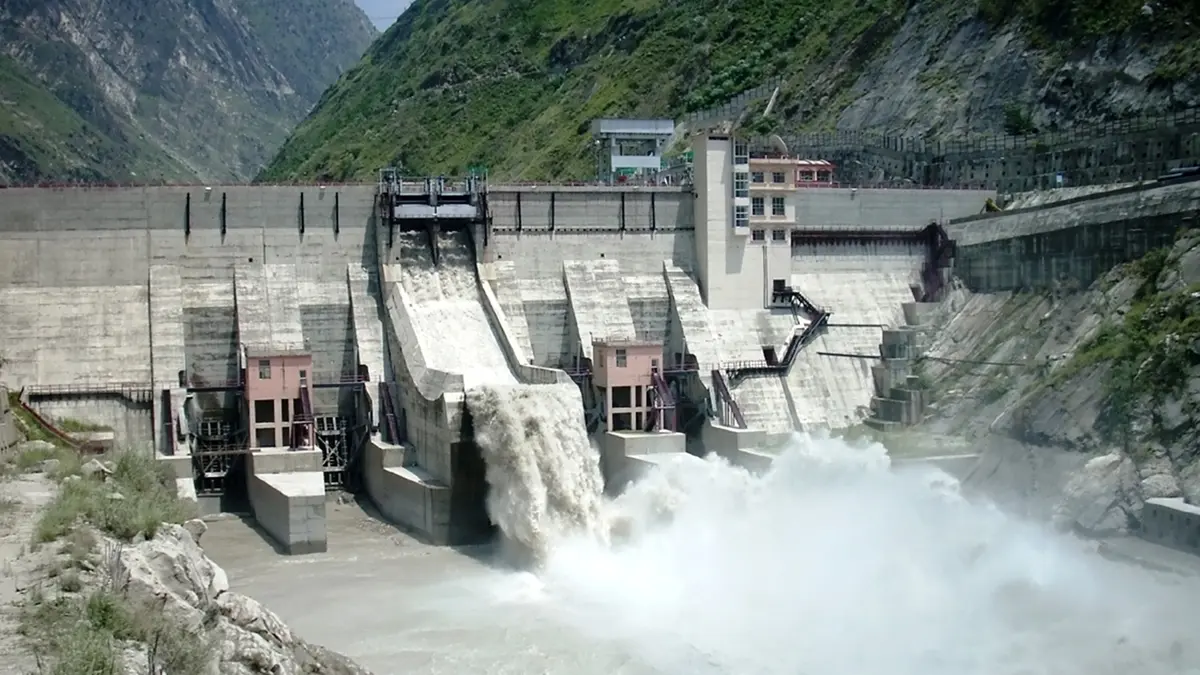
The Union Cabinet approved a new Small Hydro Power (SHP) Development Scheme for 2026‑27 to 2030‑31 with an outlay of about ₹2,584.6 crore. The scheme aims to add 1,500 MW of capacity through run‑of‑river projects in hilly and border states, providing viability gap funding to attract private investment and reduce energy poverty.
Background
SHP projects use the natural flow of rivers to generate electricity without large dams or reservoirs. In India they are defined as projects of 1–25 MW. Despite a potential of more than 21,000 MW, only about 5,100 MW has been developed. The new scheme revives earlier efforts to tap rivers in mountainous regions such as the Himalaya and northeastern hills, where grid expansion is difficult and local communities need reliable power.
Key features of the scheme
- Financial assistance: Border districts in hilly and northeastern states receive central financial assistance (CFA) covering up to 30 percent of project cost or ₹3.6 crore per MW (maximum ₹30 crore). Other eligible states receive up to 20 percent or ₹2.4 crore per MW (capped at ₹20 crore).
- Capacity target: The scheme targets the installation of 1,500 MW between 2026‑27 and 2030‑31. Projects will be run‑of‑river to minimise ecological impact, avoiding large reservoirs.
- Employment and investment: Implementation is expected to create about 51 lakh person‑days of employment and attract roughly ₹15,000 crore in private investment. Procurement of plant and machinery must comply with Atmanirbhar Bharat norms, promoting domestic manufacturing.
- Decentralised generation: Small projects reduce transmission losses and provide reliable power to remote villages. They can complement solar and wind energy in the renewable mix.
Challenges and opportunities
- Seasonal variations in river flow and high initial costs make many SHP projects financially risky. Viability gap funding helps address this but regulatory clearances and land acquisition can still delay projects.
- The scheme encourages states to streamline approvals and support community participation. It aligns with India’s goal of achieving 500 GW of non‑fossil fuel capacity by 2030 and helps decarbonise the power sector.
Source: PIB