

Why in news?
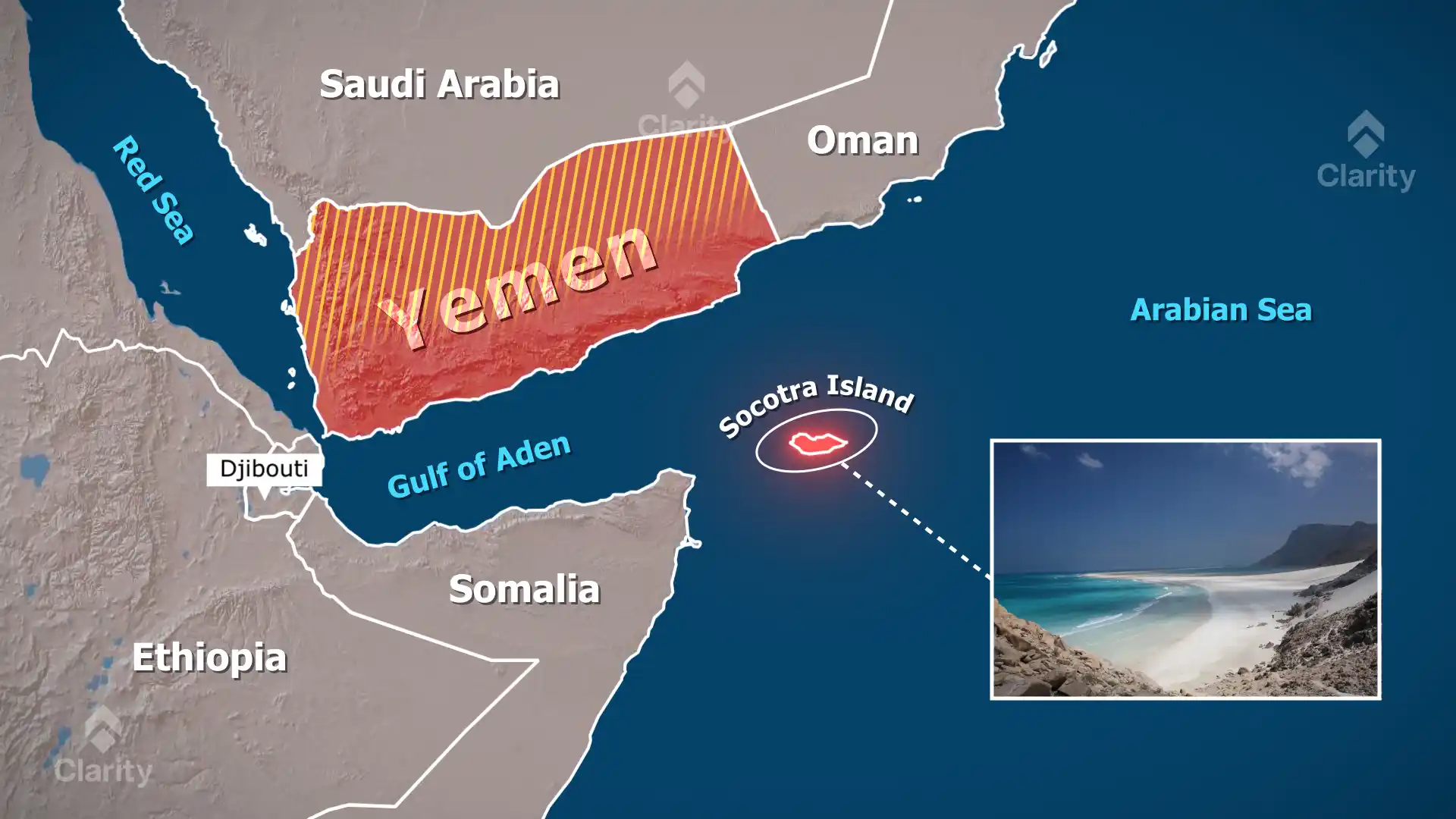
More than 400 foreign tourists were left stranded on Yemen’s Socotra Island after flights from Abu Dhabi were suspended because of fighting on the mainland. The unexpected disruption highlighted the vulnerability of this remote archipelago, known for its otherworldly landscapes and unique flora and fauna, to the wider conflict in Yemen.
Background
Socotra is an isolated island in the Arabian Sea, roughly 350 km off Yemen’s southern coast. Often described as the “Galápagos of the Indian Ocean,” the island harbours hundreds of endemic plant and animal species, including the iconic dragon’s blood tree. With a population of about 50,000, Socotra has remained largely untouched by the civil war ravaging mainland Yemen. Its turquoise waters and dramatic limestone plateaus draw eco‑tourists from around the world. Flights from Abu Dhabi have been the main link connecting tourists to the island.
Current situation
- Flight suspension: Authorities halted all flights to and from Socotra after clashes erupted between government security forces and tribal fighters in Yemen’s eastern provinces. The suspension left 416 international travellers, including citizens of Russia and China, stranded on the island.
- Limited alternatives: With commercial air services grounded, travellers have had to rely on infrequent chartered boats or military flights to return to the mainland. Local authorities have tried to accommodate stranded visitors, but supply lines for food and medical care are fragile.
- Tourism impact: The incident underscores how regional instability can disrupt eco‑tourism. Socotra’s economy depends heavily on visitors, who support small hotels, tour operators and artisans. Prolonged flight suspensions could harm livelihoods and discourage future travel.
Significance
- Ecological importance: Socotra’s unique biodiversity has earned it a UNESCO World Heritage listing. Conservationists worry that isolation resulting from the conflict could hamper scientific research and conservation work.
- Strategic location: The island sits near major shipping lanes connecting the Red Sea and the Indian Ocean. As geopolitical competition intensifies in the region, control of Socotra carries strategic value.
- Humanitarian concerns: The plight of stranded tourists draws attention to the broader humanitarian crisis in Yemen, where millions face food insecurity and displacement. It underscores the need for stability to protect both residents and visitors.
Conclusion
Socotra’s recent ordeal illustrates how violence on the mainland can ripple across even the most remote corners of Yemen. Ensuring safe and reliable access to the island is vital not only for tourism but also for preserving its rich natural heritage.
Source: The Economic Times