

Why in news?
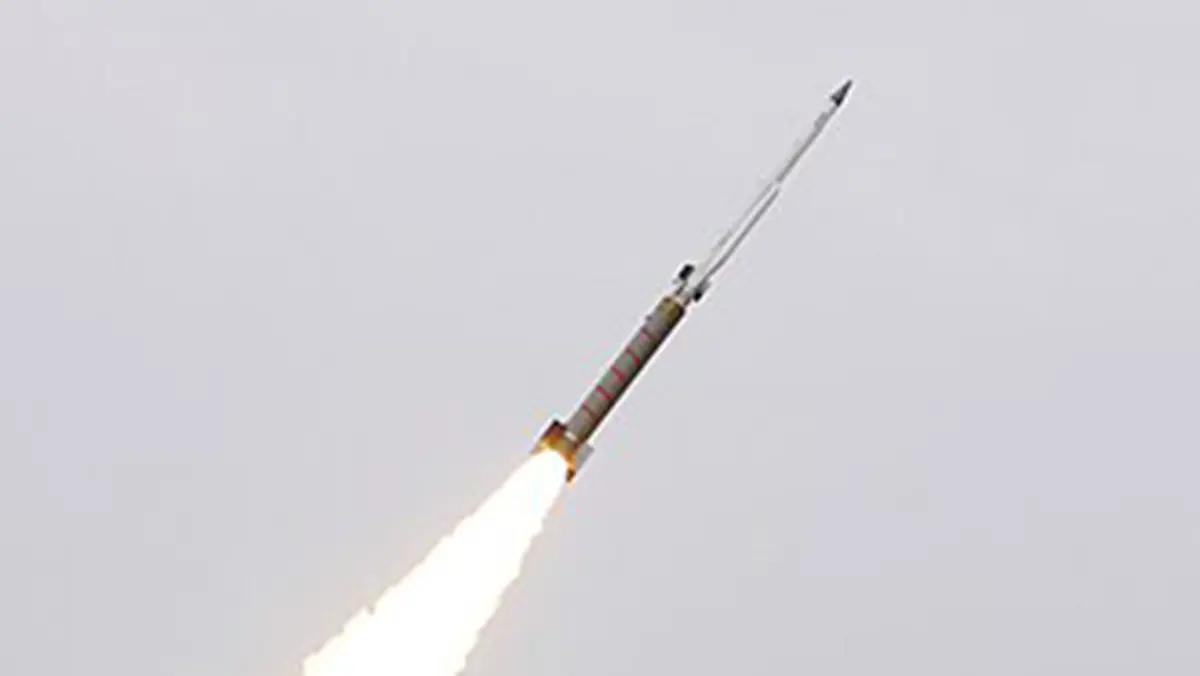
On 3 February 2026 the Defence Research and Development Organisation (DRDO) successfully flight‑tested the Solid Fuel Ducted Ramjet (SFDR) at the Integrated Test Range in Chandipur, Odisha. The demonstration validated key subsystems and marked a major step toward indigenous long‑range air‑to‑air missiles.
Background
A ramjet is an air‑breathing jet engine without moving parts. It uses the forward motion of the missile to compress incoming air, which then mixes with fuel and combusts to produce thrust. In the SFDR configuration, the missile carries solid fuel but no oxidiser. Atmospheric oxygen supports combustion, resulting in lighter weight and sustained high‑speed flight.
DRDO has been developing SFDR technology in partnership with Russia since the 2010s. The system comprises a nozzle‑less booster to accelerate the missile to ramjet speeds, a solid fuel gas generator and a fuel‑flow controller to regulate combustion. Once the ramjet takes over, the missile can cruise at supersonic speeds for an extended duration, enabling greater range and manoeuvrability.
Recent test
- Flight performance: During the February 2026 test the missile’s booster and ramjet motor operated smoothly. Telemetry data indicated that the fuel‑flow controller maintained the desired thrust profile and the missile achieved expected aerodynamic performance.
- Subsystem validation: DRDO reported that all subsystems—booster, ramjet engine and controller—performed as predicted. The successful test places India among a small group of nations possessing ramjet propulsion technology.
- Strategic impact: SFDR technology will enable the development of long‑range, high‑speed air‑to‑air missiles capable of engaging targets beyond visual range. These missiles will provide the Indian Air Force with greater stand‑off capability and reduce reliance on imported systems.
Advantages of SFDR
- Air‑breathing propulsion: By using atmospheric oxygen, SFDR eliminates the need for an onboard oxidiser, reducing weight and freeing up space for fuel or payload.
- Sustained high speed: Ramjets maintain supersonic speeds for a longer period than conventional solid rocket motors, improving engagement range and making missiles harder to intercept.
- Cost‑effectiveness: Solid fuels are easier to handle and store than liquid fuels used in some ramjet designs. The technology also promotes self‑reliance in advanced missile propulsion.
Conclusion
The successful demonstration of SFDR technology is a milestone for India’s aerospace sector. By mastering ramjet propulsion, DRDO paves the way for next‑generation air‑to‑air missiles that can protect national airspace and reinforce deterrence without depending on foreign suppliers.
Source: Press Information Bureau