
Why in news?
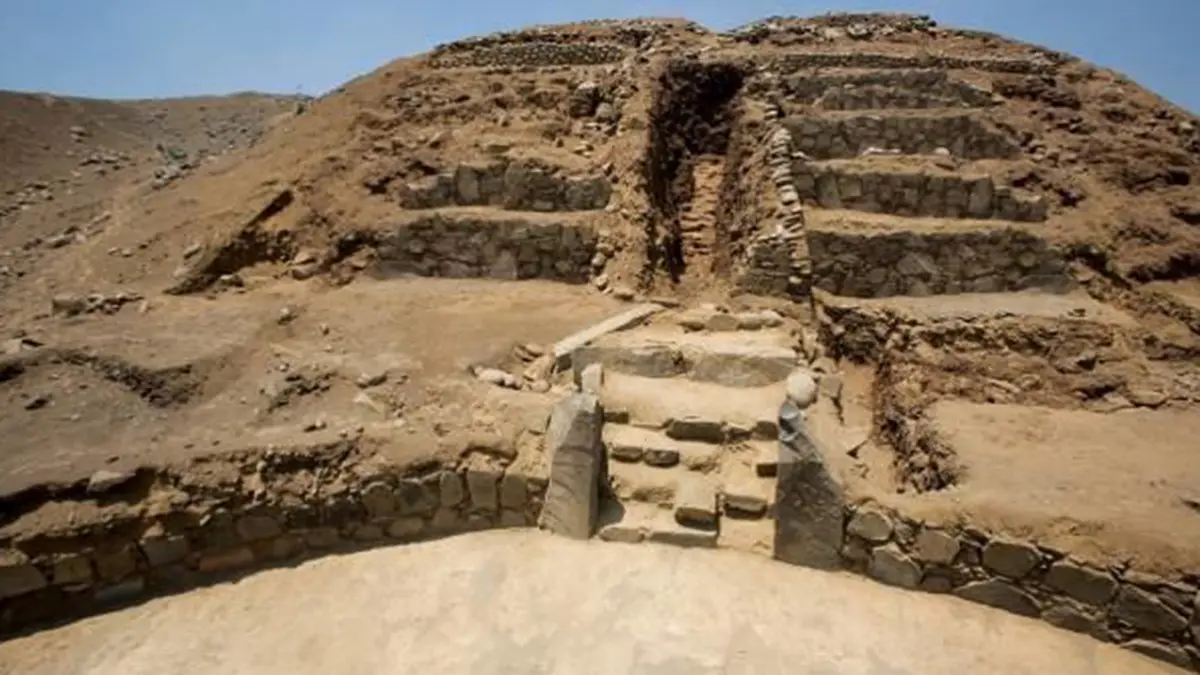
Archaeologists excavating the coastal site of Áspero in Peru reported finding a small structure that appears to have been used for observing the movement of the Sun and Moon. The discovery sheds light on how people of the Caral–Supe civilisation integrated science, ritual and daily life over 4,000 years ago.
Background
Áspero is a late pre‑ceramic archaeological site situated on the right bank of the Supe River, about 500 metres from the Pacific Ocean in Peru. It forms part of the Norte Chico or Caral–Supe civilisation, one of the earliest known civilisations in the Americas (c. 3000–1800 BC). The settlement functioned as a major fishing and trading centre for the inland city of Caral and contains monumental architecture such as platform mounds and sunken circular plazas. Archaeologists have identified at least 25 architectural complexes, including elite burials like the “Lady of the Four Tupus” and an “Elite Male”, indicating social stratification.
The newly discovered structure
- Location and layout: The structure lies in Sector J1 near larger pyramidal buildings. It commands clear views of the shoreline and lower Supe Valley.
- Construction phases: Excavations show multiple phases. Initially, the area appears to have been a public or ceremonial space. Later, a circular platform about three metres in diameter was added with a standing stone (huanca) at the centre—a feature often associated with ritual in the Andes. Subsequent modifications produced a double‑stepped platform with a broader lower tier and a smaller upper level, along with a rectangular stone and an adjacent hearth.
- Possible function: Researchers suggest that this arrangement allowed residents to track the horizon and the movement of celestial bodies. Observations of solar and lunar cycles would have helped them time fishing, agriculture and ceremonial events in an environment where tides and seasonal changes directly affected livelihoods.
- Later use: Eventually the structure was covered and reused for domestic purposes, indicating that its astronomical role had ended.
Significance
The find at Áspero illustrates that astronomical knowledge and ritual observance were central to the Caral–Supe civilisation. It reinforces evidence that early complex societies in the Americas carried out systematic sky observations long before the development of written calendars. The discovery also underscores how scientific and ceremonial practices were interwoven with daily activities in ancient Peru.
Sources: HD

