

Why in news?
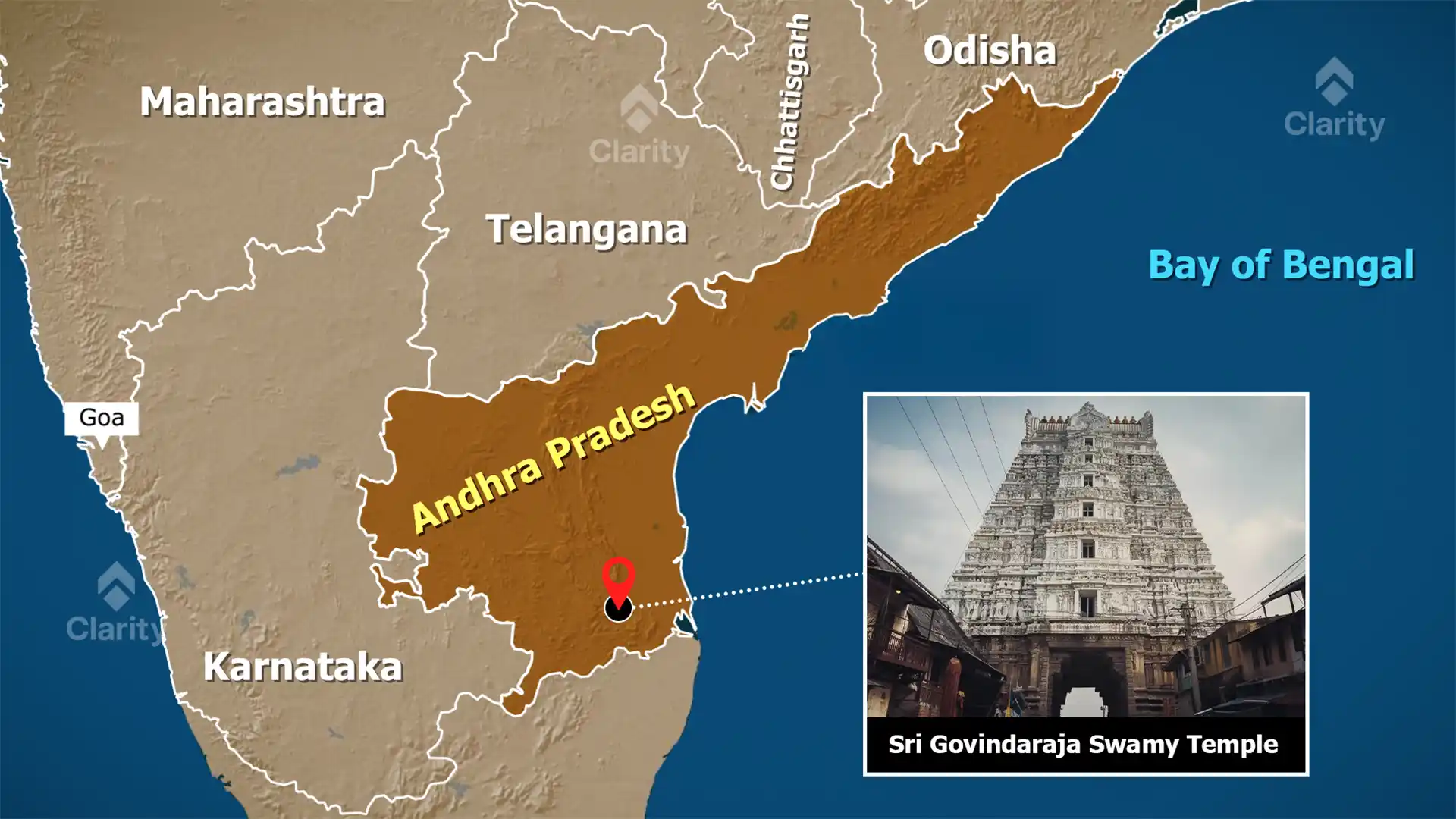
A man recently climbed the main gopuram (ornamental tower) of the Sri Govindaraja Swamy Temple in Tirupati while under the influence of alcohol, prompting police and temple officials to intervene and highlighting security concerns at the site.
Background
Located in the heart of Tirupati, Andhra Pradesh, this ancient Vaishnavite temple is dedicated to Lord Govindaraja, a reclining form of Vishnu accompanied by his consorts Sridevi and Bhudevi. The temple complex dates back to the 12th century, though earlier structures from the 9th–10th centuries exist. The great philosopher Ramanujacharya consecrated the main shrine in 1130 AD after, according to legend, he dreamt of building a temple to house an idol of Govindaraja Swamy rescued from Chidambaram during invasions.
Architecture and layout
- Dravidian and Vijayanagara styles: The temple blends Chola‑era Dravidian architecture with later Vijayanagara additions. The seven‑storied eastern rajagopuram, rising about 50 metres, is decorated with sculptures depicting scenes from the Ramayana.
- Two enclosures: The outer enclosure houses shrines for Pundarikavalli (a form of Lakshmi), the poet‑saints (Alvars) and other deities. The inner courtyard contains the main sanctum of Govindaraja, along with sub‑shrines for Krishna with his consort Andal, Kalyana Venkateswara and other avatars of Vishnu.
- Ceremonies: Rituals follow the Vaikhanasa Agama tradition. The temple opens at 5 a.m. and closes around 9 p.m., attracting thousands of devotees daily.
Devotees regard Govindaraja Swamy as the elder brother of Lord Venkateswara (Balaji) of Tirumala. The temple’s rich history and distinctive architecture make it a significant pilgrimage destination in southern India.
Source: The Hindu