Why in news?
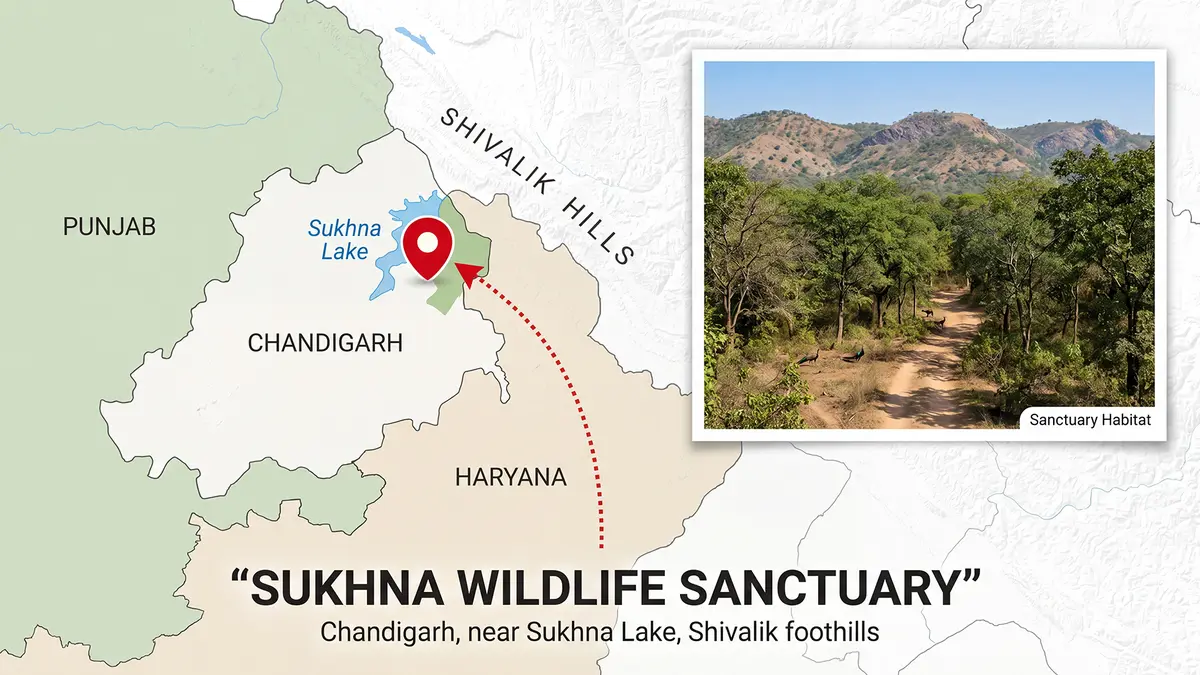
Camera‑trap surveys conducted in March 2026 confirmed a resident leopard population in the Sukhna Wildlife Sanctuary near Chandigarh. The finding highlights the success of decades‑long ecological restoration efforts in the Shivalik foothills and brings renewed attention to the sanctuary’s biodiversity.
Background
Sukhna Lake was formed in 1958 by damming the seasonal Sukhna Choe stream to provide water and recreation for Chandigarh. Soon after, heavy siltation from the catchment threatened the lake’s survival. In 1962 authorities acquired about 25.4 square kilometres of catchment area and launched soil‑conservation and afforestation projects. Terracing, gully plugging and planting hardy grasses such as Saccharum munja and tree species like Acacia, Shisham, Eucalyptus and Prosopis transformed the barren slopes into a forested landscape.
Ecological transformation
- The catchment area matured into a mixed deciduous forest with numerous ponds and was notified as the Sukhna Wildlife Sanctuary in 1998.
- According to the Chandigarh administration, the sanctuary supports mammals including sambar, spotted deer, barking deer, porcupine, pangolin, wild boar, jackal and now resident leopards. Reptiles such as python and monitor lizard and birds like peafowl, hornbills, kingfishers and waterfowl thrive here.
- The presence of apex predators signals a healthy prey base and indicates successful habitat restoration.
Significance
- The sanctuary’s revival demonstrates how long‑term ecological restoration can convert degraded hillsides into biodiverse forests.
- It provides a green lung for Chandigarh and opportunities for eco‑tourism and environmental education.
Source: Times of India · Chandigarh Administration