

Why in news?
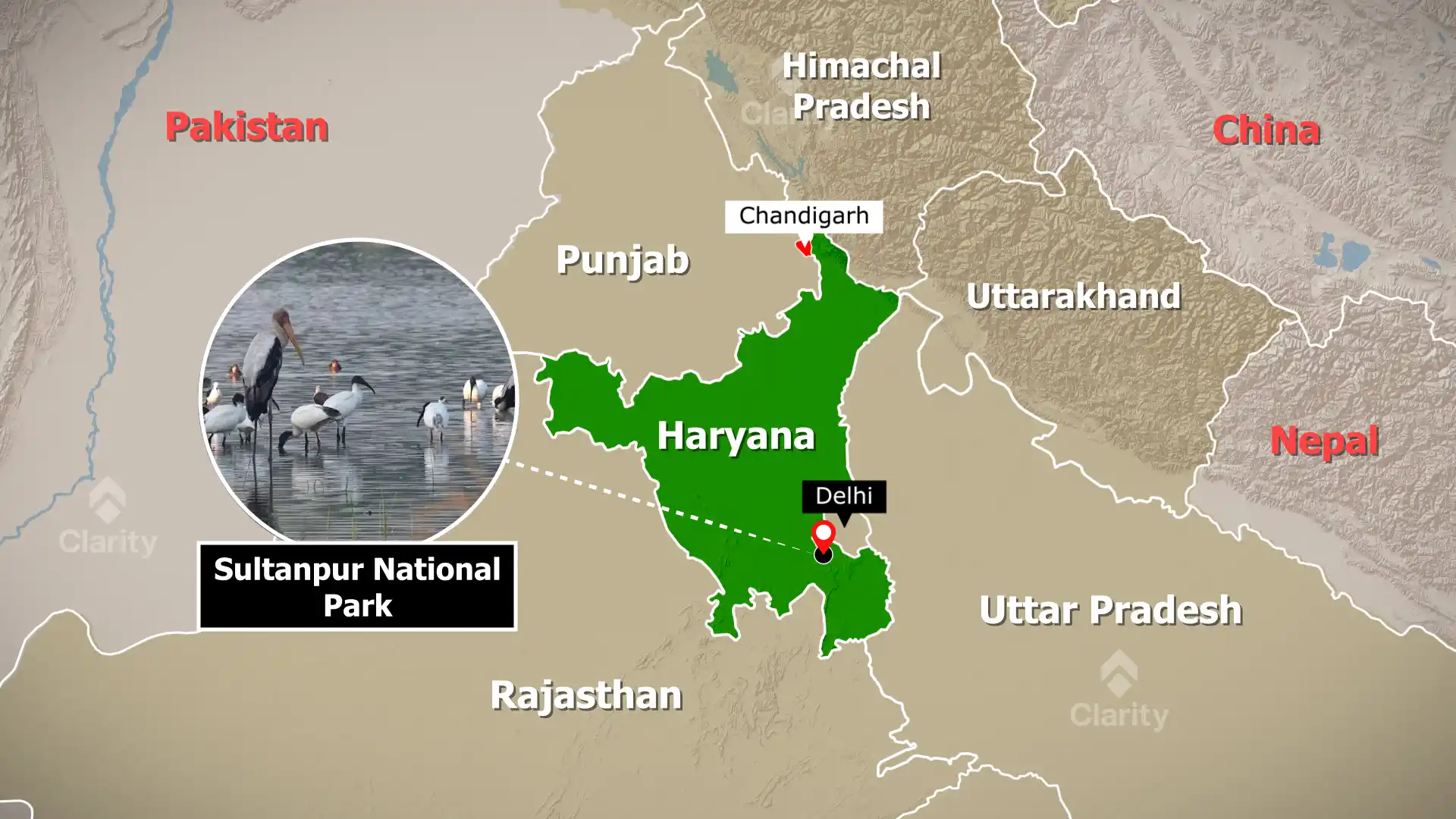
The Asian Waterbird Census of January 2025 reported a significant drop in migratory birds visiting Sultanpur National Park, Haryana. Only around 6,000 birds across 93 species were recorded, compared with 13,000 birds in 2024. Experts blamed delayed monsoon rains, late winter onset and wetland degradation for the decline.
Background
Sultanpur National Park, near Gurugram and about 50 km from Delhi, was originally a shallow lake known as Sultanpur Jheel. British ornithologist Peter Jackson and Prime Minister Indira Gandhi championed its protection, and it was notified as a bird sanctuary on 2 April 1971. The area was upgraded to a national park on 5 July 1991 under the Wildlife (Protection) Act. The park spans about 1.42 square kilometres and was declared a Ramsar wetland in 2021.
Ecology and wildlife
- Habitats: The park includes a central seasonal wetland surrounded by open grassland and scattered Acacia and eucalyptus groves. Water levels depend on monsoon rains and recycling of treated wastewater.
- Resident birds: Species such as the Indian spotted eagle, Sarus crane, purple heron, black-necked stork and kingfishers live here year‑round. Nesting colonies of egrets and cormorants dot the trees.
- Migratory visitors: From September to March the park hosts waterfowl like northern pintails, common teals, gadwalls, northern shovelers, bar‑headed geese, sandpipers and flamingos. These birds flee freezing conditions in Central Asia, Siberia and Europe and use Sultanpur as a winter refuge.
Challenges
- Erratic rainfall and rising temperatures reduce water availability, shrinking the wetland before migratory birds arrive.
- Rapid urbanisation around Gurugram increases pollution and encroachment. Treated wastewater diverted into the park sometimes contains nutrients that encourage invasive plants.
- Climate change may alter migration schedules, leaving birds mismatched with peak food supplies in wetlands.
Why it matters
- Sultanpur is one of the few protected wetlands near Delhi and supports over 250 bird species, making it vital for regional biodiversity and nature education.
- The decline in migratory birds signals wider ecological stress and underscores the need for better water management and conservation.
Sources: DG