

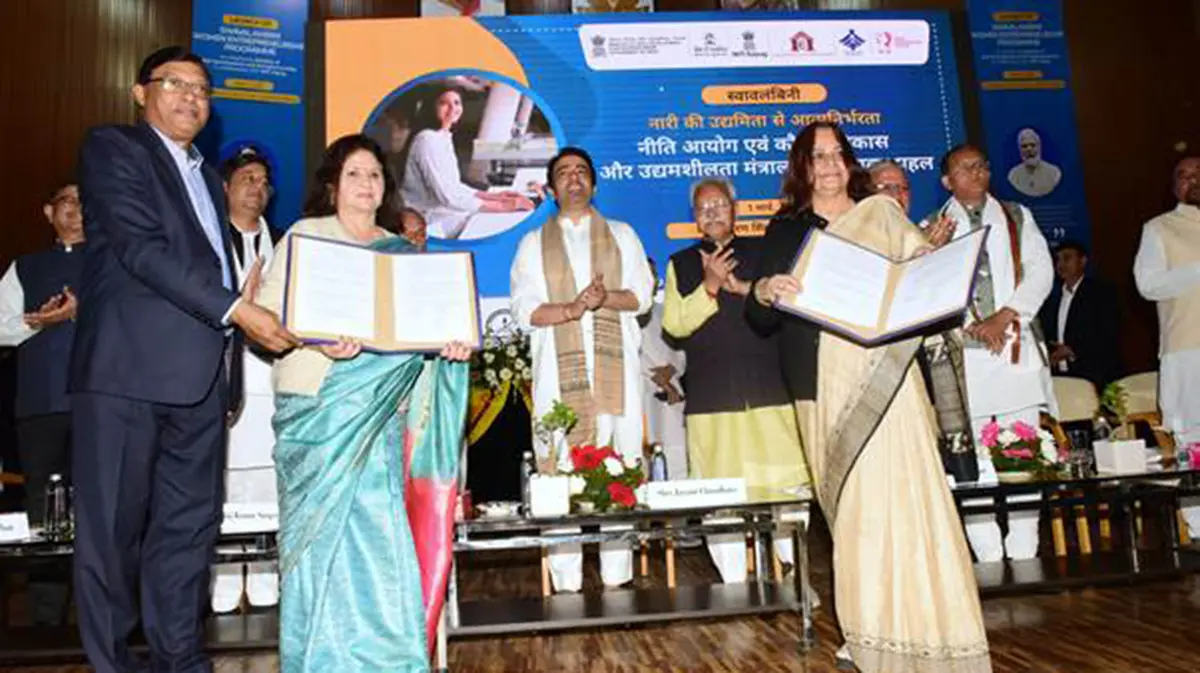
Why in news?
The Indian government’s new Swavalambini scheme has been launched to encourage entrepreneurship among young women. The pilot phase began in February 2025 across six universities, aiming to train over a thousand female students in business skills and provide mentorship and seed funding. Reports indicate that the programme has started to produce successful startups and entrepreneurial ventures.
Background
Swavalambini, meaning “self‑reliant women,” was conceived by the Ministry of Skill Development and Entrepreneurship in collaboration with NITI Aayog and leading educational institutions. It responds to low female participation in business ownership by creating a structured pathway from awareness to startup launch. The pilot covers 1,200 students for an Entrepreneurship Awareness Programme, 600 for a deeper Entrepreneurship Development Programme, and an intensive mentorship phase.
Programme structure
- Awareness: Short workshops introduce participants to entrepreneurial thinking, problem identification and idea generation.
- Training: Selected students undergo detailed training over several weeks in areas such as business planning, market research, financial management and regulatory requirements.
- Mentorship: Participants receive 21 weeks of one‑to‑one mentoring from industry experts to refine their ideas and prepare for launch.
- Faculty development: A parallel programme trains instructors from participating universities to support women entrepreneurs on campus.
- Funding support: Seed capital is provided for promising projects, and NITI Aayog helps connect startups with investors and incubators.
Why the scheme is important
- Closing the gender gap: Swavalambini aims to tackle social and economic barriers that prevent women from starting businesses, thereby improving female labour‑force participation.
- Building entrepreneurial ecosystems: By embedding entrepreneurship programmes in universities, the scheme creates local hubs where ideas can be nurtured and supported.
- Inspiring role models: Successful graduates can inspire younger students and communities, demonstrating that women can innovate and lead enterprises.
Conclusion
The Swavalambini scheme represents a comprehensive approach to women’s entrepreneurship. Through structured training, mentorship and funding, it empowers young women to turn ideas into viable businesses and contributes to inclusive economic growth.
Source: PIB