

Why in news?
The Tadoba Andhari Tiger Reserve (TATR) in Maharashtra has launched a large‑scale sterilisation and vaccination programme for stray dogs living in and around its buffer zones. Increasing numbers of dogs were attacking deer, hares and birds and spreading diseases such as rabies and distemper to wildlife.
Background
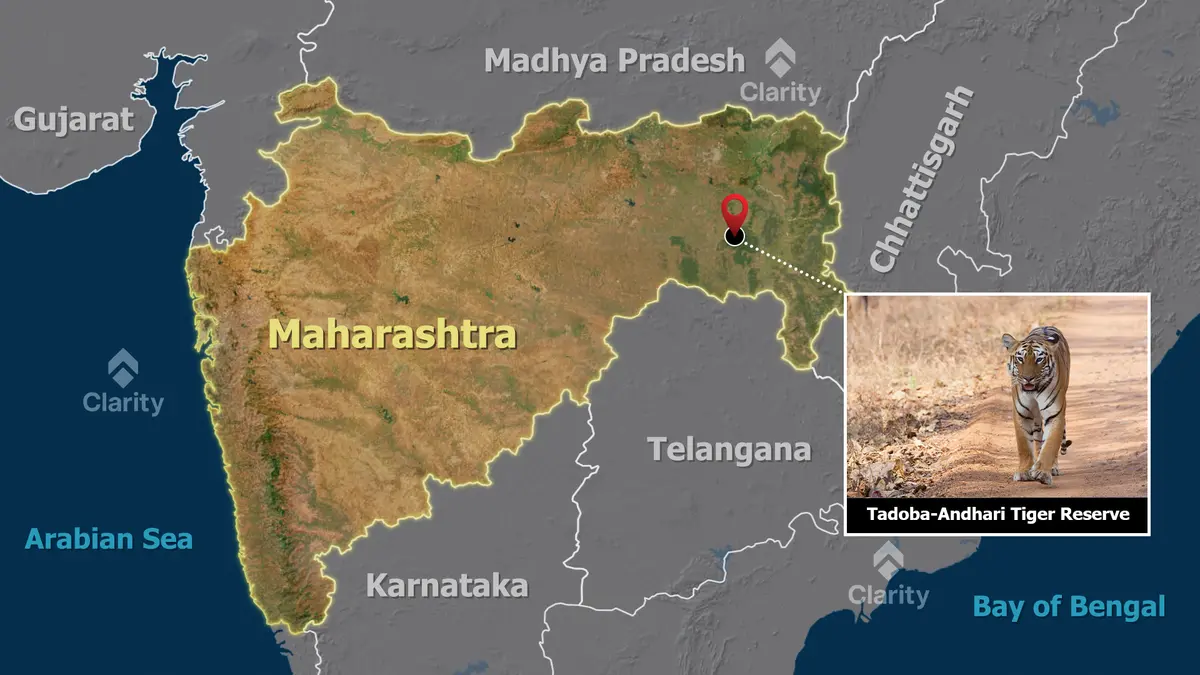
Located in Chandrapur district, TATR is Maharashtra’s oldest and largest tiger reserve. Established in 1955, it covers around 1,727 sq km and comprises the Tadoba National Park and Andhari Wildlife Sanctuary. The reserve’s name comes from the local deity “Tadoba” (or Taru) and the Andhari River that flows through its forests. Its hilly topography (200–350 m elevation), two large lakes (Tadoba and Kolsa) and dry deciduous forests create a rich habitat for wildlife.
Ecological features
- Vegetation: The reserve lies in the Central Plateau of the Deccan Peninsula and supports teak‑dominated dry deciduous forests interspersed with crocodile bark, salai, tendu, karaya gum and mahua trees.
- Fauna: Besides tigers, TATR shelters Indian leopards, sloth bears, Indian gaur (bison), dholes (wild dogs), striped hyenas, marsh crocodiles and deer species such as sambar, chital and barking deer. More than 250 species of birds—including crested serpent eagles, grey‑headed fish eagles, paradise flycatchers and hornbills—make it a bird‑watcher’s paradise.
- Corridors: The reserve has ecological linkages with the Nagzira–Navegaon and Pench tiger reserves within the state, allowing genetic exchange among tiger populations.
Stray dog programme
- Need for action: Attacks by feral dogs led to deaths of deer, hares, peafowl and other small fauna. Some wild animals were found infected with rabies and canine distemper.
- Partnerships: The sterilisation and vaccination drive is jointly carried out by TATR authorities, People For Animals (Wardha) and the wildlife NGO Wild CER.
- Humane approach: Pregnant or lactating females, very young pups, elderly and seriously ill dogs are exempted from surgery. After surgery and recovery, dogs are released back to their original locations.
- Progress: Since January 2025 more than 1,889 dogs have been sterilised by People For Animals and another 382 by Wild CER. Officials aim to cover all stray dogs in the buffer area—home to 95 villages—by March 2026.
Significance
- Wildlife protection: Controlling stray dog populations reduces predation on wild herbivores and prevents disease transmission.
- Human health: Vaccinating dogs against rabies protects people living in the buffer villages from dog bites and zoonotic diseases.
- Model for other reserves: The programme demonstrates how collaboration with NGOs and humane animal management can protect wildlife without resorting to culling.
Source: The Week