Why in news?
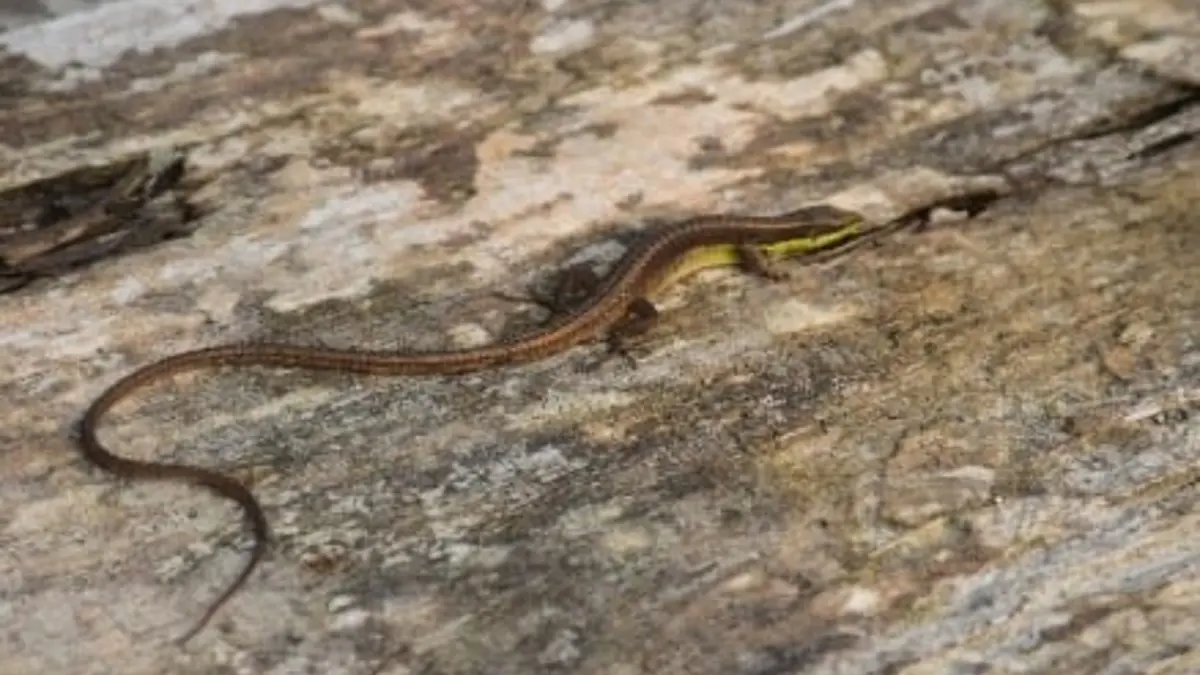
Scientists have described a new species of Asian grass lizard, Takydromus ultapanensis, from the Ultapani Reserve Forest within Assam’s Manas Biosphere landscape. The discovery adds to the growing list of reptile species found in the biodiversity‑rich northeastern region.
Background
The genus Takydromus comprises slender, fast‑moving lizards that typically inhabit grassy and scrubby habitats across Asia. Unlike many congeners that prefer montane or subtropical environments, T. ultapanensis lives in lowland semi‑evergreen forests interspersed with waterlogged grasslands and fern patches. Researchers from Sikkim University and collaborating institutions combined morphological comparisons with modern genetic sequencing to confirm that the lizard is distinct from its closest relatives.
Key characteristics
- Habitat: The species is so far known only from the Ultapani Reserve Forest in Kokrajhar district. Researchers observed individuals basking on fern bushes in small clearings criss‑crossed by seasonal water channels.
- Morphological differences: The new species differs from its northeastern Indian relatives, such as T. khasiensis and T. sikkimensis, in the pattern of its scales, body proportions and distinctive head features.
- Genetic uniqueness: DNA analysis revealed significant genetic divergence from other Indian and Southeast Asian Takydromus species, confirming that it represents a distinct evolutionary lineage.
Conservation significance
- Localised distribution: T. ultapanensis is currently known from a single forest range, making its survival vulnerable to habitat disturbance. Protecting the semi‑evergreen forest and grassland mosaic of Ultapani is essential.
- Biodiversity insights: The discovery raises the number of Takydromus species reported from northeast India to five and highlights the role of physical barriers like the Brahmaputra river in driving speciation. Continued surveys may reveal additional hidden species.
Conclusion
The identification of T. ultapanensis underscores the richness of India’s northeastern landscapes and the importance of conserving lesser‑known species. Targeted habitat protection and further research will be critical to understanding and preserving this unique lizard.
Source: NorthEast Now