

Why in news?
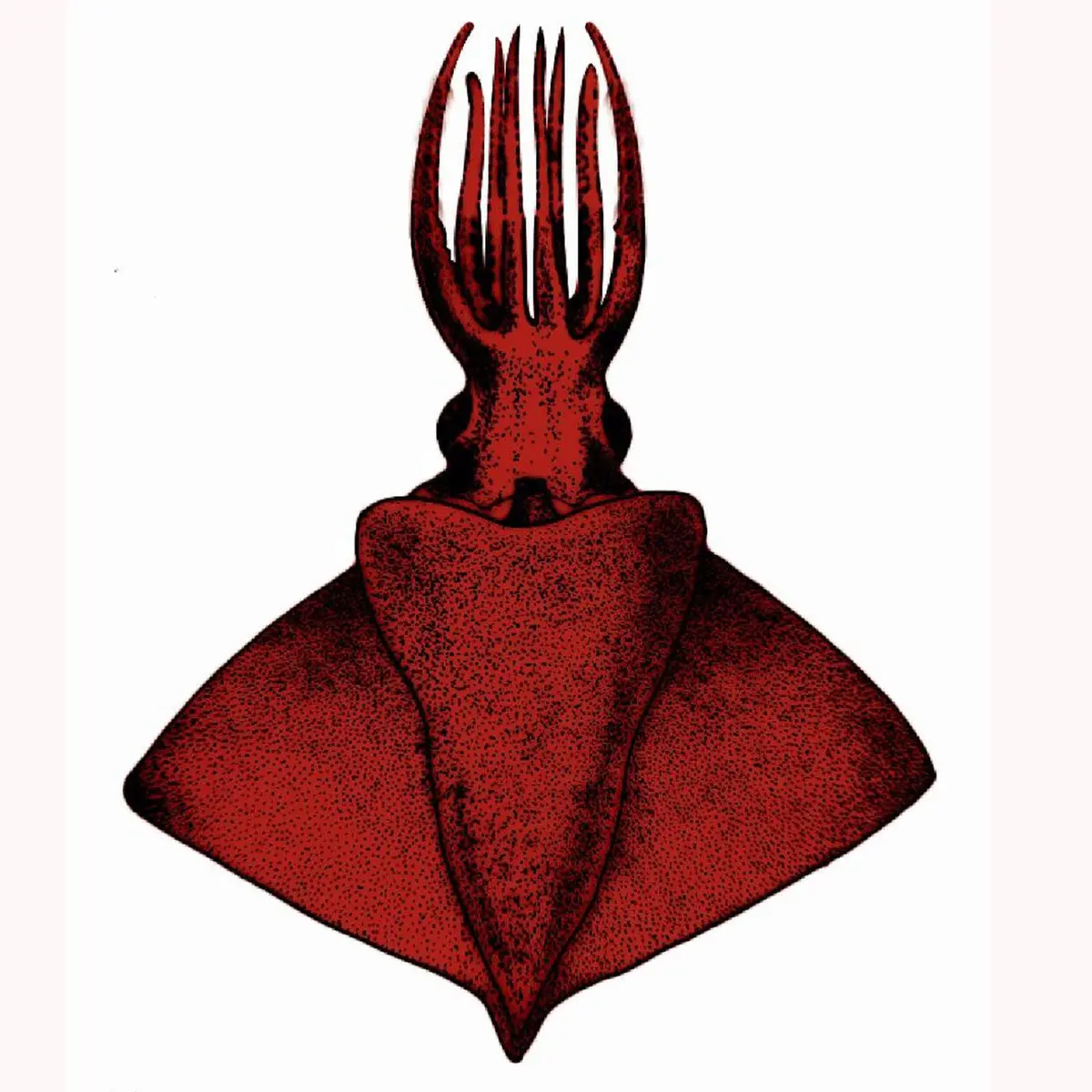
Indian marine biologists recently reported the discovery of a new species of deep‑sea squid in the Arabian Sea. The specimen was collected at a depth of roughly 390 m off the Kollam coast in Kerala and belongs to the genus Taningia, until now represented by a single known species. DNA bar‑coding showed more than 11 % genetic divergence from its Atlantic relative, confirming that this is a separate species. The researchers have named the species Taningia silasii to honour the late marine scientist E G Silas.
Background
Taningia is a genus of large deep‑sea squid in the family Octopoteuthidae. Before this finding only Taningia danae, found in the Atlantic and Pacific oceans, was recognised. These squids live in the mesopelagic zone, hundreds of metres below the surface, and are known for the luminous organs at the tips of their arms. The Indian specimen marks the first record of this genus from Indian waters.
Key observations from the discovery
- The female specimen measured about 45 cm long and weighed nearly 2.8 kg. It lacked long tentacles, having eight muscular arms equipped with hook‑like suckers for gripping prey. Photophores at the arm tips are thought to flash light to startle or attract prey.
- The mantle was robust and muscular, and the fins were short and diamond‑shaped. Mature eggs in the ovary measured 12–14 mm, suggesting reproductive maturity.
- Morphological differences in beak shape, sucker arrangement and fin proportions, together with genetic analysis, distinguished the specimen from T. danae. Scientists reported more than 11 % divergence in mitochondrial genes compared with its Atlantic cousin.
- Because it is only the second species in the genus, the discovery widens our understanding of deep‑sea cephalopod diversity and highlights the rich but little‑studied marine life of the Indian Ocean.
Significance
- Deep‑sea biodiversity: The find emphasises the need for systematic exploration of India’s deep‑sea habitats. Many species may exist undetected in the mesopelagic zone, and documenting them is vital for conservation.
- Scientific naming: By naming the species after E G Silas, the researchers paid tribute to a pioneer of Indian marine science. Such names help preserve scientific heritage.
- Insights into evolution: The high genetic divergence between T. silasii and T. danae suggests ancient separation of populations across oceans. Studying their adaptations may illuminate how life evolves in deep‑sea environments.