

Why in news?
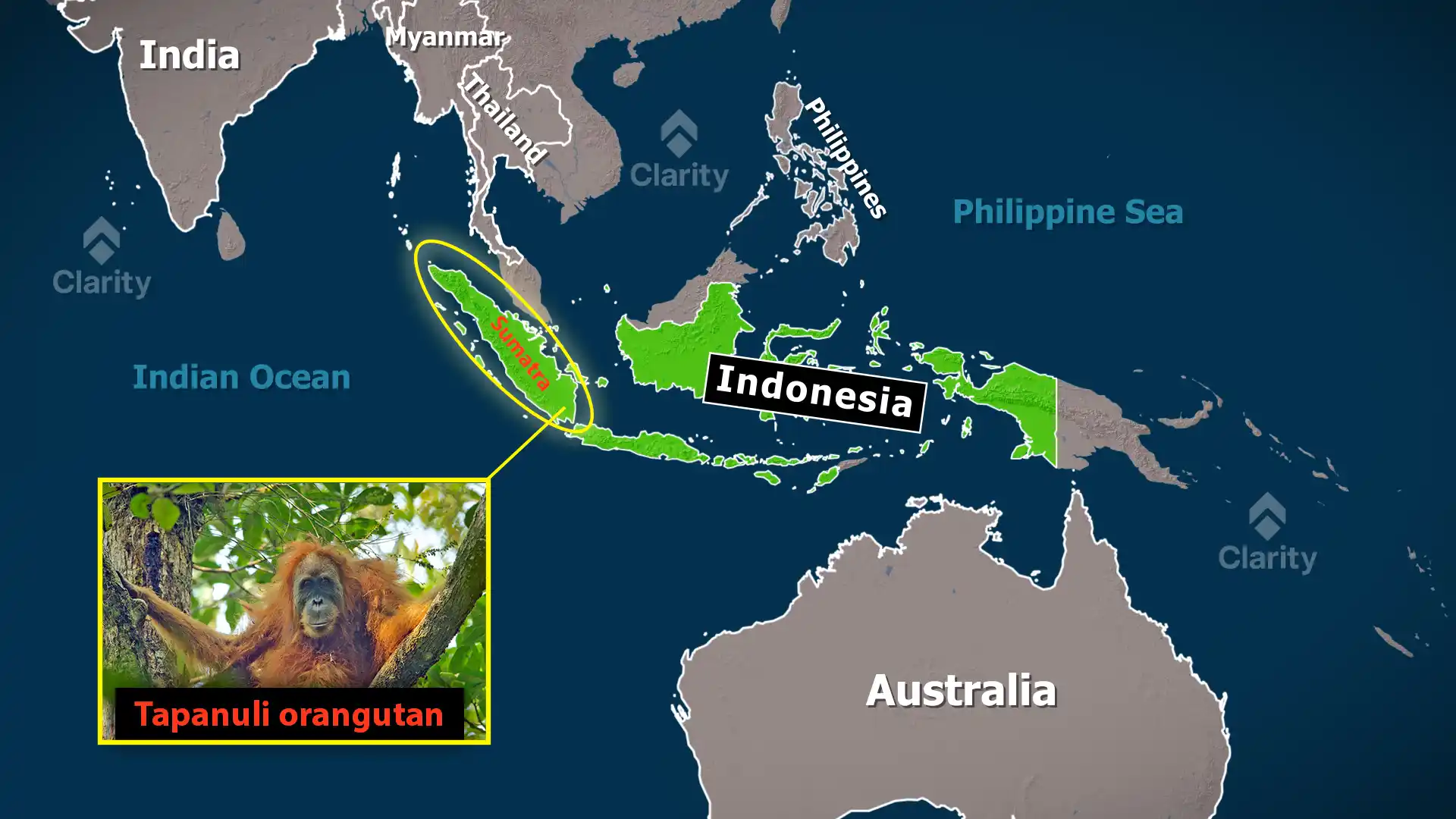
Scientists have warned that Cyclone Senyar, which struck Sumatra recently, may have washed away a significant number of the Tapanuli orangutans. With fewer than eight hundred individuals remaining, any loss could push this great ape closer to extinction. Conservation groups are calling for urgent measures to assess the damage and protect surviving populations.
Background
The Tapanuli orangutan (Pongo tapanuliensis) is one of only three orangutan species in the world. It was formally recognised in 2017 when genetic and physical differences were discovered between orangutans south of Lake Toba in Sumatra and their northern Sumatran and Bornean cousins. This species inhabits the rugged Batang Toru forests of North Sumatra in Indonesia.
Tapanuli orangutans are distinguished by their frizzier fur, smaller skull and moustache‑like beard. Males have flattened cheek pads covered in fine hair and emit long calls that can travel several kilometres through the forest. They spend most of their lives high in trees, using strong arms and feet to move from branch to branch. These apes feed mainly on fruit, leaves and insects and are known to eat certain caterpillars and pinecones that other orangutans ignore.
Current situation
- Tiny population: Less than 800 Tapanuli orangutans are left in the wild. This small number makes the species extremely vulnerable to disease, hunting and habitat loss. Scientists say that even a 1 percent increase in adult mortality can lead to extinction.
- Impact of Cyclone Senyar: In December 2025, Cyclone Senyar caused severe flooding and landslides in the Batang Toru region. Conservationists estimate that between 6 and 11 percent of the population may have been killed or swept away. Destruction of fruit trees and nesting sites further threatens their survival.
- Habitat destruction: The Batang Toru forests are already under pressure from mining, hydroelectric projects and agriculture. The cyclone has compounded these threats, turning what was already a precarious situation into an emergency.
Why they matter
- Unique lineage: Genetic studies suggest that Tapanuli orangutans separated from other orangutan populations around three million years ago. Protecting them preserves a distinct branch of the ape family tree.
- Ecological role: As seed dispersers, these great apes maintain forest diversity. Their disappearance would alter the structure and regeneration of the Batang Toru ecosystem.
- Indicator of health: The presence of orangutans often indicates a healthy rainforest. Saving this species could also safeguard countless other plants and animals that share their habitat.
Conservation efforts
Conservation groups are urging the Indonesian government to assess cyclone damage and halt development projects in critical habitats. Protecting the Batang Toru forests, restoring degraded areas and enforcing anti‑poaching laws are vital steps. Community awareness and sustainable livelihoods for local people can also reduce human–wildlife conflict.
Conclusion
The plight of the Tapanuli orangutan is a reminder that rare species can vanish quickly when disasters strike. By taking swift action, Indonesia and the global community can ensure that this little‑known ape survives for future generations.
Source: Down To Earth