

Why in News?
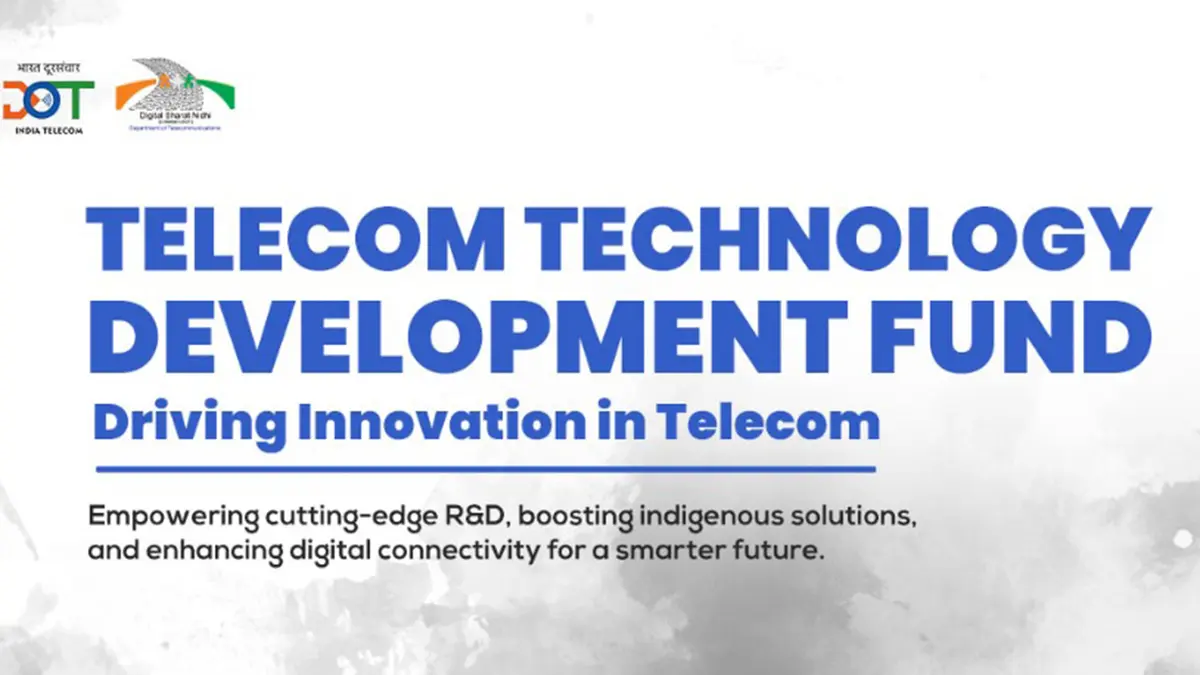
On 18 December 2025 the Minister of State for Communications and Rural Development informed the Rajya Sabha that 136 projects worth ₹542.22 crore have been approved under the Telecom Technology Development Fund (TTDF) scheme for various IITs, NITs, MSMEs, start‑ups and research institutions. The update underscored the government’s efforts to bridge the digital divide through indigenous research and development.
Background
The TTDF scheme was launched on 1 October 2022 by the Department of Telecommunications (DoT). It is funded through the Digital Bharat Nidhi (earlier known as the Universal Service Obligation Fund). Five per cent of the fund’s annual collections are earmarked for research and development in telecommunications. The scheme provides milestone‑based financial assistance to domestic companies, start‑ups, MSMEs, academic institutions and research organisations engaged in developing telecommunication products, solutions and use cases for rural and remote areas.
Objectives
- Technology ownership and Atmanirbhar Bharat: Promote indigenous design and manufacturing of telecom equipment to reduce dependence on imports and open export opportunities.
- Next‑generation technologies: Encourage research and prototyping in areas such as 5G, 6G, satellite communication, Internet of Things (IoT), optical communications, quantum communications and open radio‑access networks (RAN).
- Co‑creation and innovation culture: Foster collaboration among academia, start‑ups, MSMEs and established industry players to accelerate product development from prototype to commercial stage.
- Rural applications: Develop rural‑specific communication technologies and applications for sectors such as education, agriculture, health and water management.
- Bridge R&D and commercialisation: Provide funding and mentoring to ensure that promising technologies reach the market and are deployed in USOF‑funded projects.
Eligibility and Funding Mechanism
- Eligible applicants: Domestic companies (including Section 8 companies), start‑ups, MSMEs, academic institutions and research organisations can apply individually or as part of a consortium. Projects at pilot stage must have a minimum Technology Readiness Level (TRL) of 7.
- Funding conditions: Grants are milestone‑based. Expenditures on land and buildings are not eligible. Companies receiving grants must retain their domestic ownership for at least two years after project completion; if a foreign entity acquires a majority stake within this period, it must repay twice the grant amount.
- Intellectual property: Applicants retain ownership of intellectual property generated; however, the scheme encourages sharing know‑how and licensing at affordable rates to promote widespread adoption.
Recent Progress
- Project approvals: By 10 December 2025, 136 projects worth ₹542.22 crore had been sanctioned. These projects span 5G and 6G technologies, IoT devices, optical and satellite communications, quantum networks, indigenous core networks and open RAN.
- 6G test bed: A notable project under the scheme is the establishment of a 6G test bed at the Society for Applied Microwave Electronics Engineering & Research (SAMEER) in Kolkata, in collaboration with IIT Madras, IIT Guwahati and IIT Patna. The consortium has already developed an indigenous prototype.
- Outputs: By the end of 2026, beneficiaries had filed 26 patents, contributed to 36 standards and published 48 research papers and conference articles under the scheme.
Significance
- Bridging the digital divide: By targeting rural and remote areas, the scheme aims to make high‑quality telecom services accessible and affordable for all citizens.
- Indigenous innovation: The fund supports home‑grown companies and research institutions, contributing to national self‑reliance in critical technologies.
- Collaboration: A consortium model enables academia, industry and start‑ups to pool expertise, accelerating innovation and facilitating the commercialisation of research.
- Global competitiveness: Participation in developing 5G and 6G technologies positions India to contribute to international standards and compete in future communications markets.