

Why in news?
The Ho Samaj Yuva Mahasabha, a youth organisation representing the Ho tribe, called on tribal communities to observe 1–2 January 2026 as a ‘Black Day’ instead of organising picnics. They urged people to remember martyrs who resisted British oppression and colonial land seizures.
Background
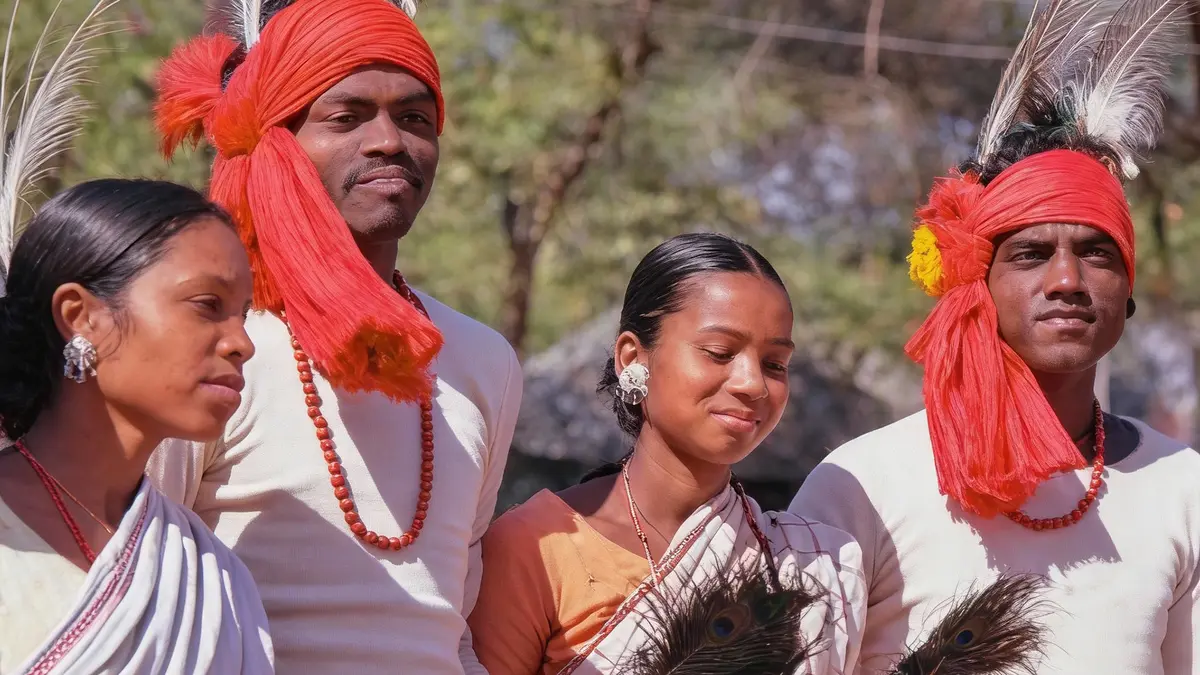
The Ho are one of India’s major Austroasiatic tribes. Their name means “human” or “folk” in their own language, which belongs to the Munda branch of the Austroasiatic family. Most Ho people live in the Kolhan region of Jharkhand—West Singhbhum, East Singhbhum and Seraikela‑Kharsawan districts— with smaller communities in northern Odisha, West Bengal and Bihar. They speak the Ho language, written in the unique Warang Citi script.
Cultural and social features
- Livelihood: Traditionally the Ho cultivate rice, millets and vegetables on terraced fields. Many also practice forestry and work in mines and factories.
- Religion: The majority follow Sarna or Sari Dharma, worshipping village spirits and ancestors under sacred groves. Some have adopted Hinduism or Christianity.
- Music and dance: Dances like Jadua, Mundari and Chhau are performed to the beat of drums (dama) and flutes (rutu), especially during harvest festivals.
- Governance: A traditional Manki–Munda system governs villages. The Munda is the village headman and the Manki presides over a group of villages. They resolve disputes and manage community resources.
Why a ‘Black Day’?
The Ho Samaj Yuva Mahasabha argues that New Year picnics distract from the sacrifices of tribal ancestors who fought against British rule and subsequent land alienation. By observing a Black Day, they aim to commemorate those martyrs and raise awareness of ongoing challenges such as land rights, displacement and cultural preservation.
Source: Hindustan Times