

Why in news?
The United States’ 2025 National Security Strategy, released under President Donald Trump, calls for a revival of the Monroe Doctrine. This policy reasserts U.S. primacy in the Western Hemisphere by warning external powers against interference in Latin America. The declaration has reignited debate about sovereignty, regional autonomy and U.S. foreign policy.
Background
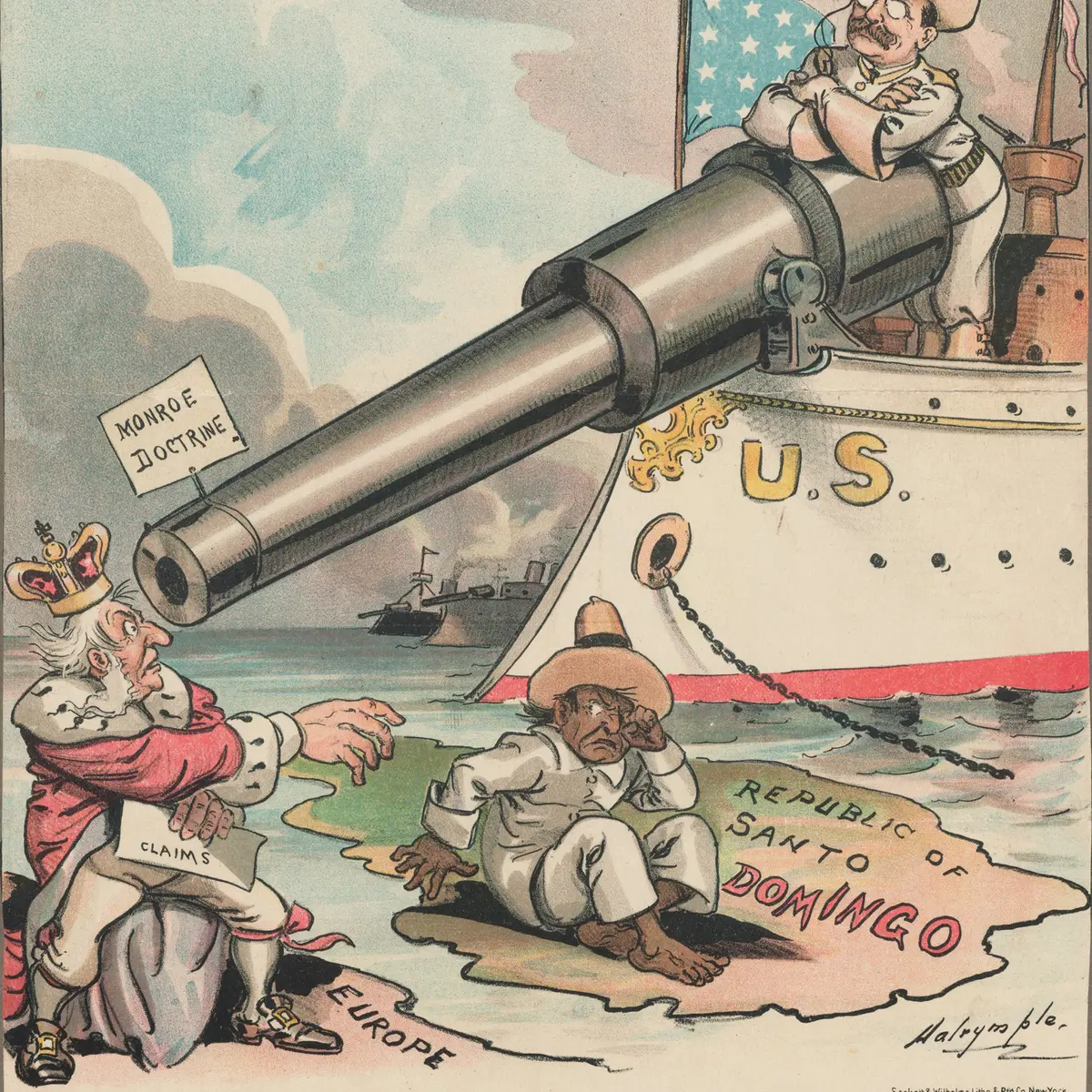
The Monroe Doctrine dates back to 2 December 1823, when U.S. President James Monroe told Congress that the Americas were no longer open to European colonisation. It rested on three pillars: separate spheres for the Americas and Europe, a ban on further colonisation in the Western Hemisphere, and non‑intervention in the internal affairs of newly independent nations. At the time, Spain’s former colonies in Latin America were gaining independence, and the United States sought to prevent European monarchies from reasserting control. Although the doctrine promised that the U.S. would not meddle in European affairs, it implicitly positioned Washington as a guardian of the hemisphere. Later presidents expanded its scope; Theodore Roosevelt’s 1904 corollary claimed a U.S. right to intervene in Latin American countries to forestall European intervention.
Key points of the 2025 strategy
- Flexible realism: The document describes a pragmatic approach to maintaining U.S. interests while building partnerships with like‑minded democracies.
- Reassertion of hemispheric dominance: It declares that the Western Hemisphere is within the U.S. sphere of influence, warning rival powers against deploying military or economic influence there.
- Military preparedness: The strategy proposes strengthening U.S. naval and air capabilities in the Caribbean and Pacific to deter adversaries. It also emphasises the Indo‑Pacific region as a secondary theatre where allies will share the burden.
- Trump Corollary: A new interpretation states that the U.S. will support democracies in the Americas by economic and diplomatic means while reserving the right to act unilaterally if regional stability is threatened.
Implications
- Response from Latin America: Many governments in the region view the doctrine as paternalistic and advocate greater autonomy. They fear that U.S. intervention may undermine sovereignty and hinder regional cooperation.
- Geopolitical tensions: Rival powers such as China and Russia have invested heavily in Latin America’s infrastructure and natural resources. The renewed doctrine aims to curtail such involvement, which could increase tensions.
- Historical baggage: Previous enforcement of the doctrine led to numerous U.S. interventions, including in Panama, Nicaragua and Cuba. Critics argue that reviving it resurrects an outdated worldview and may damage U.S. credibility.
Conclusion: The Monroe Doctrine once shielded newly independent nations from European colonisers but also justified U.S. hegemony. Its 21st century revival underlines shifting global power dynamics and raises questions about regional sovereignty. As Latin America seeks greater self‑reliance, any application of the doctrine will require careful diplomacy to avoid repeating past mistakes.
Source: THE PRINT