

Why in news?
Scientists from Kyoto University reported in March 2025 that they had developed a universal criterion to explain the Mpemba effect using principles of statistical mechanics. The phenomenon – in which hot water freezes faster than cold water under certain conditions – has puzzled scientists for centuries. The new work suggests the effect arises from differences in how systems relax to equilibrium and is not limited to water.
Background
The Mpemba effect is named after Tanzanian schoolboy Erasto Mpemba, who in 1963 noticed that hot ice‑cream mix froze faster than a cooler mixture. Reports of hot water freezing sooner than cold date back to ancient times – Aristotle mentioned a similar observation in his writings. Over the years, researchers have proposed explanations such as evaporation (reducing the volume of hot water), convection currents, dissolved gases and the formation of different hydrogen‑bond networks in warm water. However, experimental results have been inconsistent because the effect depends sensitively on container shape, cooling conditions and measurement methods.
Recent insights
- Thermomajorisation: Researchers applied a mathematical tool known as thermomajorisation to show that the Mpemba effect occurs when a system’s relaxation trajectory crosses that of a colder system for certain measures of distance from equilibrium. This criterion provides a general condition for the effect in both classical and quantum systems.
- Universality: The study demonstrates that the effect is not unique to water – similar behaviour was found in simulations of other liquids and even in simple statistical models. The effect depends on how energy is redistributed during cooling.
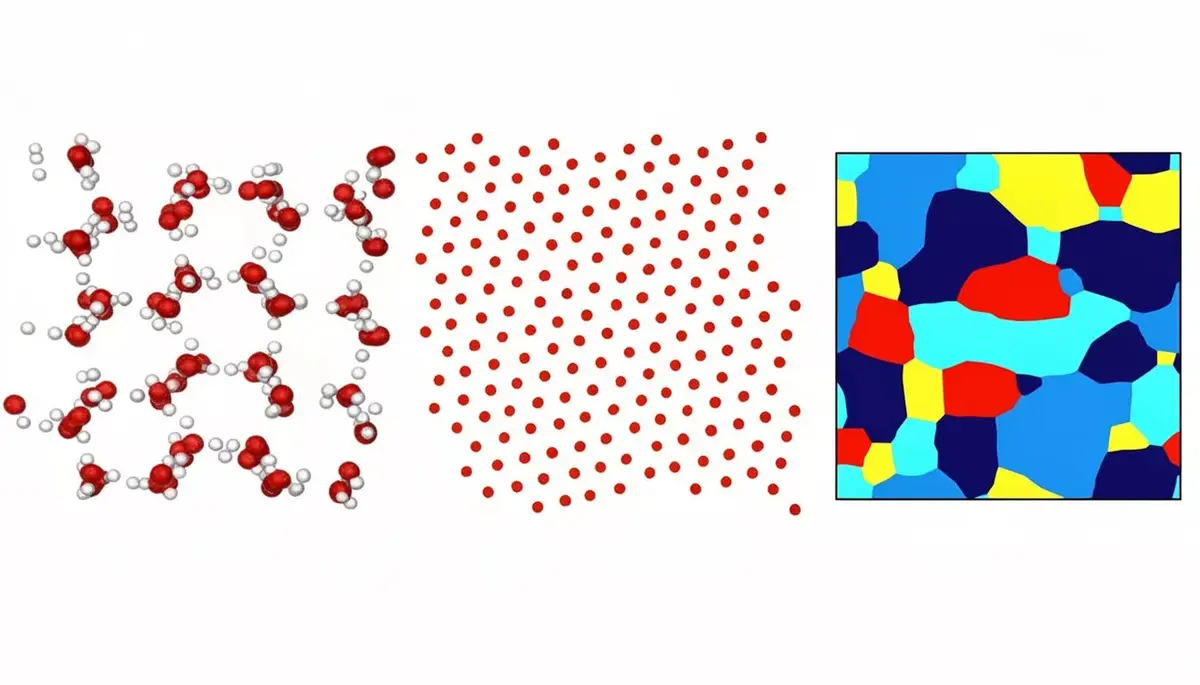
- Molecular explanation: Earlier computational studies suggested that hot water contains fewer but stronger hydrogen bonds than cold water. These stronger clusters can rearrange quickly into an ice lattice, contributing to faster freezing.
Significance
- Fundamental physics: Understanding anomalous cooling helps refine thermodynamic theory and may reveal new insights into non‑equilibrium processes.
- Practical applications: Insights from the Mpemba effect could inform the design of heat engines, refrigeration systems and even quantum computers where rapid cooling is desirable.
- Scientific curiosity: The phenomenon reminds students that seemingly simple processes can have surprising outcomes and that questioning everyday observations often leads to deeper science.
Sources: PIB