

Why in news?
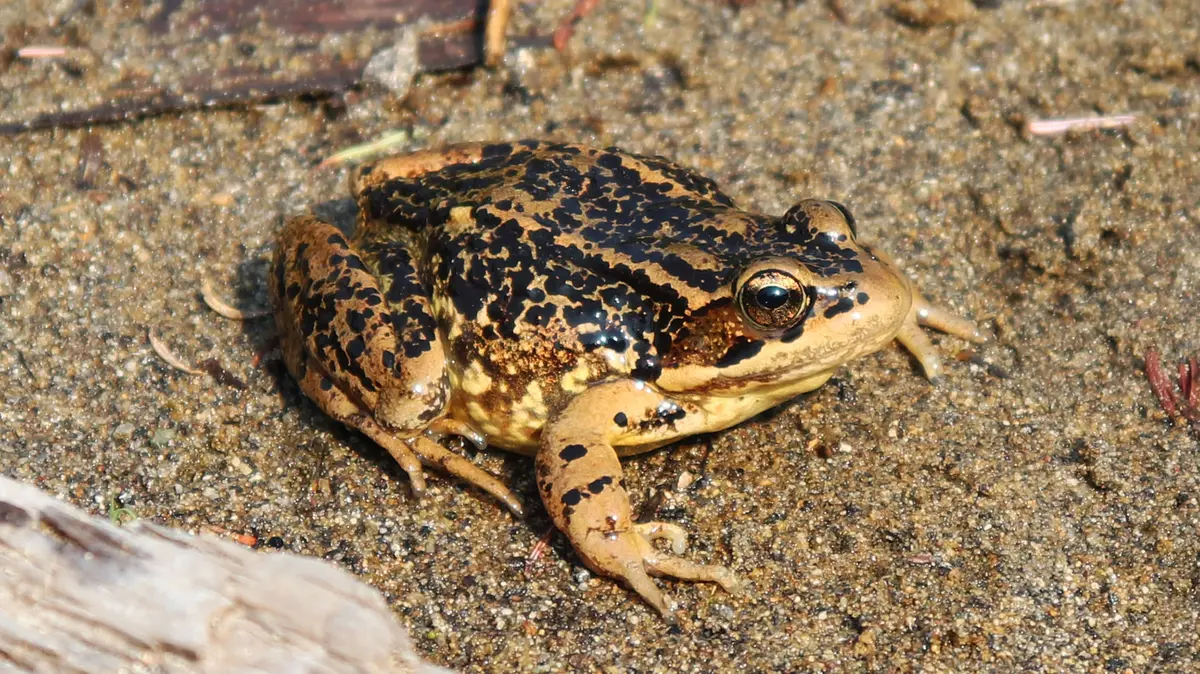
A major taxonomic study described three Indian cascade frogs. It also revised the wider classification and distribution of the genus Amolops.
The new species
The study named Amolops ammachi, Amolops bella and Amolops sendenyu. It appeared in the Bulletin of the Museum of Comparative Zoology.
Researchers combined physical examination with molecular evidence. They analysed mitochondrial and nuclear genetic markers across extensive Indian sampling.
The revision also reported five species in India for the first time. Five existing names were placed in synonymy after comparison.
Six additional lineages remain unnamed candidates. Their status requires more material or evidence before formal description.
What are cascade frogs?
Amolops belongs to the true-frog family Ranidae. Its members are closely associated with fast mountain streams and cascades.
These habitats occur across Asian mountain systems, including the Himalaya and Northeast India. Political borders divide landscapes that remain ecologically connected.
Strong currents create specialised conditions for breeding and attachment. Stream temperature, forest cover and water quality can therefore shape distribution.
Why taxonomy changes
New evidence can split hidden species or combine duplicate names. Revision is scientific correction, not inconsistency.
Evolutionary findings
The authors estimated that the group began diversifying about 31.5 million years ago. Such dates are model-based estimates with uncertainty.
Their reconstruction supported east-to-west colonisation across Asian mountains. Himalayan uplift likely influenced available habitats and dispersal routes.
Classification matters for conservation. A widespread name may conceal several narrow-range species with very different risks.
Stream frogs can respond quickly to altered flow or pollution. Roads, dams and forest loss may fragment their already linear habitat.
Future surveys need comparable genetic and field methods. This would distinguish genuine absence from limited sampling in difficult terrain.
Formal names should be tied to designated type specimens. These permanent references help resolve later disagreement over identification.
Distribution maps must protect sensitive localities where collection could become a threat. Scientific openness sometimes needs carefully limited precision.
Long-term monitoring should include larvae and breeding calls. Adult-only surveys can miss important changes in reproduction.
Names guide protection
Accurate species boundaries reveal where diversity is concentrated. They also prevent conservation plans from treating unlike populations as one.
Conclusion
The revision expands knowledge while exposing major gaps. Protecting mountain streams will support both known and undiscovered amphibians.