

Why in News?
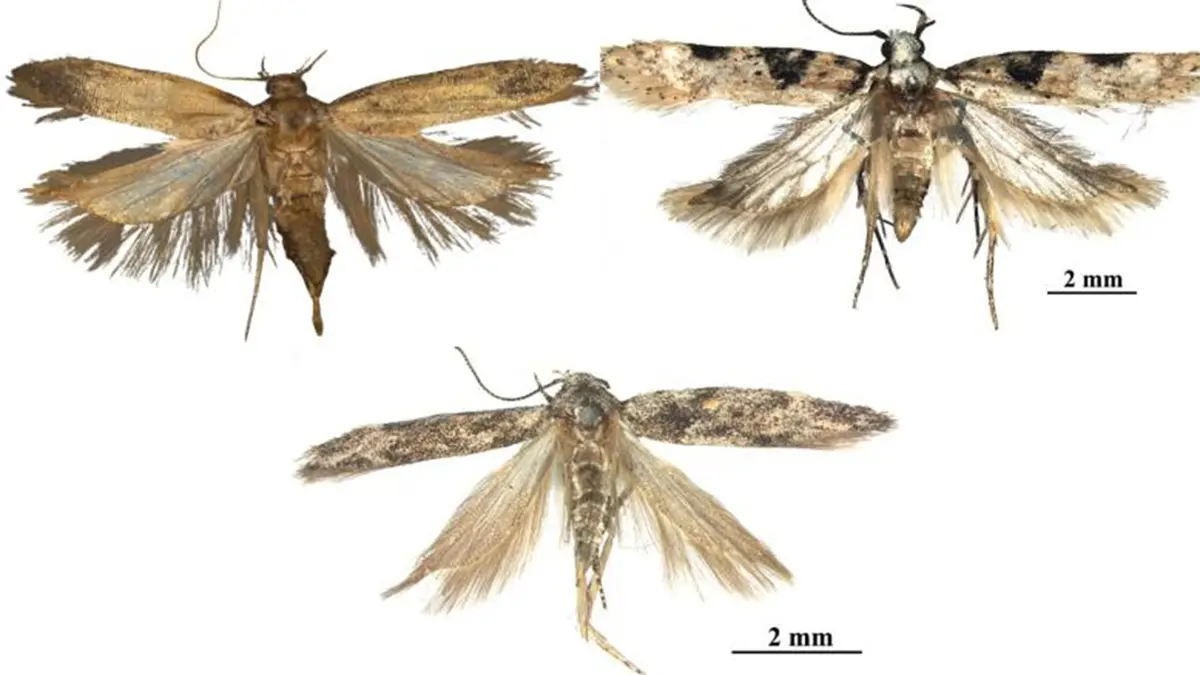
Researchers from the ICAR‑Indian Agricultural Research Institute have described three previously unknown moth species from high‑altitude regions of the Himalayas. Their discoveries were published in a taxonomic journal in December 2025 and highlight the rich but understudied insect diversity of India’s northern mountains.
Background
The newly described species belong to the family Gelechiidae, a group of micro‑moths known for their tiny size and intricate wing patterns. The researchers conducted night‑time surveys using mercury‑vapour lamps in Himachal Pradesh, Arunachal Pradesh and Ladakh. After collecting specimens, they used a combination of DNA barcoding and detailed morphological analysis, focusing on wing patterns and the shapes of male and female reproductive structures, to confirm that the specimens represented species new to science. The type specimens have been deposited in the National Pusa Collection in New Delhi.
The Three Species
- Gelechia bilobuncusa: Discovered in Himachal Pradesh, this moth’s name refers to the bilobed shape of the male genital structure known as the uncus. It has pale brown wings scattered with irregular black scales.
- Gelechia adi: Found in the Ramsing area of Arunachal Pradesh, it is named in honour of the local Adi tribe. The species is visually striking, with ivory‑white forewings crossed by a bold black streak and dotted with triangular spots.
- Istrianis ladakhensis: Collected in Ladakh, this moth is named after its type locality. It is adapted to high‑altitude environments and has light brown wings mottled with dark grey, white and orange scales.
Importance of the Discovery
- Biodiversity documentation: Discovering new species adds to our understanding of Earth’s biodiversity and helps scientists map evolutionary relationships among insects.
- Cultural recognition: Naming Gelechia adi after the Adi tribe acknowledges the role of indigenous communities and local knowledge in conservation.
- Conservation significance: High‑altitude ecosystems are sensitive to climate change. Recording their fauna now provides baseline data that can be used to monitor future environmental changes.