

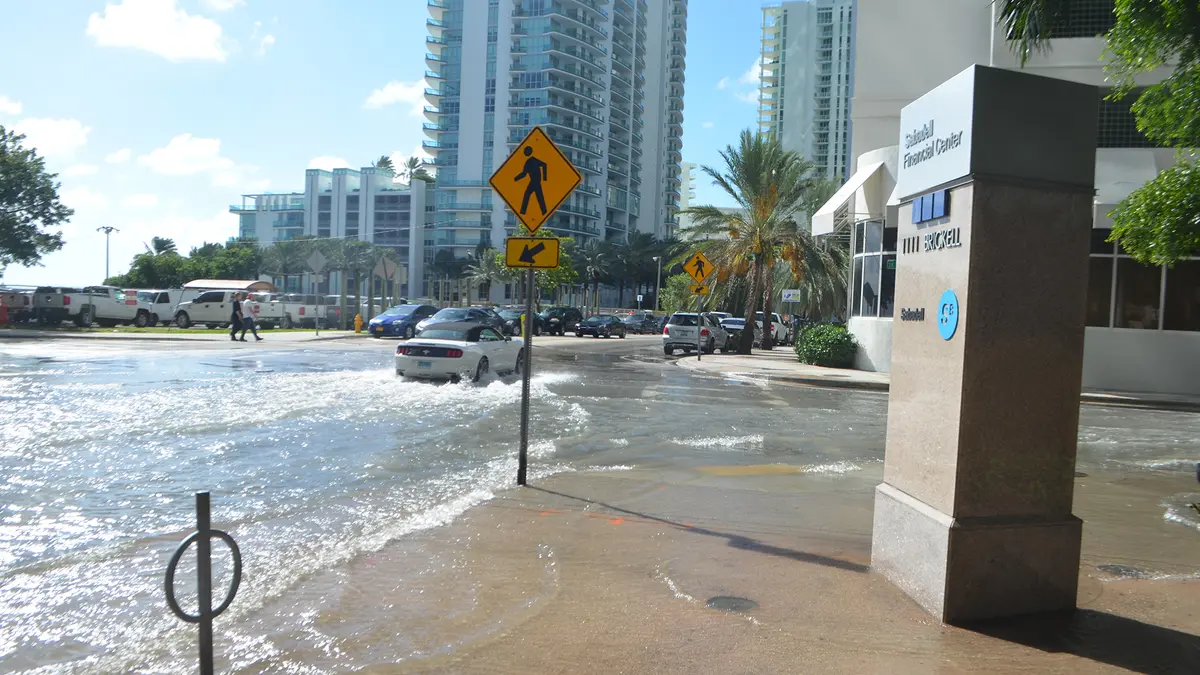
Why in news?
The Kerala government has declared tidal flooding — the regular inundation of low‑lying coastal areas by high tides — a State‑specific disaster. Victims will now receive financial assistance similar to those affected by cyclones or floods from the State Disaster Response Fund. Kerala is the first Indian state to formally recognise this recurring event as a disaster.
Background
Tidal flooding, sometimes called “sunny day flooding” or “king tide flooding,” occurs when the sea level temporarily rises above normal high tide lines, inundating coastal areas. Unlike storm surges from cyclones, tidal flooding happens twice daily and becomes more pronounced during full or new moons. Along Kerala’s coast, this phenomenon is a recurring problem in districts such as Ernakulam, Alappuzha and Kollam. The state’s low‑lying topography, with parts of the coast sitting at or below sea level, makes it especially vulnerable. Factors such as spring tides, coastal storms, silting of rivers and backwaters, and unplanned construction exacerbate the impact.
Why was it declared a disaster?
Under the Disaster Management Act, a natural phenomenon can be deemed a disaster when it adversely affects a community and causes loss of life or livelihood. Tidal flooding routinely damages homes, roads and livelihoods of fishermen and coastal farmers. Because the event is considered “routine,” victims previously could not claim relief under national disaster norms. The state government’s order recognises that high‑tide flooding is no longer an aberration but a serious hazard warranting dedicated relief. Key considerations include:
- Vulnerability: Around 10% of Kerala’s population lives in areas susceptible to tidal incursions, with many houses built on floodplains or near riverbanks.
- Topography: Regions such as the Kuttanad and Kochi backwaters lie below sea level. Tidal water enters through rivers, canals and backwaters during high tides.
- Legal basis: Section 2(d) of the Disaster Management Act allows classification of tidal flooding as a disaster when it results in significant damage. This classification enables financial assistance from the State Disaster Response Fund.
- Other state‑specific disasters: Kerala has previously notified coastal erosion, lightning, strong winds, soil piping, heat waves, sunburns and human–wildlife conflict as disasters unique to the state.
Source: The Hindu