

Why in news?
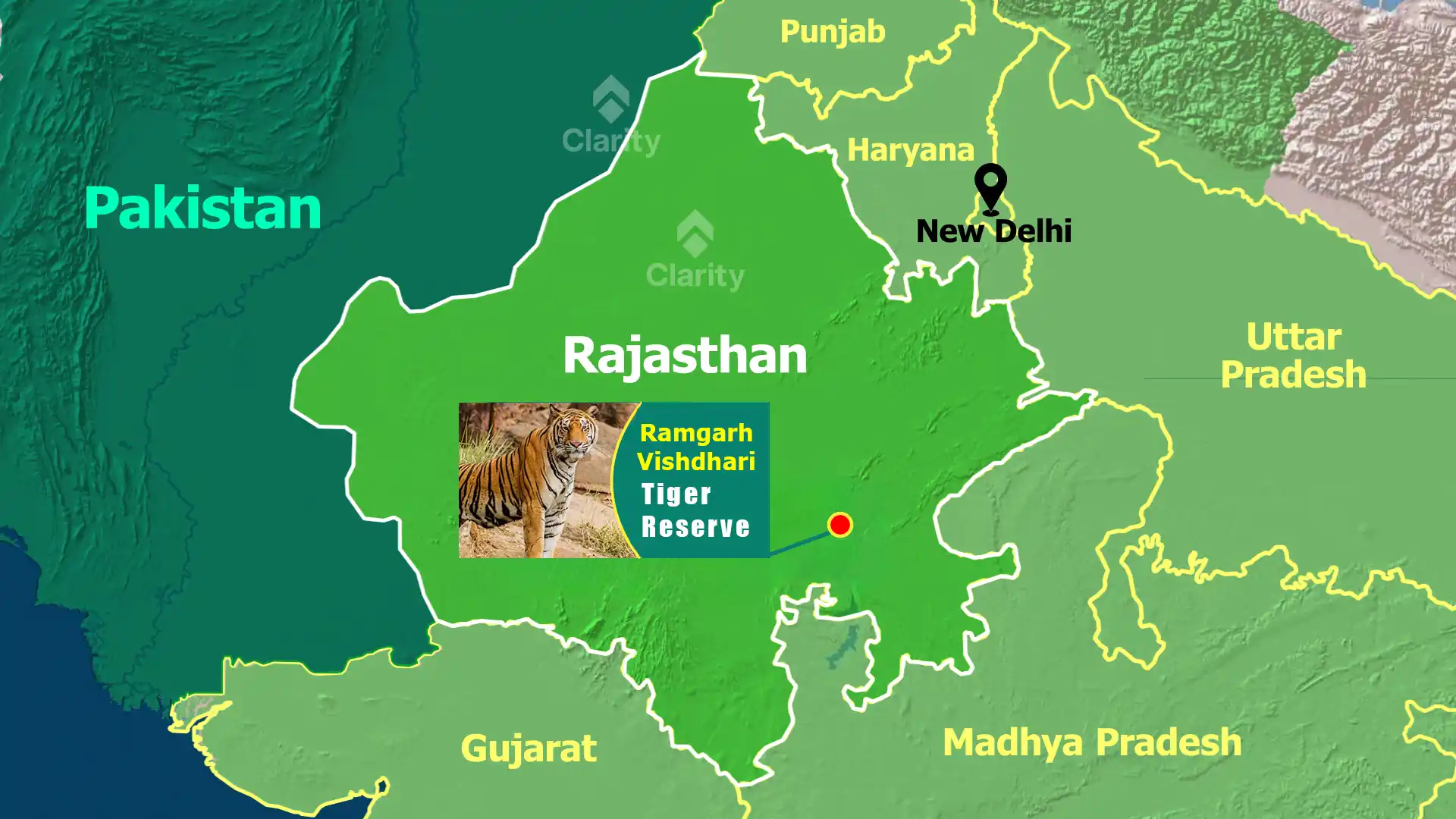
A young tigress from Madhya Pradesh’s Pench Tiger Reserve was safely translocated to the Ramgarh Vishdhari Tiger Reserve in Rajasthan on 3 December. This interstate relocation, carried out using helicopters and expert wildlife teams, aims to reintroduce tigers to Rajasthan’s newest reserve and improve genetic diversity among India’s tiger populations.
Background
Ramgarh Vishdhari Tiger Reserve, notified in 2022, lies in the Bundi district of Rajasthan and acts as a corridor between the Ranthambore and Mukundra Hills Tiger Reserves. The area consists of dry deciduous forests, scrub and grasslands that historically hosted tigers but lost them due to hunting and habitat fragmentation. Pench Tiger Reserve in Madhya Pradesh, on the other hand, has a robust tiger population and is famous as the setting for Rudyard Kipling’s The Jungle Book. Translocating surplus animals from Pench to Ramgarh helps relieve pressure on one reserve while reviving another.
Translocation process
- Capture and sedation: Wildlife veterinarians and forest staff tracked a four‑year‑old tigress in Pench. She was tranquilised from an elephant’s back using a dart gun and then given a health check.
- Radio‑collaring: A satellite‑linked collar was fitted to monitor her movements and health after release. This ensures that conservationists can track her adaptation to the new habitat.
- Airlift to Rajasthan: The sedated tigress was transported by road to an airbase and then flown by an Indian Air Force helicopter to Jaipur. From there she was driven to a soft‑release enclosure inside Ramgarh Vishdhari.
- Acclimatisation: For a few weeks the tigress will remain in a large enclosure to familiarise herself with the surroundings and local prey. If she adapts well, she will be released into the wild to establish territory.
Importance of relocation
- Genetic diversity: Introducing animals from different reserves prevents inbreeding and strengthens the genetic health of tiger populations.
- Expanding range: New breeding populations in Rajasthan will increase the overall carrying capacity for tigers in India and reduce human–wildlife conflict in overcrowded reserves.
- Collaboration: The project required coordination between two state governments, central wildlife authorities and the Air Force, showcasing cooperative conservation efforts under Project Tiger.
Source: WEEK