
Why in news?
Researchers from the Indian Institute of Technology Kharagpur and the Physical Research Laboratory in Ahmedabad have experimentally decoded how the Moon’s titanium‑rich rocks formed. Their study simulated the extreme pressures and temperatures of the Moon’s early magma ocean, revealing how rare ilmenite‑bearing cumulates melted to produce the titanium‑rich basalts observed on the lunar surface. The findings will help the upcoming Chandrayaan‑4 mission identify scientifically valuable landing sites.
Background
Titanium is a transition metal discovered in 1791 and extracted in pure form only by the early 20th century. It is celebrated for its high strength‑to‑weight ratio, excellent corrosion resistance and biocompatibility. These properties make titanium indispensable in aerospace components, shipbuilding, medical implants and industrial equipment. Its low density allows aircraft and spacecraft to reduce weight without sacrificing strength, while its resistance to corrosion in salt water and biological fluids has led to widespread use in marine and biomedical applications. Because titanium is inert and integrates well with bone, it is favoured for hip replacements, dental implants and surgical instruments.
Decoding lunar titanium‑rich rocks
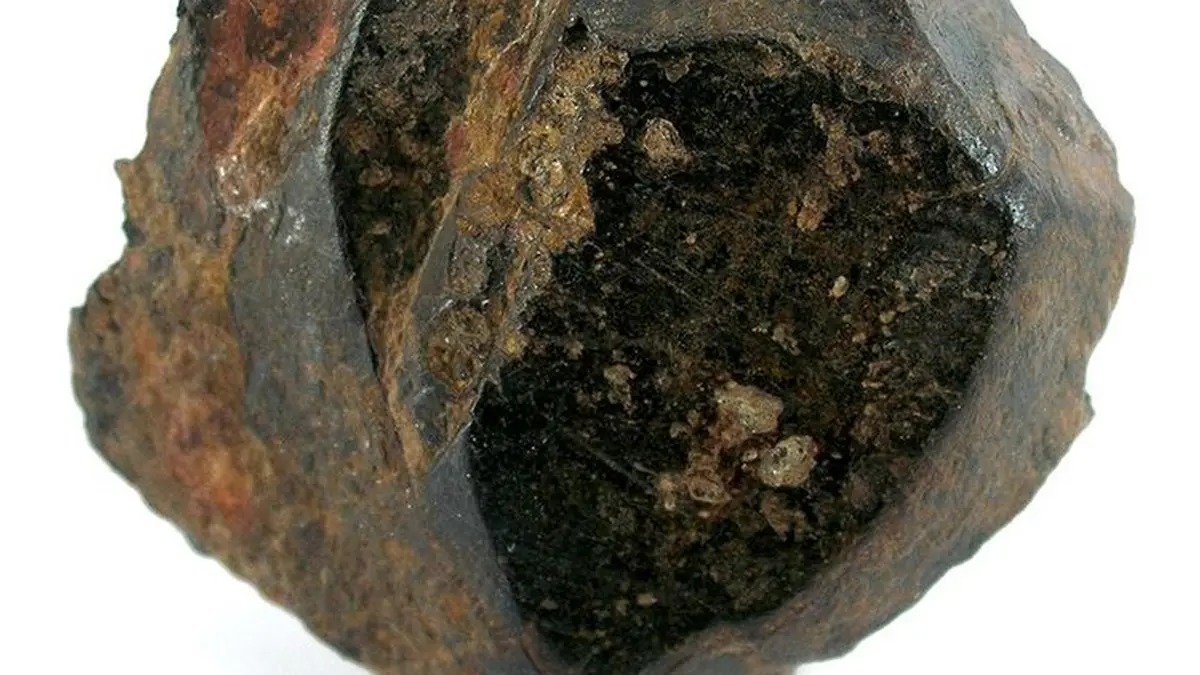
The IIT–PRL team focused on rare, iron‑ and titanium‑rich layers deep within the Moon called ilmenite‑bearing cumulates (IBC). These rocks formed about 4.3–4.4 billion years ago when the lunar magma ocean began to crystallise. Using high‑pressure apparatus that recreated conditions of 3 gigapascals and temperatures above 1,500 °C, the researchers melted synthetic IBC samples and observed how the resulting magmas changed with temperature.
- Intermediate versus ultra‑high titanium melts: Experiments showed that at higher temperatures, partial melting produced moderately titanium‑rich liquids that would solidify into intermediate‑Ti basalts. At lower temperatures, melts became extremely rich in titanium and depleted in magnesium.
- Mixing with other magmas: Before reaching the surface, these titanium‑rich magmas interacted with more conventional lunar magmas, creating a spectrum of compositions resembling those sampled by Apollo and other missions.
- Dynamic interior: The research also suggests that during the Moon’s early history, dense melts may have sunk back into the mantle while buoyant melts rose, indicating a process of mantle overturn and challenging the notion of a static lunar interior.
Implications for Chandrayaan‑4
Understanding how titanium‑rich basalts originate helps scientists identify regions where these rocks erupted. Remote sensing instruments on Chandrayaan‑2 and other orbiters have mapped titanium hotspots, and the new models indicate where the underlying IBC layers may have melted and surfaced. Selecting a landing site rich in these materials would allow Chandrayaan‑4’s rover to collect samples that record the Moon’s early differentiation and volcanic history.
Conclusion
Titanium’s unique properties have long been exploited on Earth, and now laboratory experiments are unlocking its secrets on the Moon. By reproducing lunar conditions and studying ancient minerals, Indian scientists are helping steer future exploration missions and deepening our understanding of planetary formation.
Source: The Hindu

