

Why in news?
The tundra ecosystem has garnered attention due to new reports highlighting how climate change is warming Arctic regions, thawing permafrost and triggering shifts in vegetation. Satellite observations in 2025 indicated earlier greening of tundra landscapes, prompting scientists and policymakers to consider the implications for global climate and indigenous communities.
Background
The tundra is a cold, treeless biome found at high latitudes near the Arctic Circle and at high elevations worldwide. It experiences long, harsh winters and short summers. Annual precipitation is typically less than 25 cm, and the ground remains frozen for much of the year as permafrost. Only a thin upper layer thaws during summer, limiting root depth and plant growth.
Characteristics
- Vegetation: Low‑lying plants such as mosses, lichens, sedges, dwarf shrubs and grasses dominate. Trees are absent because permafrost prevents deep roots.
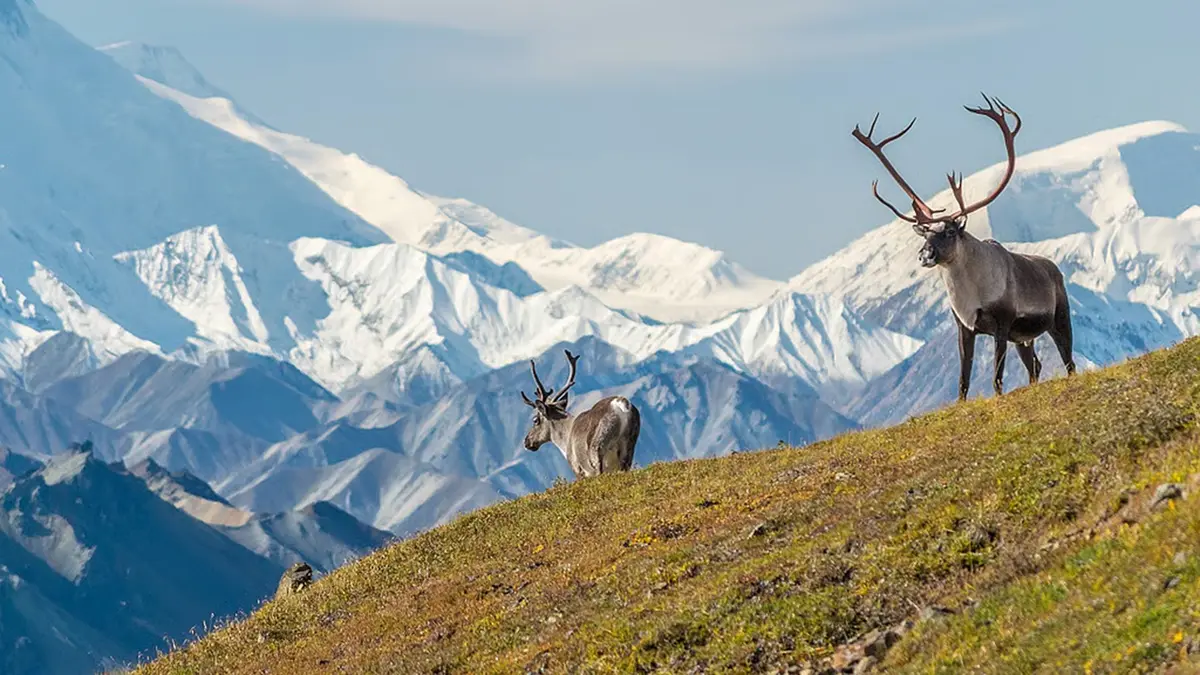
- Animal life: Herbivores like caribou, reindeer, musk oxen, Arctic hares and lemmings graze on sparse vegetation. Predators include Arctic foxes, snowy owls and polar bears. Many animals migrate or hibernate to survive the long winter.
- Alpine vs. Arctic: Alpine tundra occurs on mountains worldwide and is influenced by altitude rather than latitude. Arctic tundra lies in circumpolar regions and is more extensive.
Threats and climate change
- Permafrost thaw: Rising temperatures melt permafrost, causing soil subsidence and releasing stored carbon dioxide and methane, potent greenhouse gases.
- Vegetation changes: Warming allows shrubs and trees to colonise tundra areas, altering habitats and reducing albedo (surface reflectivity), which can accelerate warming.
- Human impacts: Resource extraction, road construction and pollution disturb fragile ecosystems and threaten wildlife.
- Indigenous communities: Melting ice and changing wildlife patterns affect traditional hunting and fishing, challenging livelihoods.
Significance
- The tundra plays a critical role in the global climate system by storing carbon. Its degradation could exacerbate climate change through feedback loops.
- Conserving tundra habitats protects unique biodiversity and preserves the cultural heritage of indigenous peoples.
- Monitoring tundra greenness and permafrost helps scientists predict future climate scenarios and informs international climate policy.