
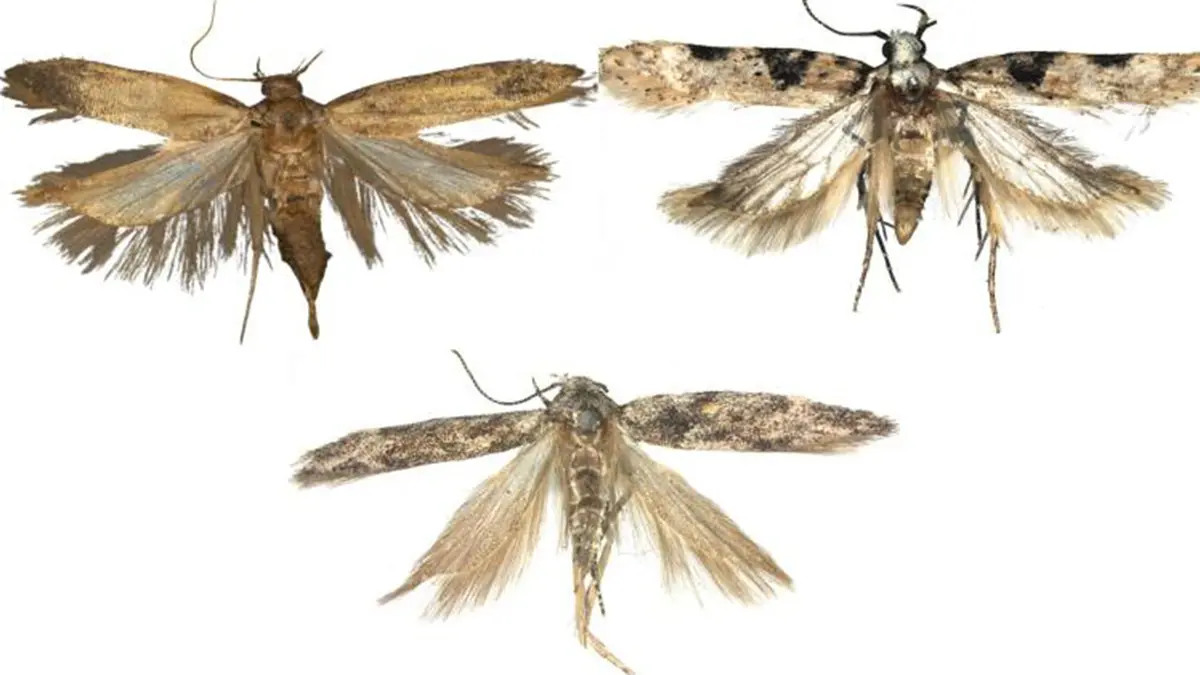
Why in news?
Researchers from the Zoological Survey of India (ZSI) described two new species of lichen moths in March 2026. Named Caulocera hollowayi and Asura buxa, the insects were collected from Sikkim and West Bengal. Their discovery highlights the unexplored biodiversity of the Eastern Himalayas and the importance of lichens as air‑quality indicators.
Background
Lichen moths belong to the subfamily Lithosiinae within the tiger moth family Erebidae. Their caterpillars feed on lichens – symbiotic organisms composed of algae and fungi – which makes them sensitive to air pollution because lichens thrive only in clean environments. Scientists often use lichens and the insects associated with them as biological monitors of air quality.
About the discoveries
- Caulocera hollowayi: This moth was collected from Golitar near Namchi in Sikkim. It is characterised by yellowish‑brown wings with bright white markings and unique male genitalia. The species name honours British lepidopterist Jeremy Holloway for his contributions to moth taxonomy.
- Asura buxa: Found in Panijhora inside the Buxa Tiger Reserve in West Bengal, this moth has greyish forewings with black spots and distinctive tufts of scales on its hind legs. The species name refers to the Buxa region where it was discovered.
- Morphological differences: The researchers distinguished the new species by examining microscopic structures such as the uncus and valva (parts of the male reproductive organ), wing patterns and the arrangement of scales. These features help differentiate closely related lichen moths.
- Indicators of clean air: Because the caterpillars feed exclusively on lichens, the presence of these moths suggests low levels of air pollution. Their discovery therefore signals relatively pristine habitats in the Himalayas.
- Importance of continued surveys: The Eastern Himalayas are a global biodiversity hotspot. New finds emphasise the need for systematic surveys to document species before they are lost to habitat changes and climate warming.
What do lichens tell us?
Lichens are extremely sensitive to sulphur dioxide and other pollutants. When air quality worsens, lichens disappear, along with the insects that depend on them. Monitoring lichen distribution therefore helps scientists detect pollution trends in mountain ecosystems.
Sources: India Today.

