Why in news?
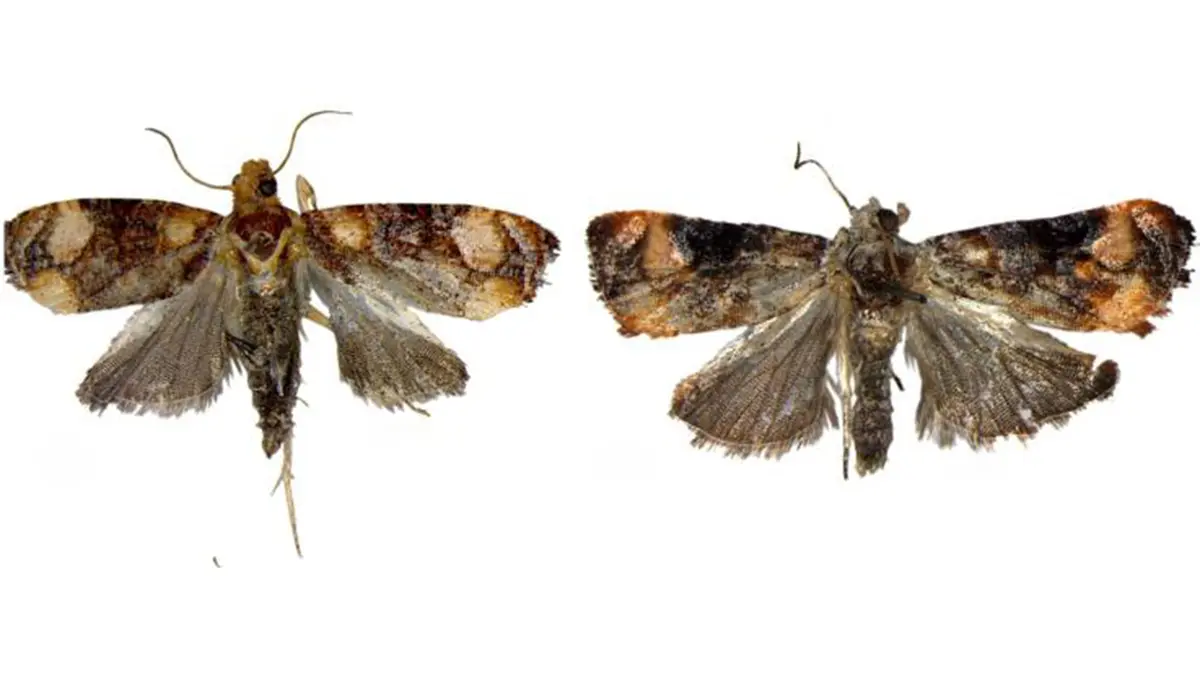
Scientists from the National Pusa Collection at the ICAR‑Indian Agricultural Research Institute have discovered two new species of micromoths, Eudemopsis hunliensis and Eudemopsis gobuka, in the remote forests of Arunachal Pradesh. The discovery, announced in March 2026, marks the first record of the genus Eudemopsis in India and expands the known range of these moths beyond East Asia.
Background
Eudemopsis is a genus of tortricid micromoths previously known from China, Japan and Vietnam. During an expedition in August 2024, researchers Shashank P.R. and Santhosh Naik trekked into the Mishmi Hills of Upper Siang and Lower Dibang Valley districts. Using light traps fitted with mercury vapour lamps and LepiLEDs that mimic moonlight, they collected tiny moths attracted to white sheets.
The two species were named after the localities where they were found. The epithet hunliensis honours the town of Hunli in Lower Dibang Valley, while gobuka refers to the village of Gobuk in Upper Siang. Their discovery raises the global count of Eudemopsis species to 17.
Diagnostic features
- Eudemopsis hunliensis: Males have distinctive brownish‑purple scales on the head and a unique pitcher‑shaped structure in the genitalia. The forewings bear subtle markings that distinguish it from related species.
- Eudemopsis gobuka: This species has dark grey hindwings and a rectangular patch on the forewings. Morphological examination of wing patterns and genital structures separates it from congeners in Vietnam.
- Habitat: The moths inhabit subtropical evergreen forests of the Eastern Himalayas. Their caterpillars likely feed on leaf litter or lichens, but further research is needed.
Significance
- New record for India: Finding the genus in Arunachal Pradesh extends its range westward and highlights the underexplored biodiversity of the Eastern Himalayas.
- Conservation value: The Eastern Himalayas are a global biodiversity hotspot. Discoveries of small insects underscore the importance of preserving their habitats.
- Further research: Many more micro‑moth species may remain undiscovered in these remote forests. Detailed surveys can enrich our understanding of insect diversity and ecological roles.
Source: Research Matters