Why in news?
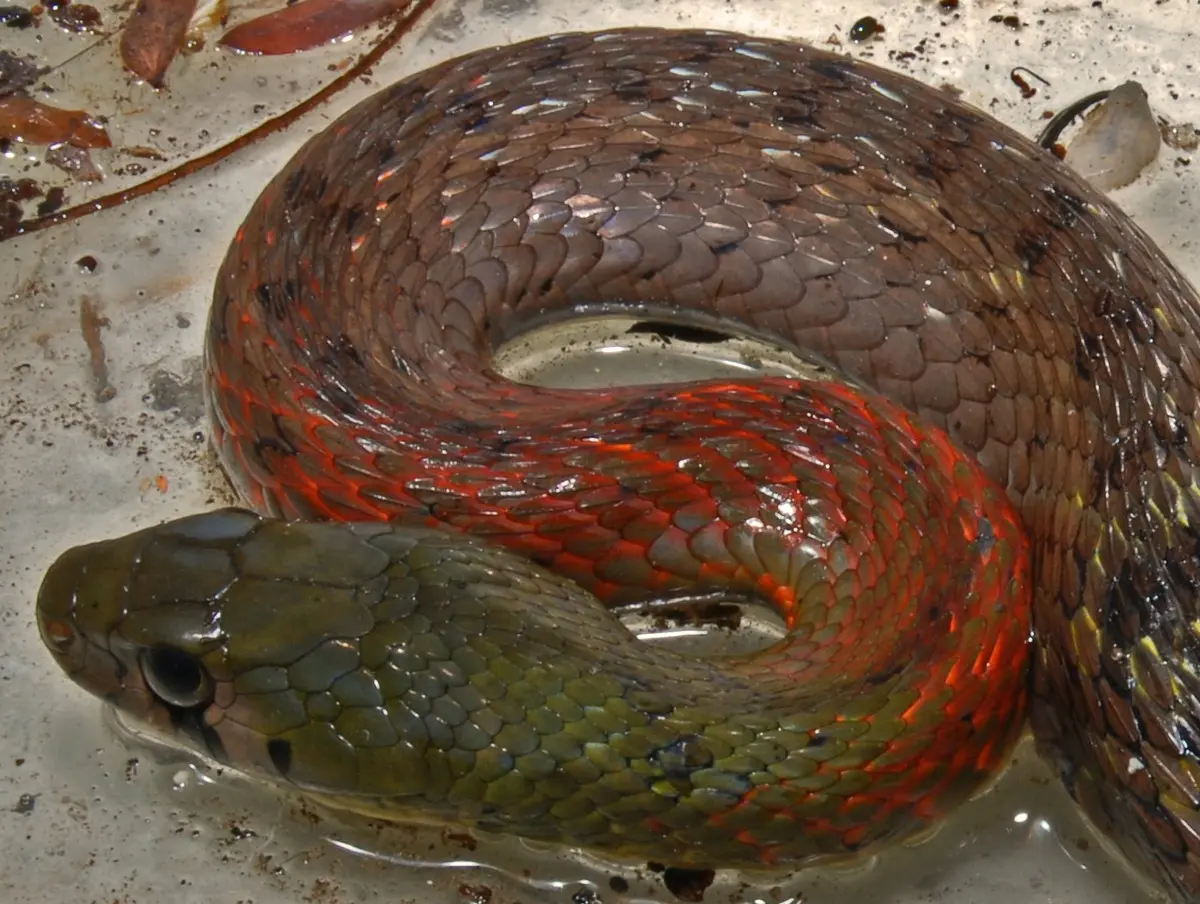
Herpetologists from the Wildlife Institute of India have reported two species of keelback snakes in India for the first time. The Rakhine Keelback (Herpetoreas davidi) and the Kachin Hills Keelback (Hebius gilhodesi) were documented in Mizoram and Arunachal Pradesh, respectively. Until now these natricine snakes were known only from Myanmar, so their discovery extends their known range and underlines the biodiversity of India’s north‑eastern forests.
Background
Keelbacks are non‑venomous snakes belonging to the family Natricidae. They are named for the keeled (ridged) scales running down their backs and are often found near streams, paddy fields and other wet habitats. Key details about the newly recorded species include:
- Rakhine Keelback (Herpetoreas davidi): Previously believed to inhabit only Rakhine State in Myanmar, this species was found in the Ngengpui Wildlife Sanctuary of Mizoram. The discovery extends its known range by roughly 577 kilometres.
- Kachin Hills Keelback (Hebius gilhodesi): Formerly known only from the Kachin Hills, it has now been recorded in Namdapha National Park and Kamlang Tiger Reserve in Arunachal Pradesh. The range extension is about 107 kilometres.
The snakes were identified through a combination of field observations, morphological measurements and mitochondrial DNA analysis. Both species are medium‑sized, semi‑aquatic and harmless to humans. Their presence in India indicates that the Eastern Himalaya biodiversity hotspot may harbour many more undocumented reptiles.
Importance of the discovery
- Mapping biodiversity: Recording species outside their previously known ranges helps scientists refine distribution maps and understand ecological connections across political boundaries.
- Conservation planning: The presence of these snakes supports the need to protect forests and wetlands in Mizoram and Arunachal Pradesh. Effective management of wildlife sanctuaries and national parks is essential for safeguarding such rare species.
- Scientific insight: New morphological descriptions and genetic data aid in distinguishing closely related species and improve the taxonomy of the natricine group.
Conclusion
The rediscovery of the Rakhine and Kachin Hills keelbacks in India emphasises how under‑explored the north‑east remains. Continued surveys and habitat conservation will likely reveal more hidden species, highlighting the region’s global importance for biodiversity.
Source: BioPatrika