

Why in news?
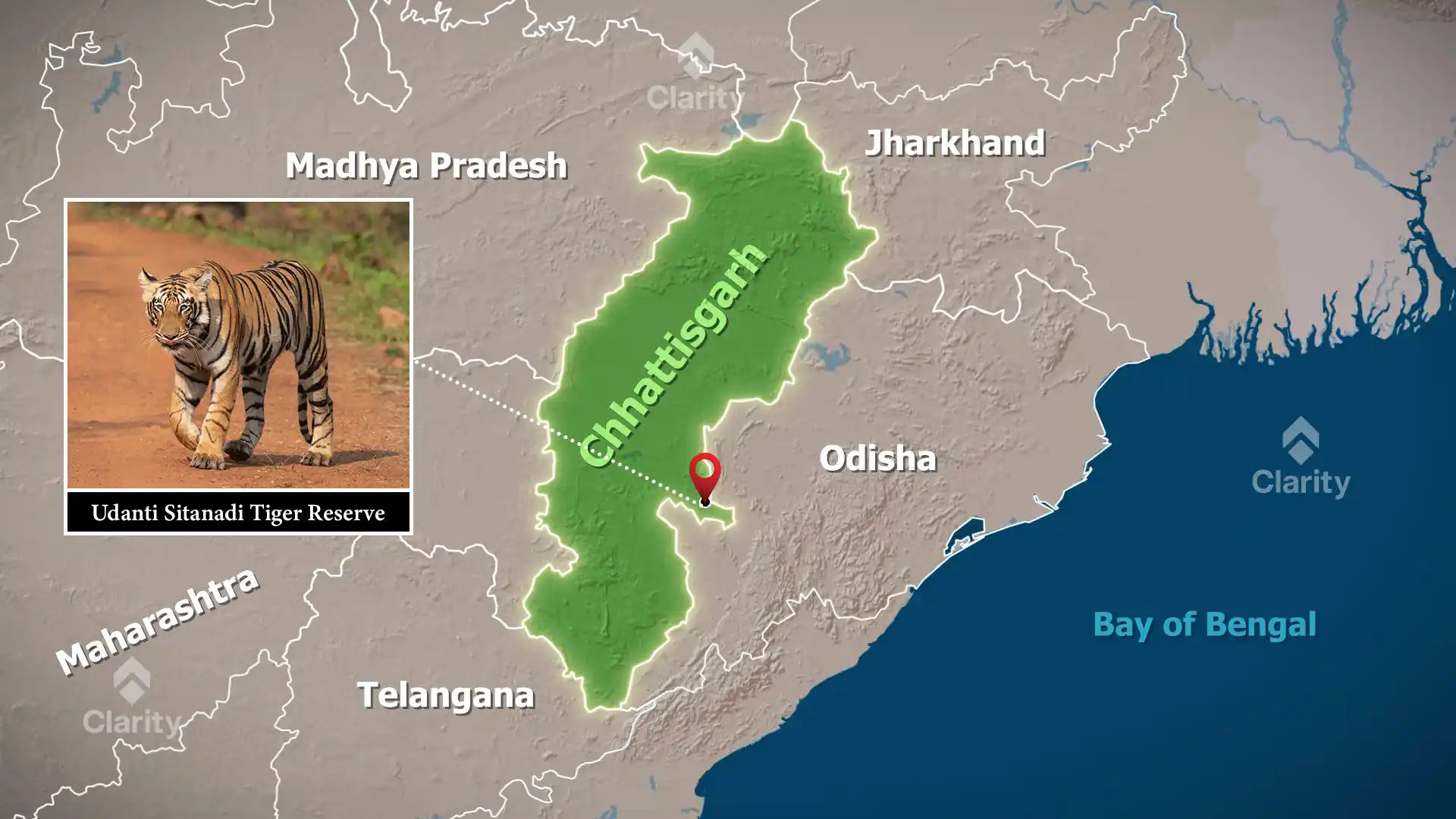
Conservationists reported in December 2025 that the Udanti‑Sitanadi Tiger Reserve in Chhattisgarh has become a haven for species usually found in the Western Ghats, such as the Malabar Pied Hornbill and the Indian Giant Flying Squirrel. The discovery highlights the reserve’s unique microclimate and has revived discussions about reintroducing tigers and balancing conservation with community rights.
Background
The Udanti and Sitanadi wildlife sanctuaries were established in 1983 and 1974 respectively and later combined under Project Tiger to form the Udanti‑Sitanadi Tiger Reserve in 2009. The reserve spans roughly 1,846 km² across Dhamtari and Gariaband districts of Chhattisgarh. Its landscape comprises undulating hills (525–1,100 m), plateaus, and valleys drained by the Udanti and Sitanadi rivers. Tropical dry deciduous forests dominated by sal, teak, mahua and bamboo cover much of the area.
Biodiversity and unique species
- Wildlife: The reserve shelters wild water buffalo (the state animal of Chhattisgarh), tigers, leopards, dholes (wild dogs), sloth bears, gaur (Indian bison), sambars, chital deer, mouse deer and abundant birdlife.
- Western Ghats species: In high‑elevation pockets with evergreen‑like microclimates, researchers have observed Malabar Pied Hornbills and Indian Giant Flying Squirrels, species normally confined to the Western Ghats. The hornbills nest in hollows high up; local villagers act as “Van‑Mitaans” (forest friends) to monitor nests and protect the birds from poachers.
- Flora: Dense sal forests transition to mixed dry deciduous and bamboo groves. Non‑timber forest products like tendu leaves, mahua flowers and medicinal plants support local livelihoods.
Human communities and conservation
- Indigenous residents: Several tribal communities, including Gond and Pardhi, live within and around the reserve, practising agriculture, gathering forest produce and maintaining cultural ties to the land.
- Tiger relocation: The National Tiger Conservation Authority plans to relocate tigers from high‑density reserves to Udanti‑Sitanadi to restore a viable population. Villagers welcome the return of tigers but fear displacement and restrictions on forest use. They cite the Forest Rights Act 2006, which recognises their ancestral rights, to resist any eviction proposals.
- Community stewardship: Conservation programmes enlist local youth as trackers and guides. Sustainable ecotourism and alternative livelihoods are being developed to balance wildlife protection with socio‑economic needs.
Significance
- The presence of Western Ghats species underscores the ecological diversity of central India and the importance of preserving microhabitats.
- Reintroducing tigers could strengthen the reserve’s role in connecting tiger populations across eastern and central India.
- Ensuring that conservation respects community rights is vital for long‑term success and social justice.