
Why in news?
In April 2026 wildlife officials and visitors at the Umred–Pauni–Karhandla Wildlife Sanctuary near Nagpur spotted a melanistic (black‑coloured) spotted deer, also known as a chital. Such sightings are rare and have generated excitement among naturalists and tourists, drawing attention to the sanctuary’s rich biodiversity.
Background
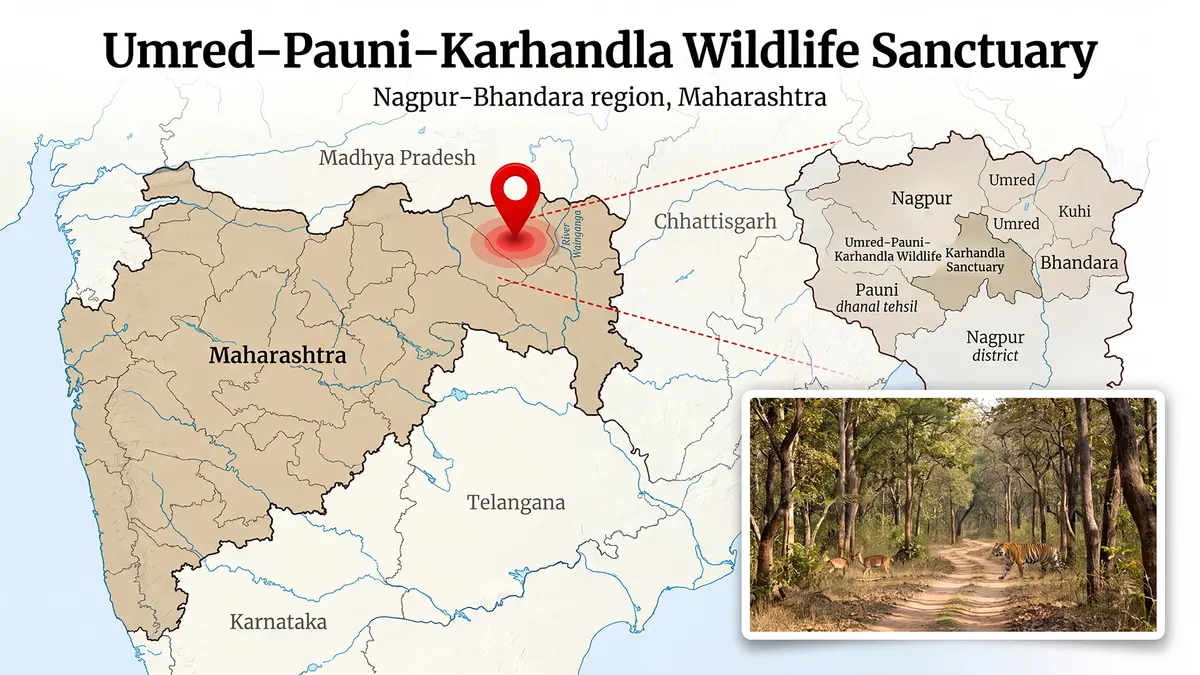
The Umred–Pauni–Karhandla Wildlife Sanctuary (UPKWS) was established in 2013 in Maharashtra. Spanning around 189 square kilometres, it covers parts of Pauni tehsil in Bhandara district and Umred, Kuhi and Bhivapur talukas in Nagpur district. The sanctuary lies along the Wainganga River and is connected via forests to the Tadoba Andhari Tiger Reserve, Pench Tiger Reserve and Nagzira Wildlife Sanctuary, forming an important wildlife corridor in central India.
Landscape and biodiversity
- Flora: The forest is predominantly composed of teak, which makes up about 60 percent of the tree population. Bamboo, tendu, mahua and other indigenous species add to the diversity.
- Fauna: The sanctuary hosts resident breeding tigers, herds of gaur (Indian bison), wild dogs, flying squirrels, pangolins, honey badgers and a variety of birds and reptiles. The presence of a melanistic deer underscores the genetic diversity within its ungulate population.
Melanism in deer
Melanism is a genetic condition that results in increased dark pigmentation. In spotted deer, which usually have a reddish‑brown coat with white spots, melanistic individuals appear dark brown or nearly black. Such variations are uncommon and are considered valuable from a conservation and genetic diversity perspective.
Significance of the sighting
- Indicator of health: The presence of rare genetic traits suggests a healthy gene pool and reflects the sanctuary’s role in preserving wildlife diversity.
- Awareness and tourism: Unique sightings draw attention to lesser‑known protected areas, encouraging responsible tourism and generating support for conservation efforts.
- Conservation message: Protection of habitats like UPKWS is essential for safeguarding not only flagship species like tigers but also lesser‑known species and genetic variants that enrich India’s natural heritage.
Conclusion
The melanistic chital sighting serves as a reminder of the hidden wonders of India’s wildlife sanctuaries. Sustained conservation measures, community participation and ecological connectivity with adjoining reserves are vital to protect such rare inhabitants.
Source: The Live Nagpur

