

Why in news?
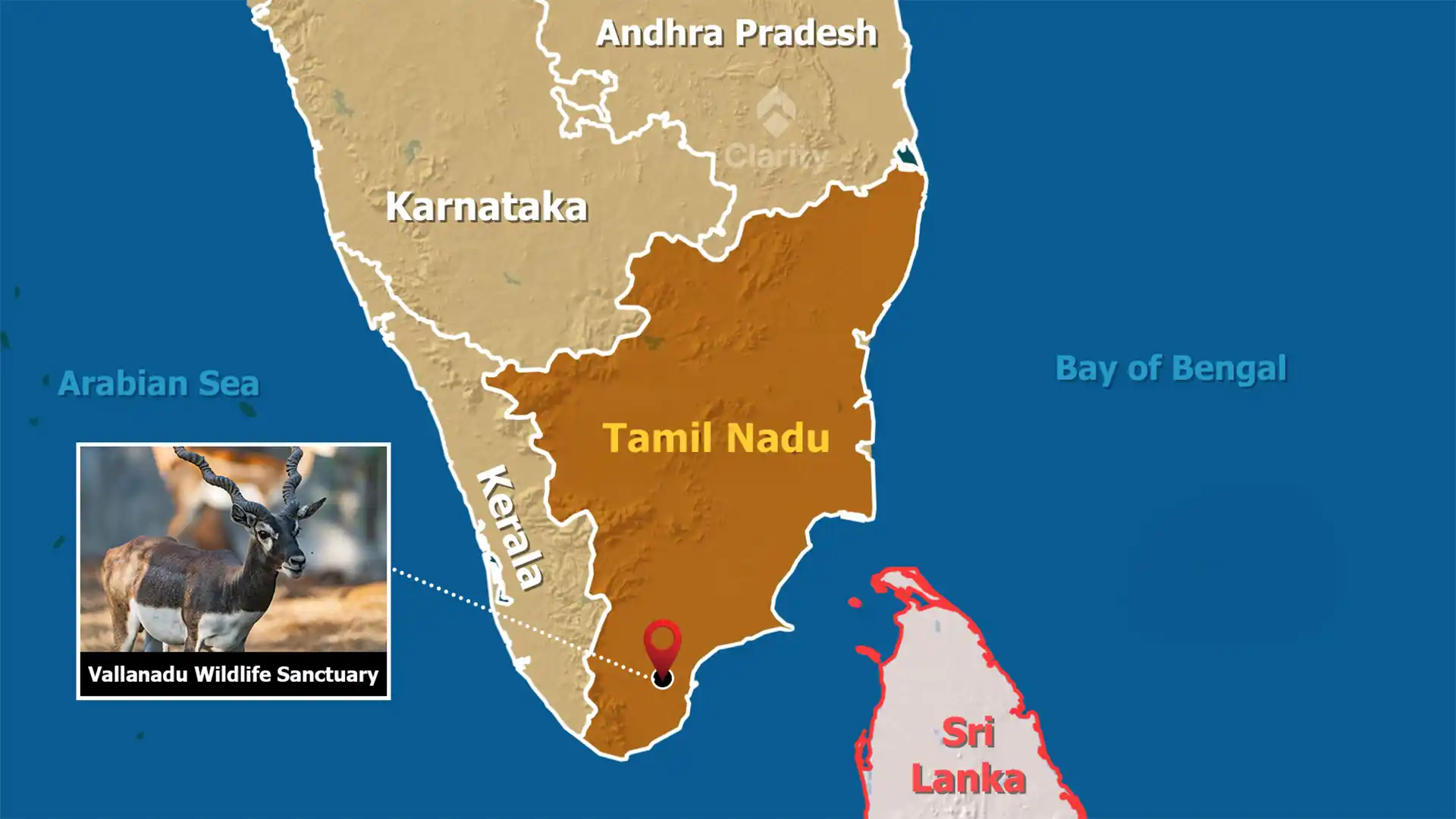
Tamil Nadu’s Vallanadu Wildlife Sanctuary has seen a remarkable increase in its blackbuck population following habitat restoration. The sanctuary now hosts around 265 blackbuck antelopes, making it one of the richest blackbuck habitats in the state.
Background
Vallanadu Wildlife Sanctuary was established in 1987 to protect the endangered blackbuck (Antilope cervicapra). The sanctuary is spread over about 16.4 sq km of scrub forest in Thoothukudi district. Blackbuck prefer open grasslands, but invasive bushes had overrun the sanctuary and degraded habitat quality.
Habitat restoration
- Bush clearing: Under the Tamil Nadu Biodiversity Conservation and Greening Project, about 20 hectares of invasive shrubs were cleared to create open meadows.
- Grass seeding: Native grass species were planted, turning the landscape into a savanna‑like grassland that supports grazing animals.
- Protection: Anti‑poaching patrols and community awareness programmes have reduced hunting and disturbance.
Blackbuck – characteristics
- Physical features: Males have long spiralled horns and dark brown coats with white underparts, while females are usually fawn coloured without horns.
- Behaviour: Blackbuck live in herds on open grasslands. Males establish territories during the rut and perform leaps and displays to attract females.
- Conservation status: Listed as Least Concern on the IUCN Red List but protected under Schedule I of India’s Wildlife Protection Act due to threats from hunting and habitat loss.
Significance of the sanctuary
- Refuge for blackbuck: Vallanadu now holds the second largest population of blackbuck in Tamil Nadu. The success demonstrates the value of habitat management.
- Biodiversity hotspot: Besides blackbuck, the sanctuary supports spotted deer, jackals, bonnet macaques, mongooses, monitor lizards and various birds.
- Ecotourism potential: With improved infrastructure, the sanctuary can offer responsible wildlife tourism that benefits local communities.
Source: The Hindu