Why in news?
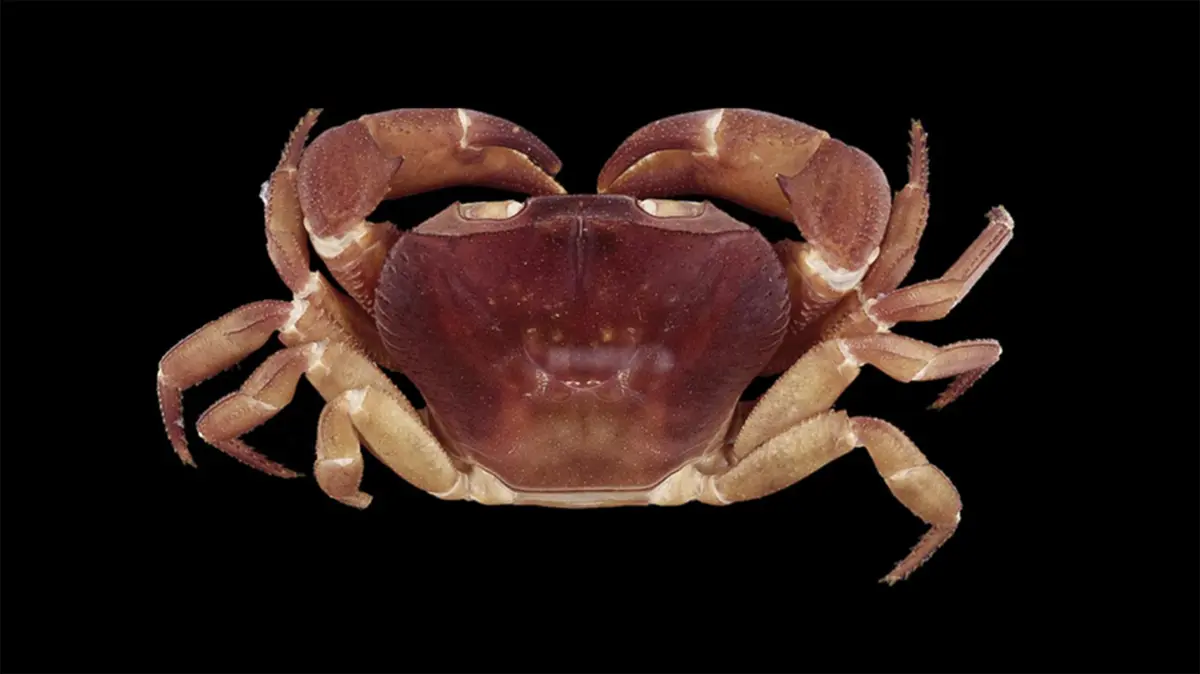
Scientists from the Zoological Survey of India and MES Mampad College have reported the first cases of gynandromorphy in the freshwater crab species Vela carli. The discovery was described in the journal Crustaceana on 10 March 2026.
Background
Vela carli is an endemic freshwater crab found only in the forests and streams of the Silent Valley National Park and other areas of the central Western Ghats in Kerala. In March 2026 researchers studied more than a hundred individuals collected from tree holes in Palakkad and Malappuram districts.
Gynandromorphy observed
- Dual sex traits: At least three adult specimens exhibited both male and female reproductive structures. Their bodies bore male pleopods (appendages used to transfer sperm) on one side and female gonopores on the other.
- First report in family: This is the first documented case of gynandromorphism in the freshwater crab family Gecarcinucidae, making it a notable discovery in crustacean biology.
- Possible causes: The study suggests that developmental anomalies during early growth, hormonal imbalances or climatic stress could lead to such dual‑sex traits. Pollution was ruled out because specimens came from pristine forest habitats.
Significance
The finding highlights the rich biodiversity of the Western Ghats and draws attention to less‑studied species. Documenting unusual phenomena like gynandromorphy can improve our understanding of crustacean development and inform conservation efforts in Silent Valley National Park.
Source: The Hindu