

Why in news?
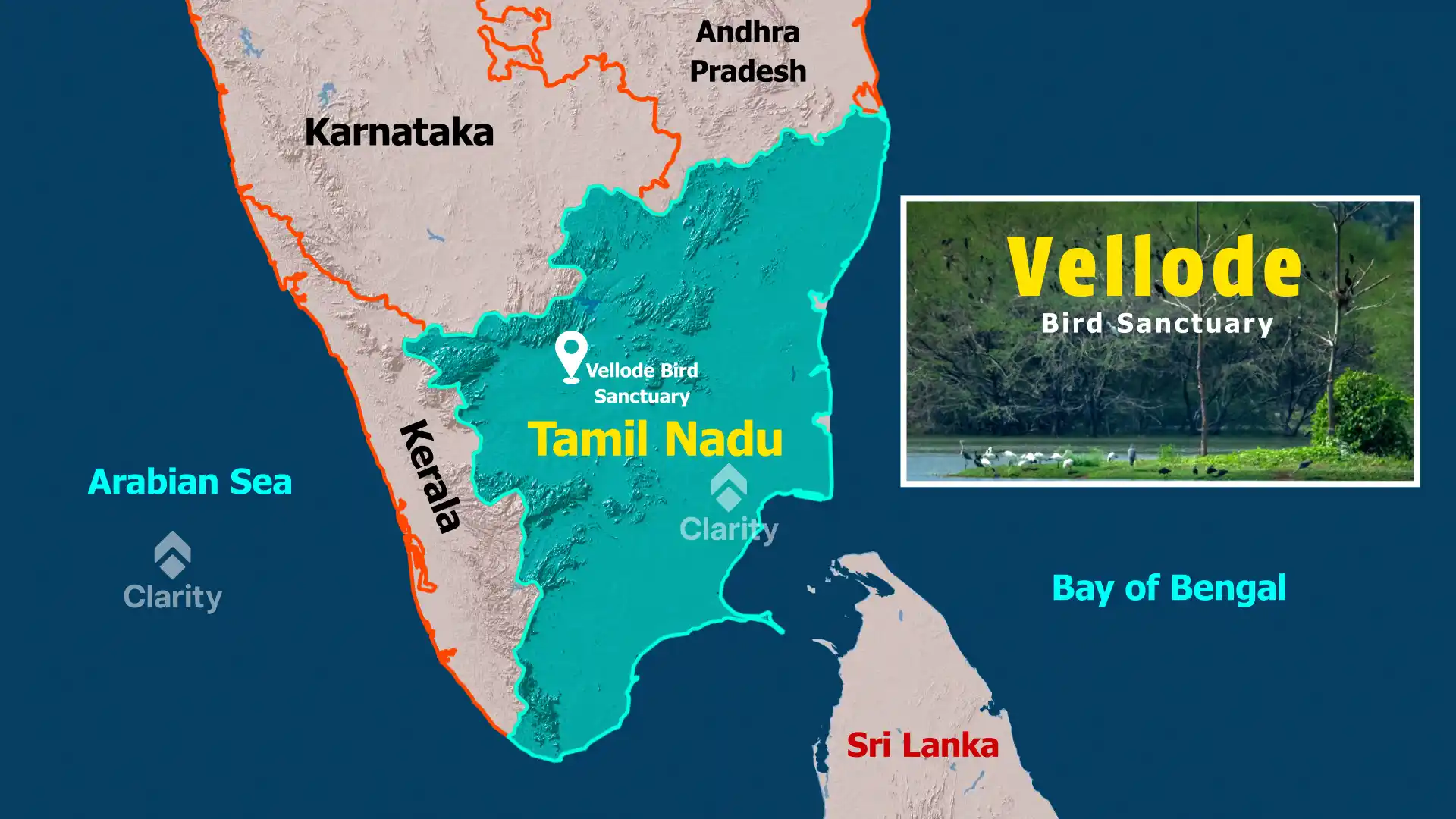
With the arrival of winter, Tamil Nadu’s Vellode Bird Sanctuary has once again become a favourite stopover for thousands of migratory birds. The sanctuary, which gained international recognition when it was designated a Ramsar wetland in 2022, has been in the spotlight as local authorities upgrade facilities to accommodate birdwatchers and protect its delicate ecosystem.
Background
Vellode Bird Sanctuary is located near Vellode village in Erode district, roughly 15 kilometres south of the city of Erode. Established as a sanctuary in 1996, it spans about 0.77 square kilometres around the Periyakulam lake, a large perennial tank bordered by shrubs and trees. The wetland acts as a magnet for waterfowl and waders from as far away as Central Asia. In recognition of its ecological importance, it was added to the Ramsar list of wetlands of international significance in August 2022.
Ecology and wildlife
- Diverse habitats: The sanctuary includes open water, mudflats, reed beds and dry scrub, supporting aquatic birds as well as terrestrial species. The lake’s islands provide safe nesting sites.
- Resident and migratory birds: Frequent visitors include spot‑billed pelicans, painted storks, darters, cormorants, teals, moorhens and pintail ducks. Migrants such as bar‑headed geese, black‑tailed godwits, barn swallows, black‑capped kingfishers and marsh harriers arrive between November and March.
- Other fauna: The wetland also supports fish, amphibians and reptiles that form part of the birds’ diet. Surrounding scrub lands harbour small mammals and reptiles, adding to the area’s biodiversity.
Conservation efforts
- Habitat protection: The Forest Department restricts grazing, fishing and hunting within the sanctuary. Watchtowers and walking trails have been built to minimise disturbance to nesting birds.
- Community involvement: Local villagers help maintain the lake’s embankments and participate in awareness campaigns about the importance of protecting migratory birds. Eco‑development committees run boating and guiding services to generate income without harming wildlife.
- Eco‑tourism infrastructure: Recent improvements include interpretation centres, bird hides and improved access roads. These facilities aim to promote responsible tourism while educating visitors about wetland conservation.
Conclusion
Vellode Bird Sanctuary illustrates how a small wetland can play an outsized role in conserving global biodiversity. By balancing habitat protection with community benefits, the sanctuary provides a refuge for birds and a learning opportunity for nature enthusiasts. Ongoing conservation and sustainable tourism will be crucial to preserving this ecological gem.
Source: TH