

Why in news?
Researchers using data from the Vera C. Rubin Observatory reported the discovery of asteroid 2025 MN45, which rotates faster than any other known asteroid larger than half a kilometre. The discovery came during early test observations ahead of the observatory’s full operations.
Background
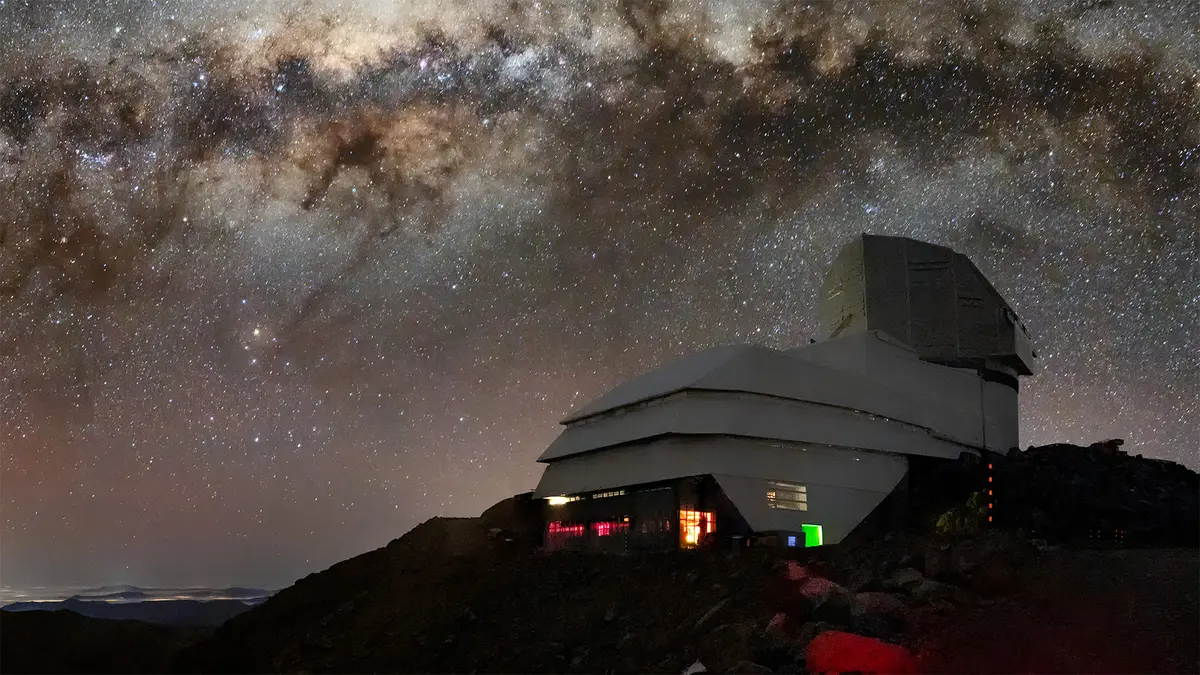
The Vera C. Rubin Observatory, located on Cerro Pachón in Chile, is an 8.4‑metre telescope designed to conduct the Legacy Survey of Space and Time (LSST). When fully operational, it will scan the southern sky repeatedly for a decade, creating an unprecedented time‑domain map of the universe. Its 3.2‑gigapixel camera will capture faint objects and rapidly changing phenomena, from supernovae to near‑Earth asteroids.
The discovery of asteroid 2025 MN45
- Size and rotation: The asteroid is about 710 metres wide and completes one rotation every 113 seconds (1.88 minutes), making it the fastest‑spinning asteroid of its size ever observed.
- Main‑belt location: Unlike near‑Earth objects that pass close to our planet, 2025 MN45 orbits in the main asteroid belt between Mars and Jupiter.
- Structural implications: An asteroid spinning this quickly must possess considerable internal strength; otherwise it would break apart. The discovery thus challenges models of asteroid cohesion and formation.
- Early science: The observation demonstrates the Rubin Observatory’s ability to detect small, faint and fast‑moving objects even before routine survey operations begin.
About the Rubin Observatory
- Mission goals: The LSST aims to address questions related to dark matter, dark energy, the formation of the Milky Way and the inventory of hazardous asteroids.
- Wide‑field design: The telescope’s large mirror and wide field of view allow it to capture the entire visible southern sky every few nights. Its repeated imaging will reveal moving objects and variable phenomena.
- Public data: Data collected by the observatory will be made available to researchers worldwide, enabling citizen scientists to contribute to discoveries.
Conclusion
The discovery of asteroid 2025 MN45 highlights the transformative capabilities of the Vera C. Rubin Observatory. As full operations commence, astronomers expect to identify thousands of new asteroids, track potentially hazardous objects and glean insights into the evolution of the solar system.
Sources: Live Science