

Why in news?
Conservationists report that India’s Western Tragopan population has stabilised thanks to captive‑breeding efforts, but human disturbance and habitat fragmentation continue to threaten this rare bird’s future. The plight of the species has drawn attention to the need for sustained protection in Himalayan forests.
Background
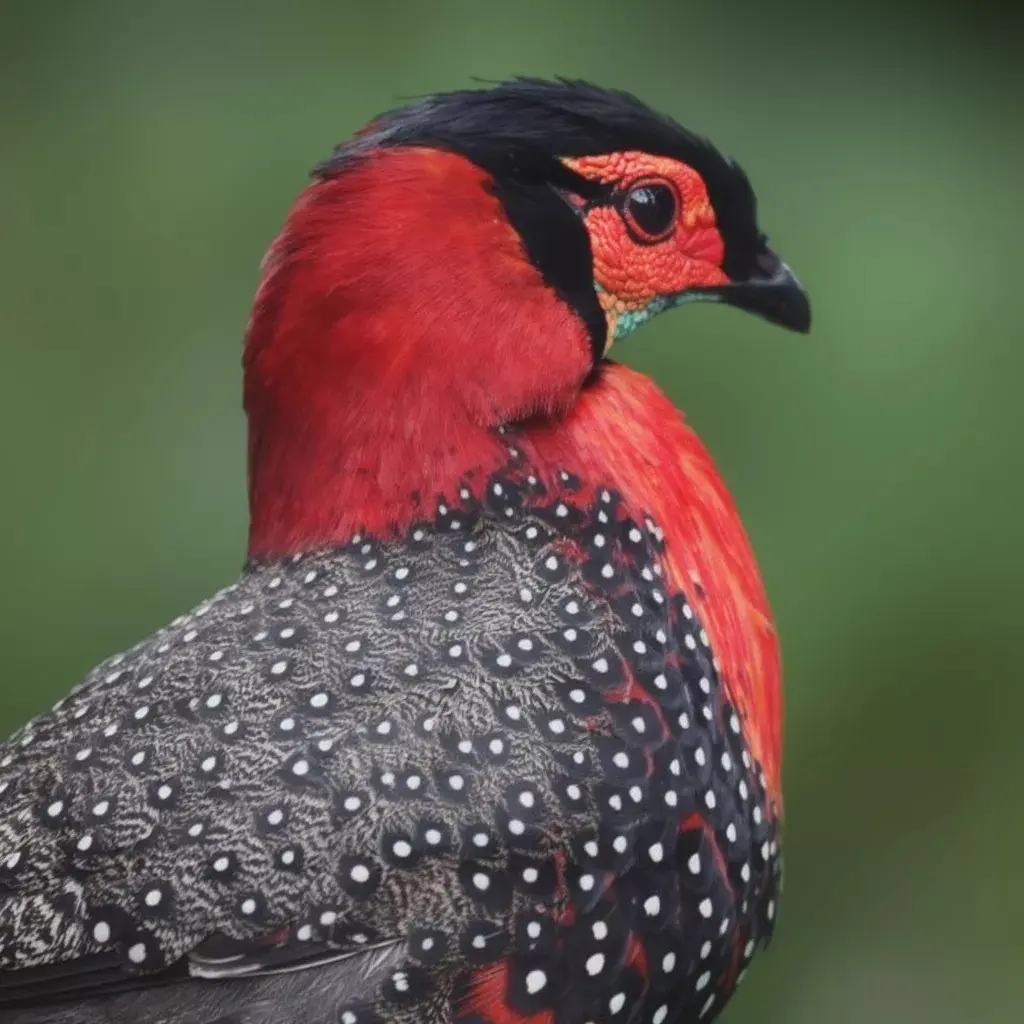
The Western Tragopan (Tragopan melanocephalus) is one of the world’s most spectacular and elusive pheasants. Locally called jujurana, meaning “king of birds,” the male sports brilliant crimson and black plumage with cobalt‑blue facial wattles and fleshy horns that it inflates during courtship displays. Females are more cryptically coloured. The species is endemic to a narrow belt of the western Himalaya, from Pakistan’s Hazara region through Jammu and Kashmir and Himachal Pradesh into western Uttarakhand. It inhabits dense, moist temperate forests between 2,400 and 3,600 metres, where ringal (dwarf bamboo) provides cover and food.
Ecology and habits
- Behaviour: Western tragopans are shy and largely ground‑dwelling. They move quietly through thick undergrowth at dawn and dusk, feeding on leaves, shoots, seeds, berries and invertebrates.
- Breeding: Breeding occurs from May to June. The hen lays three to five eggs in a nest on the forest floor, often hidden among rocks or dense shrubs. Chicks are precocial and follow their mother shortly after hatching.
- Range stronghold: The upper forest zone of the Great Himalayan National Park in Himachal Pradesh harbours the largest known population. Captive‑breeding centres near this area have released birds to supplement wild numbers.
- Threats: Habitat loss due to deforestation, grazing and collection of medicinal plants, coupled with hunting, continue to reduce suitable habitat. Climate change may also shift the altitudinal range of the species.
Conservation status
The Western Tragopan is listed as Vulnerable on the IUCN Red List. It is legally protected under Indian and Pakistani wildlife laws. Community‑based conservation programmes, habitat restoration and eco‑tourism are helping to stabilise its numbers, but sustained funding and awareness are needed.
Significance
- Flagship species: Protecting the western tragopan benefits other plants and animals in its habitat, making it a symbol for conservation in the Himalaya.
- Cultural value: The bird features in local folklore and has been chosen as the state bird of Himachal Pradesh, reflecting its importance to regional identity.
- Ecotourism potential: Birdwatchers and nature lovers are drawn to areas where the species occurs, providing livelihoods for local communities if tourism is managed sustainably.
Conclusion
The Western Tragopan embodies the fragility and beauty of Himalayan ecosystems. Continued habitat protection, scientific monitoring and community engagement are essential to ensure that this “king of birds” remains a living part of India’s natural heritage.
Sources: TH