
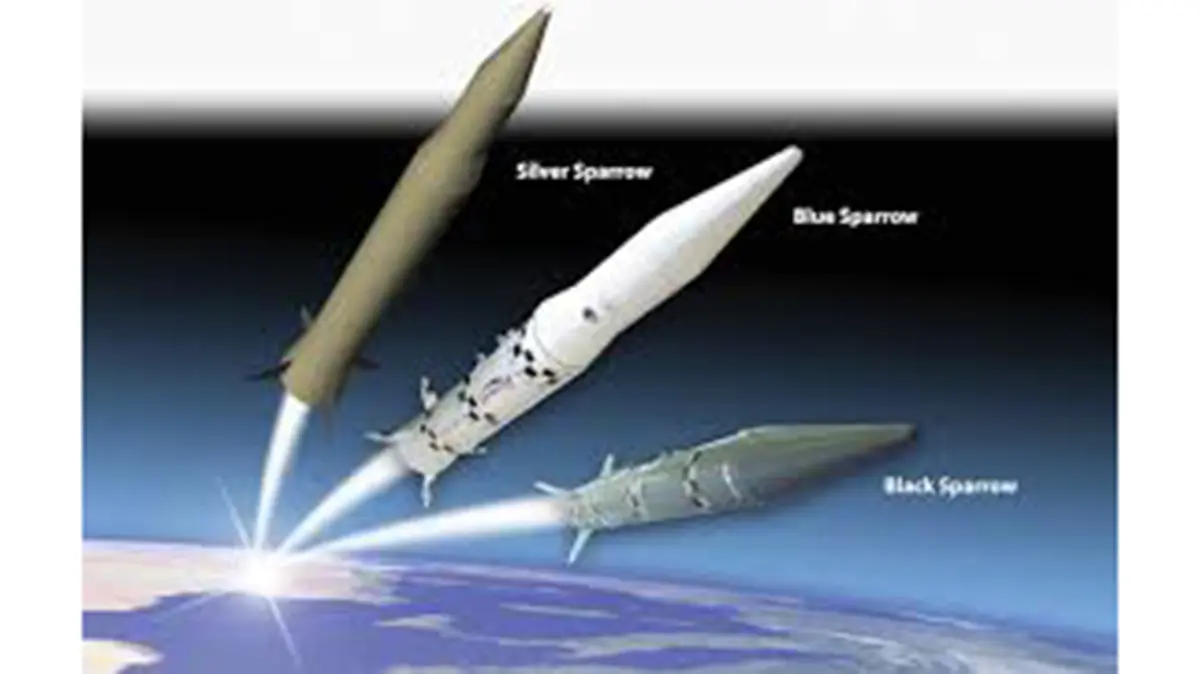
Why in News? During recent tensions in West Asia, Israel’s air force was reported to have used an air‑launched ballistic missile known as Blue Sparrow. Originally developed as a target for testing the Arrow missile defence system, Blue Sparrow has evolved into an offensive weapon and attracted global attention.
Background
The Blue Sparrow belongs to a family of air‑launched ballistic missiles produced by Israel Aerospace Industries. The family also includes the Black Sparrow and Silver Sparrow missiles. They were designed to simulate incoming ballistic missiles for testing defence systems. Later, the technology was adapted into the ROCKS missile, which can deliver conventional or special warheads.
Features
- Dimensions: The Blue Sparrow is about 6.5 metres long and weighs roughly 1 900 kilograms.
- Propulsion: It uses a single‑stage solid rocket motor. After being released from a fighter aircraft, the missile climbs above the atmosphere before its re‑entry vehicle detaches.
- Guidance: Navigation is provided by an inertial guidance system combined with satellite‑based GPS. This allows the warhead to follow a quasi‑ballistic trajectory and then dive steeply toward its target, making interception difficult.
- Adaptation: Although initially a test target, the Blue Sparrow has been converted into an operational weapon. It can be equipped with different warheads and has been integrated into Israel’s arsenal.
- Family: The Black Sparrow and Silver Sparrow are smaller variants used to simulate various threats during missile defence exercises. Their technology laid the foundation for the ROCKS precision‑strike system.
The Blue Sparrow demonstrates how defence technologies can be repurposed for offensive roles. Its ability to evade missile defences poses new challenges for regional security planners.

