Why in news?
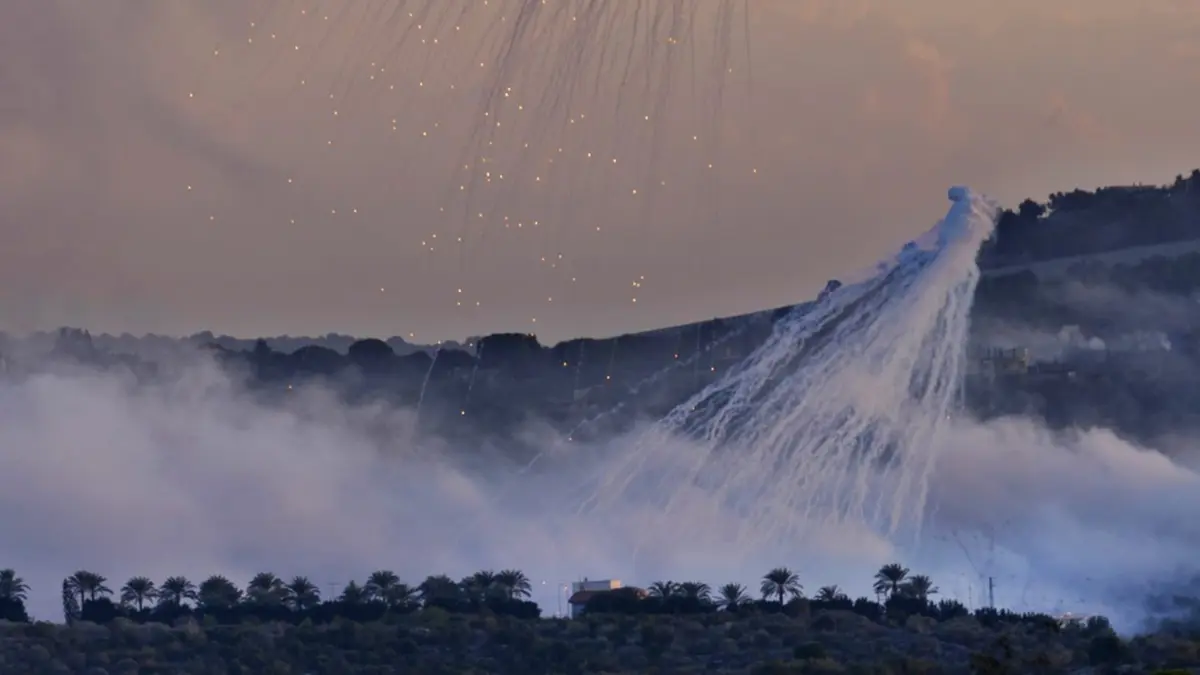
Human Rights Watch recently accused the Israeli military of using white‑phosphorus artillery shells in the Lebanese town of Yohmor on 3 March 2026. The organisation released imagery purporting to show air‑burst munitions dispersing white phosphorus over residential areas and called on Israel to halt such attacks.
Background
White phosphorus is a waxy chemical that ignites on contact with oxygen, burning at temperatures of up to 800 °C. It is commonly used in artillery shells and bombs to create smoke screens, mark targets or illuminate battlefields. Under international law it may be used for signalling or concealment, but its use against civilian populations is banned because it can cause severe burns, respiratory damage and uncontrollable fires.
Human Rights Watch findings
- Evidence: The rights group analysed videos and photographs showing artillery shells exploding above Yohmor and releasing burning white phosphorus pellets over homes and fields. Residents reported fires and injuries consistent with the substance’s properties.
- Legal concerns: International humanitarian law prohibits the use of incendiary weapons in populated areas. White phosphorus can stick to skin and clothing, causing deep chemical burns that may reignite when bandages are removed. Inhaling fumes can damage the lungs and organs.
- Past incidents: Human Rights Watch has documented previous instances of Israeli use of white phosphorus in Gaza and Lebanon. Israel maintains that the substance is used lawfully for creating smoke screens, but critics argue that its deployment in populated areas violates humanitarian norms.
Implications
The allegations come amid heightened violence along the Israel– Lebanon border and have spurred renewed calls for accountability and adherence to the laws of war. International pressure may prompt investigations, but proving intent and obtaining redress remain challenging in conflict zones.
Source: The Hindu