

Why in news?
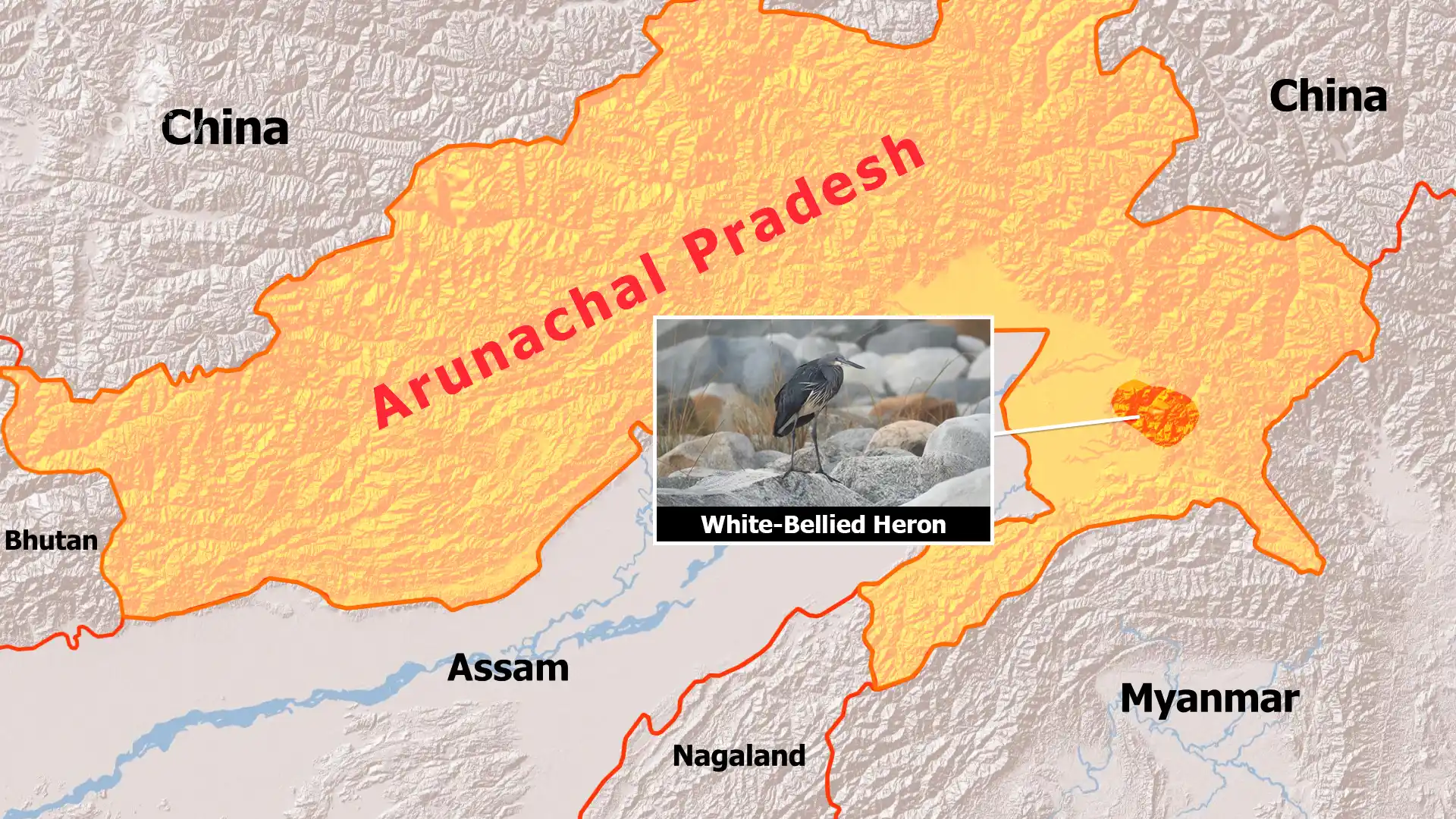
The Union Environment Ministry’s expert panel has recommended environmental clearance for the Kalai‑II hydroelectric project on the Lohit River in Arunachal Pradesh. Conservationists have raised alarms because the project area is one of the last habitats of the critically endangered white‑bellied heron.
Background
The white‑bellied heron (Ardea insignis) is a large brownish‑grey heron known for its distinctive white underparts. Sometimes called the imperial or great white‑bellied heron, it prefers undisturbed riverine forests and wetlands in the foothills of the eastern Himalayas. Historically it ranged across northern India, Nepal, Bhutan and Myanmar, but today fewer than 60 mature individuals survive. Small nesting populations are recorded in Bhutan and eastern Arunachal Pradesh.
Habitat and behaviour
- These herons inhabit free‑flowing rivers and wetlands with minimal human disturbance. They rely heavily on fish found in fast‑flowing rapids and seldom venture far from riverbanks.
- The species nests in tall trees along secluded river valleys. Sites in Namdapha National Park and the Walong region are among the few known breeding grounds in India.
- White‑bellied herons are solitary and territorial; seeing one indicates a healthy river ecosystem with abundant fish and clear water.
Conservation concerns
- The species is classified as Critically Endangered on the IUCN Red List and is listed in Schedule I of India’s Wildlife Protection Act (1972), providing it the highest degree of legal protection.
- Primary threats include habitat loss from hydropower dams, deforestation, sand mining and conversion of wetlands to agriculture or settlements. Human disturbance and hunting have also contributed to its decline.
- Environmentalists worry that the Kalai‑II project could inundate or fragment critical riverine habitats, further reducing the already tiny population. They advocate for careful impact assessments and consideration of alternative energy options.
Protecting the white‑bellied heron requires preserving free‑flowing rivers, enforcing strict anti‑poaching measures and promoting sustainable development that does not sacrifice fragile ecosystems for short‑term gains.
Source: The Indian Express