

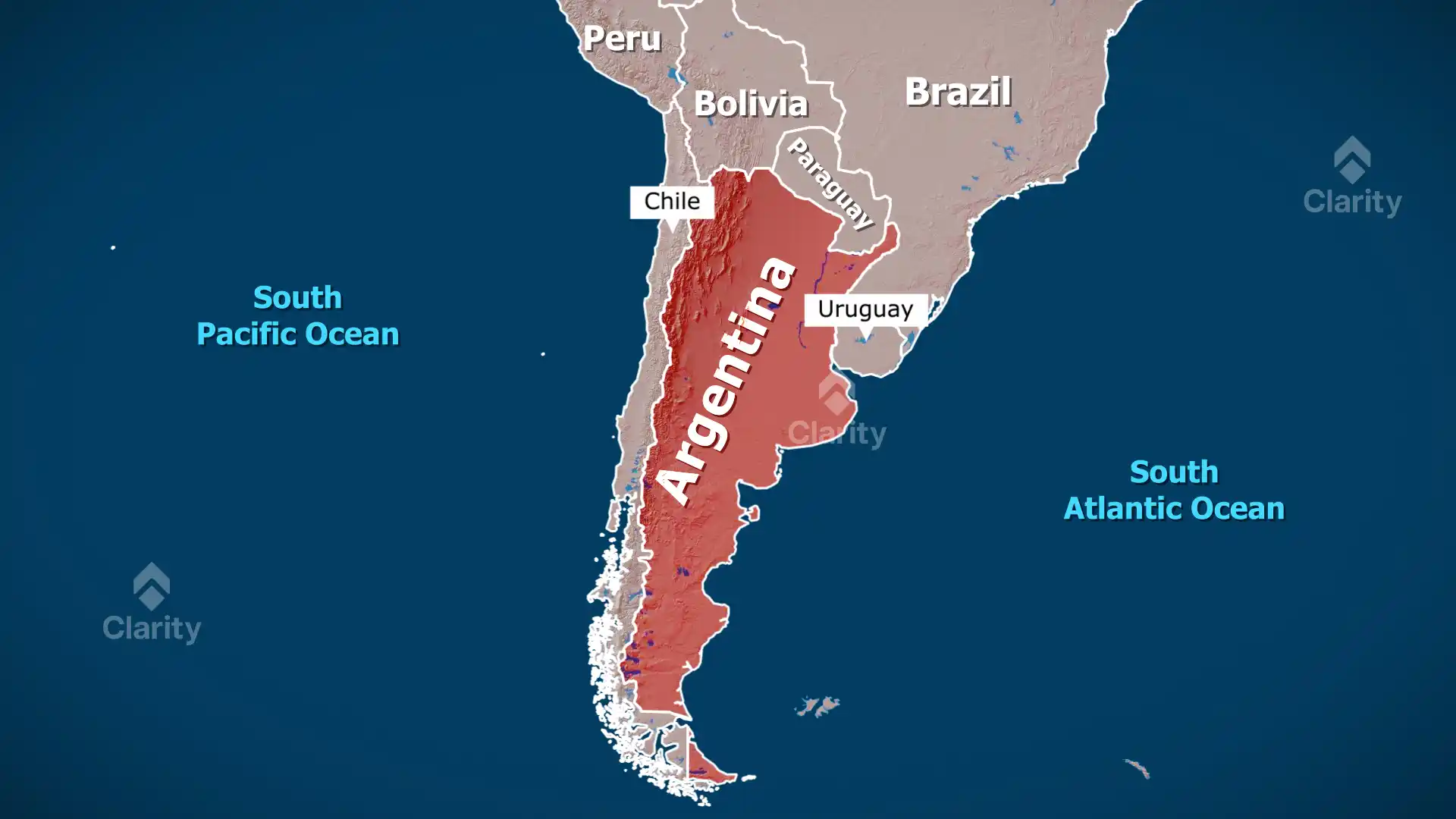
Why in news?
In early January 2026 large wildfires broke out in the Patagonia region of Argentina, burning nearly 12,000 hectares of scrubland and forest. Dry weather and strong winds hampered firefighting efforts, and authorities suspected arson as a possible cause. This event draws attention to both Argentina’s unique geography and the increasing threat of climate‑driven fires.
Background on Argentina
Argentina, officially the Argentine Republic, is the second‑largest country in South America. Its capital is Buenos Aires, and Spanish is the official language. The nation spans about 2.78 million square kilometres and is geographically diverse, stretching from the Tropic of Capricorn to near Antarctica.
Regions and landscape
- The Andes: The western region is dominated by the Andes mountains. Argentina’s highest peak, Cerro Aconcagua (about 6,961 m), is the tallest mountain in the Americas.
- The North: A mix of subtropical forests, savannah and wetlands. The spectacular Iguazú Falls on the border with Brazil and Paraguay is located here.
- The Pampas: A vast, fertile grassland in central Argentina that supports cattle ranching and grain cultivation. This region is the heart of the country’s agricultural economy.
- Patagonia: The southern plateau, known for windswept steppes, glaciers and wildlife. It extends towards Tierra del Fuego and includes the forested Andes foothills where many fires occur during the dry summer months.
Current wildfires
- The fires started in Chubut province and quickly spread across vegetation that had dried out after months of low rainfall. Hot, windy conditions during the December–March fire season made containment difficult.
- Firefighters, supported by aircraft and volunteers, worked to protect nearby communities and limit damage. Authorities suspected that some fires may have been deliberately set.
- Patagonia’s remote terrain and sparse population make firefighting logistically challenging. Local officials urged residents to remain alert and help prevent future fires.
Significance
- These wildfires highlight the growing risk of forest and grassland fires across South America as temperatures rise and rainfall patterns change.
- Understanding Argentina’s geography helps explain why its regions face different environmental threats: dry, windy conditions in Patagonia support fire spread while the Pampas face soil erosion and the north endures flooding.
- Patagonia’s ecosystems are home to unique wildlife and support local tourism; repeated fires can damage habitats and livelihoods.
- The situation underscores the importance of effective land‑management policies, community awareness and international cooperation in fighting wildfires.