
Why in news?
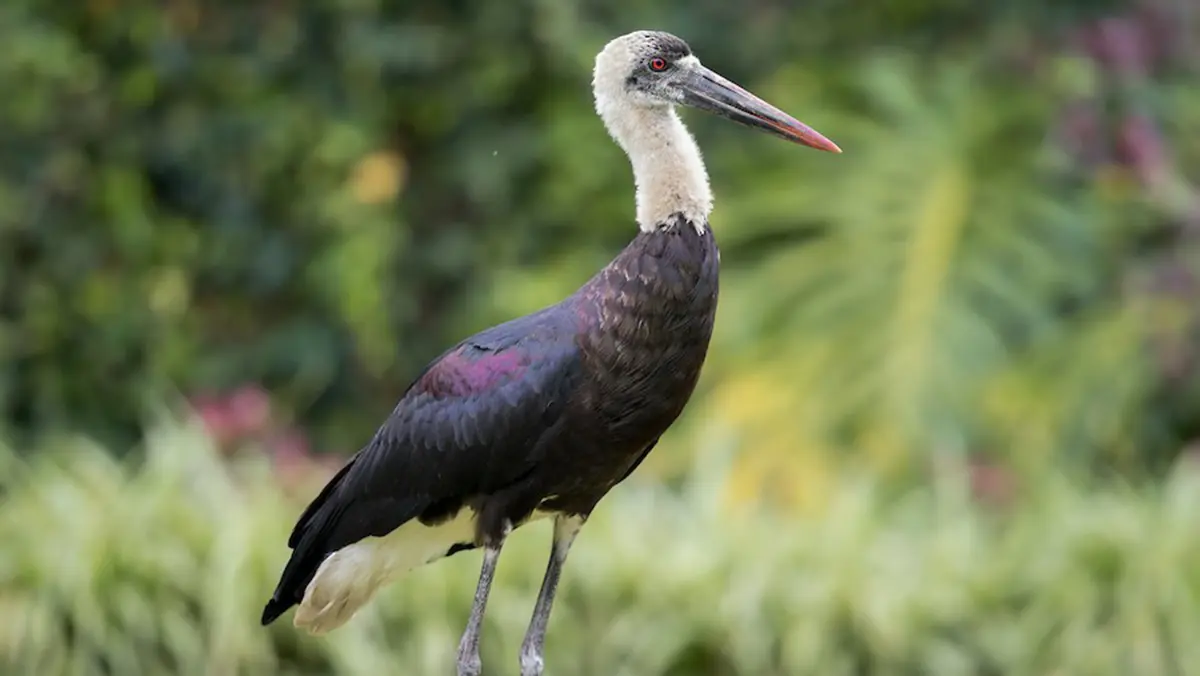
Birdwatchers in Tamil Nadu’s Thanjavur district have reported rare sightings of the woolly‑necked stork in local paddy fields. This species is typically found in northern India, and its presence in the south during the off‑season suggests either a range expansion or shifts in migration patterns, possibly linked to environmental changes.
Background
The woolly‑necked stork (Ciconia episcopus), also known as the white‑necked or bishop stork, is a large wading bird belonging to the stork family. It is widely distributed across tropical Africa and Asia, breeding from India to Indonesia. In India the species is more common in the northern plains, where it nests atop tall trees near wetlands.
Habitat and habits
- Preferred habitats: These storks inhabit open grasslands, paddy fields, floodplains, riverbanks, ponds and other wetlands. They forage by walking slowly through shallow water or vegetation, stabbing at prey with their long bills.
- Diet: They are carnivorous, feeding on fish, frogs, snakes, lizards, large insects, crabs, molluscs and other invertebrates. The varied diet allows them to exploit both aquatic and terrestrial environments.
- Appearance: Adults have glossy black plumage with a purplish sheen, contrasted by a woolly white neck and white belly. Juveniles are duller. They have broad wings adapted for soaring on thermals during long flights.
- Breeding: The species usually nests solitarily or in small colonies, building large stick platforms high in trees. In India breeding generally coincides with the dry season.
Conservation status and significance
- Near threatened: The International Union for Conservation of Nature (IUCN) lists the woolly‑necked stork as Near Threatened due to habitat loss, wetland degradation and hunting in parts of its range.
- Ecological role: By controlling populations of fish, amphibians and insects, these storks help maintain the balance of wetland ecosystems.
- Indicator species: Unusual sightings outside their normal range may signal environmental changes such as alterations in rainfall patterns, land use or food availability.
Conclusion
The unexpected appearance of woolly‑necked storks in southern India highlights the importance of continuous monitoring of bird populations. Protecting wetlands, regulating pesticide use and conserving nesting sites can help ensure the survival of this elegant but vulnerable species.
Source: The Times of India

