

Why in news?
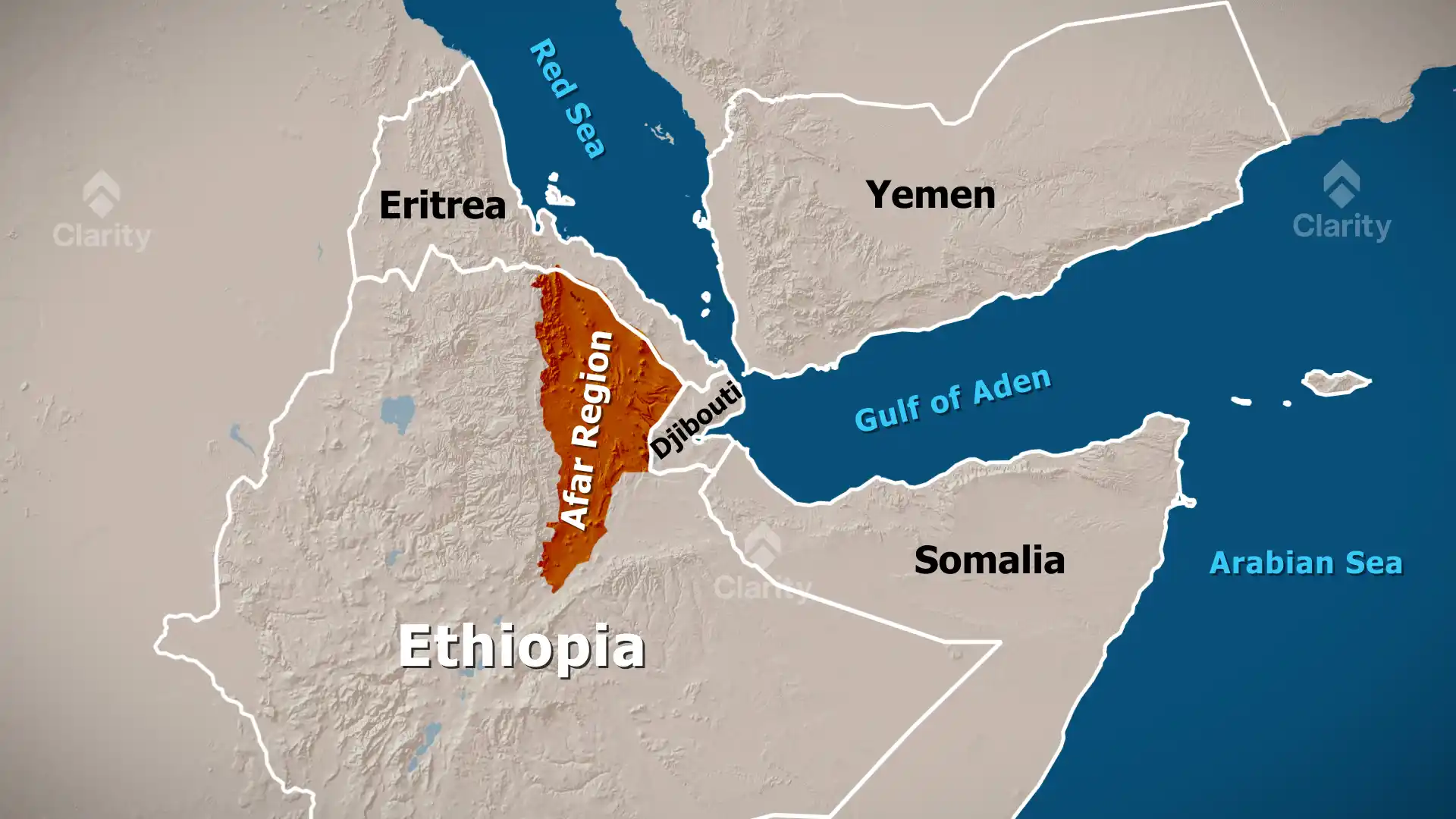
Geologists examining decades‑old magnetic data recently concluded that the Afar region in northeastern Africa is splitting apart as tectonic plates diverge. The findings suggest that in 5–10 million years a new ocean could form as the Red Sea, Gulf of Aden and East African Rift continue to pull the continent apart. The research has attracted public interest because it reveals continental breakup in real time.
Background
The Afar region, also known as the Afar Depression or Danakil Depression, spans parts of Ethiopia, Eritrea and Djibouti. It sits at a triple junction where three tectonic plates—the African, Somali and Arabian plates—meet. This junction creates a Y‑shaped rift system comprising the Red Sea Rift, Gulf of Aden Rift and East African Rift. The landscape features deep rift valleys, volcanic plateaus, salt flats and some of the lowest points on the African continent, such as Lake Assal below sea level.
Geological significance
- Rifting process: As plates move apart, magma rises to fill the gap, forming new crust. Over millions of years, continued spreading can split a continent and create an ocean basin, as happened when the Atlantic Ocean opened between Africa and South America.
- Magnetic evidence: Scientists analysed airborne magnetic surveys from the late 1960s and 1970s and found consistent signals of seafloor spreading beneath the Afar region. These data, combined with GPS measurements, confirm that the rift is widening at 5–16 millimetres per year.
- Potential future: If spreading continues, eastern Africa—including Somalia, Kenya, Tanzania, Mozambique and parts of Ethiopia—could detach from the rest of the continent, forming a new landmass surrounded by ocean.
Other features
- Climate and ecology: The Afar Depression is one of the hottest and driest places on Earth. Despite the harsh conditions, it is rich in salt deposits and supports hardy vegetation and wildlife such as zebras and the critically endangered African wild ass.
- Human origins: The region is famous for fossil discoveries of early hominins, including Lucy (Australopithecus afarensis) and Ardi (Ardipithecus ramidus), making it a key site for studying human evolution.
Conclusion
The Afar region illustrates the dynamic nature of Earth’s crust and offers a window into the slow process of continental breakup. While the formation of a new ocean is far in the future, ongoing research helps scientists better understand plate tectonics and its implications for landscapes, ecosystems and human history.
Source: The Indian Express