

Why in news?
A Fort Hood-based AH-64E Apache crashed near Salado, Texas, on 12 August. The United States Army confirmed that two soldiers died.
Known facts and open questions
The helicopter came down south of Fort Hood in central Texas. Fort Hood personnel worked with local responders at the scene.
The crash also ignited a grass fire and prompted local safety measures. The cause was not established by the reporting date.
Later reporting said the Army temporarily paused Apache training flights. Investigators must distinguish equipment, maintenance, weather and human factors.
Investigation must come before explanation
A crash alone does not reveal a design defect. Fleet-wide action is precautionary while evidence is collected.
The aircraft
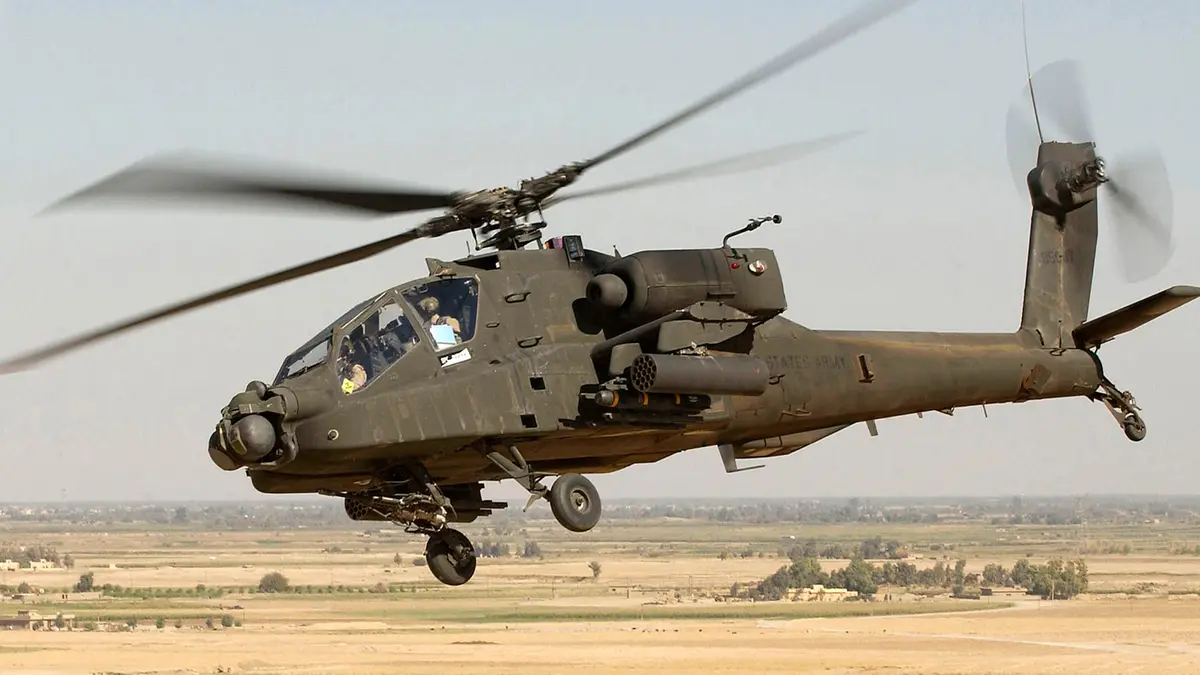
The AH-64E is a twin-engine, four-bladed attack helicopter with tandem seats. The pilot and co-pilot gunner share flight and mission tasks.
Its sensors support day, night and adverse-weather targeting. Network systems can exchange battlefield information and work with unmanned aircraft.
Standard armament can include a 30-millimetre chain gun, Hellfire missiles and 70-millimetre rockets. Actual loads depend on mission and operator.
Boeing lists a two-person crew and a service ceiling of 6,096 metres. Manufacturer performance figures depend on configuration and conditions.
Why the model matters to India
The Indian Air Force operates 22 AH-64E helicopters. The Indian Army separately received six aircraft for its first Apache squadron.
Boeing stated in April 2026 that it had completed the Army’s fleet. The Army unit is based at Jodhpur in western Rajasthan.
Jodhpur lies east of the India–Pakistan boundary in a hot desert environment. High temperatures and dust make maintenance discipline especially important.
A United States accident does not directly determine Indian operations. However, shared platforms make verified safety findings relevant to all operators.
Safety and capability
Modern attack helicopters combine complex sensors, weapons, engines and software. Airworthiness depends on configuration control and continuous crew training.
Temporary stand-downs can preserve evidence and spread urgent checks quickly. They should not be mistaken for a final finding against the aircraft.
India should review official investigation outcomes through its technical channels. Rumours and unsourced comparisons cannot support fleet decisions.
Capability requires transparent safety learning
The Apache’s combat role does not reduce peacetime safety obligations. Credible investigation protects crews and operational readiness.
Conclusion
The Salado crash is first a human loss and an active investigation. Wider conclusions should follow evidence, not the aircraft’s reputation.